Tag Archives: Field Trip

Grosse Pointe: Sweet Music

23 Mar

christ church gp 096 (1)

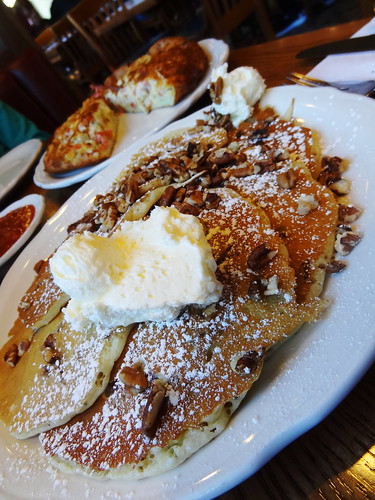
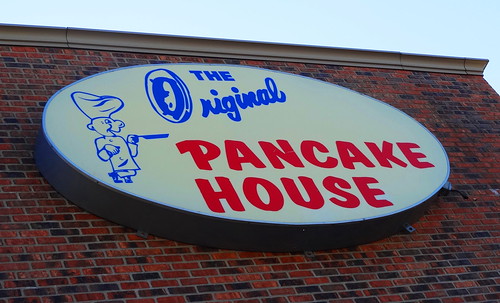
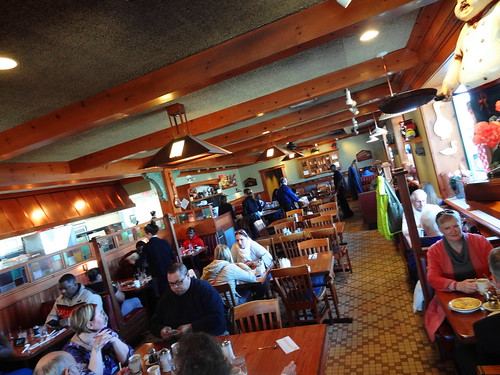
As a rule Kris and I never eat at chain restaurants, there are exceptions to that rule; The Original Pancake House on Mack in Grosse Pointe Woods is one such exception. For over 50 years the homey, family friendly restaurant has been a fixture in the neighborhood, feeding hungry diners piles of buttermilk pancakes, golden brown waffles, the signature Dutch Baby, fluffy omelettes and Danish crepes. It’s a Sunday afternoon, we arrive as the crowds begin to thin, we are seated at a small booth window-side. I could eat breakfast any time of day, everything on the menu sounds delicious, we decide on one savory and one sweet item to share.
christ church gp 050 (1)

christ church gp 044 (1)

christ church gp 040 (1)

Glasses of fresh squeezed orange juice and a dish of salsa arrive in an instant, we survey plates topped with ice cream, strawberries and whipped cream as they pass by. First to arrive is the Southwest Dutch Baby, a special today–it’s huge! Stuffed with jalapeno, onions, pepperjack cheese and tomato, cooked perfectly, it’s delicious. The pecan pancakes arrive a moment later, tender and tasty buttermilk pancakes with toasted pecans in the batter and sprinkled on top, served with whipped butter, we add a little maple syrup, outstanding. Tables come and go swiftly, many patrons seem to be on a first name basis with the staff. If you like good, old-fashioned, traditional breakfast food, be sure to stop in.

christ church gp 068 (2)

christ church gp 061 (1)

christ church gp 058 (1)christ church gp 055 (2)

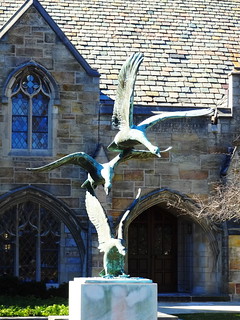
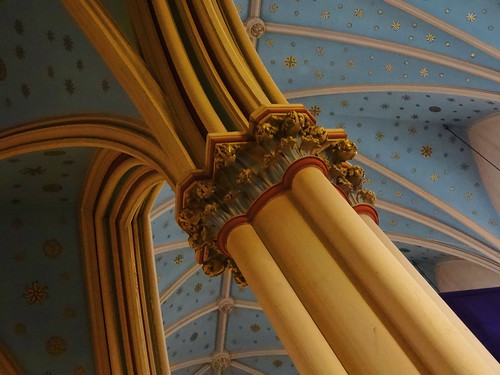
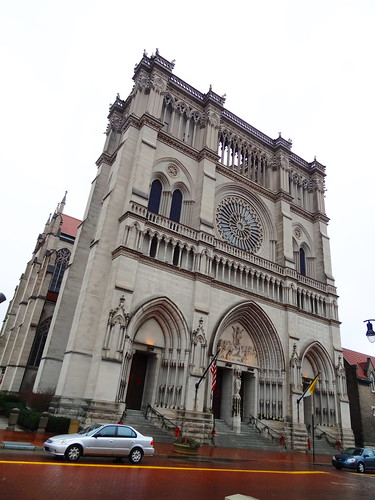
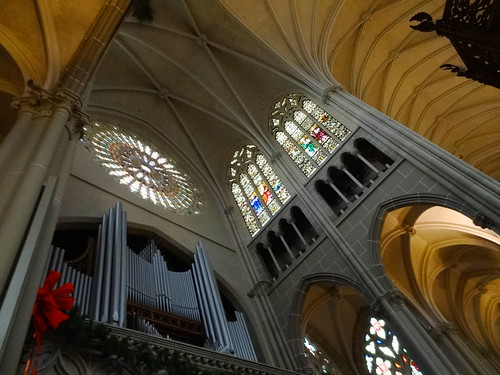
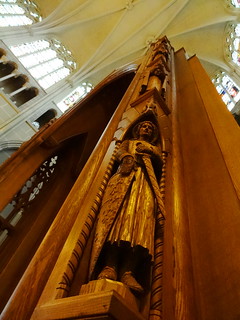
Many churches in metro Detroit offer wonderful programs to the community at large. Today we are attending a concert at Christ Church Grosse Pointe, though we have driven by the building for years, this will be our first time inside. We follow the long driveway to the parking lot that connects to the Grosse Pointe South High School lot, cars are just beginning to arrive. The day is beautiful, the sun shines in a perfect blue sky, we wander the perimeter of the building taking in architectural details, bronze statues, the blue-green patina of the steeple and fantastic windows. The building was completed in 1930 as a branch of Christ Church Detroit, called Christ Church Chapel at the time, made of Pennsylvania iridescent sandstone, it was just the beginning of a planned cathedral-like complex. The Great Depression ended plans of further expansion.
christ church gp 084 (1)

christ church gp 113 (1)

christ church gp 082 (1)christ church gp 094 (1)

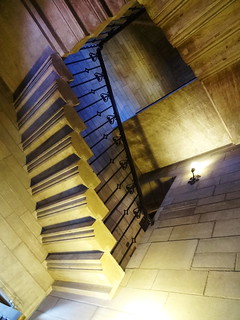
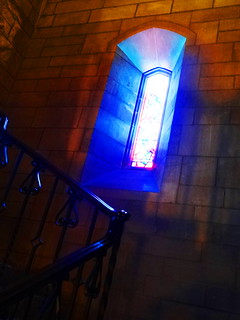
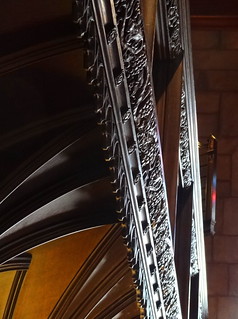
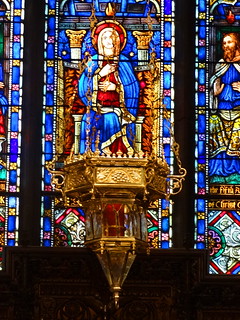
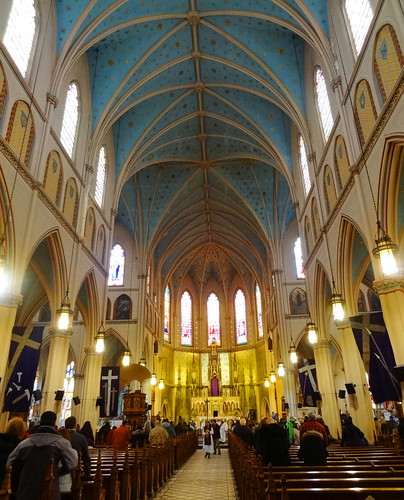
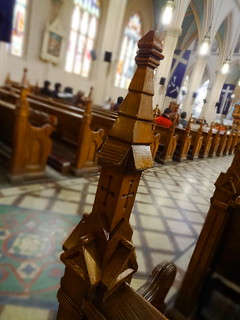
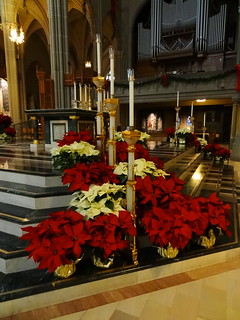
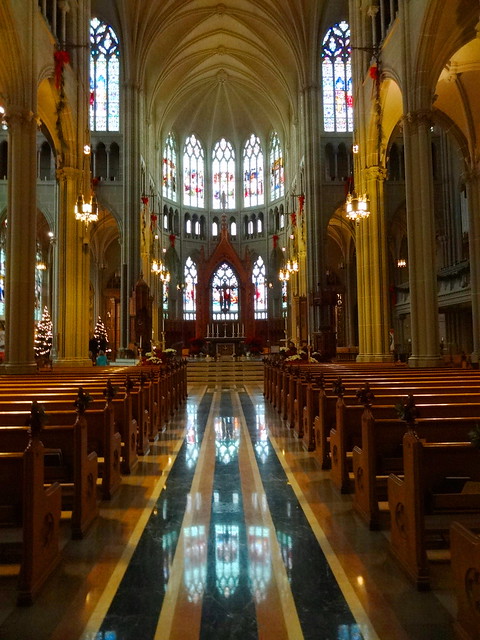
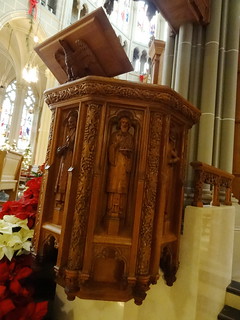
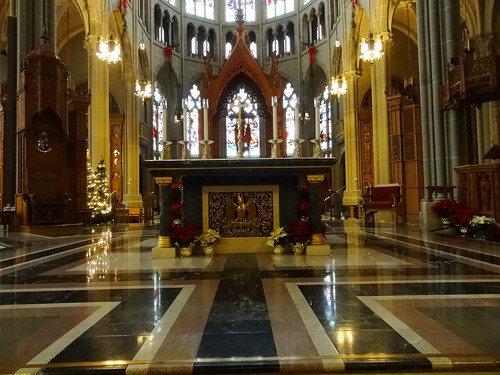
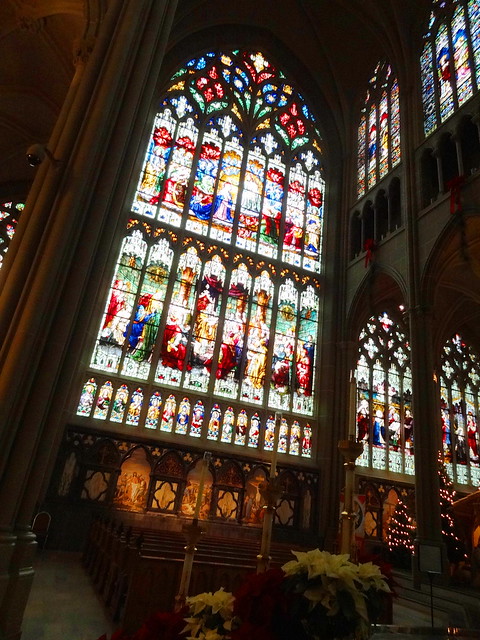
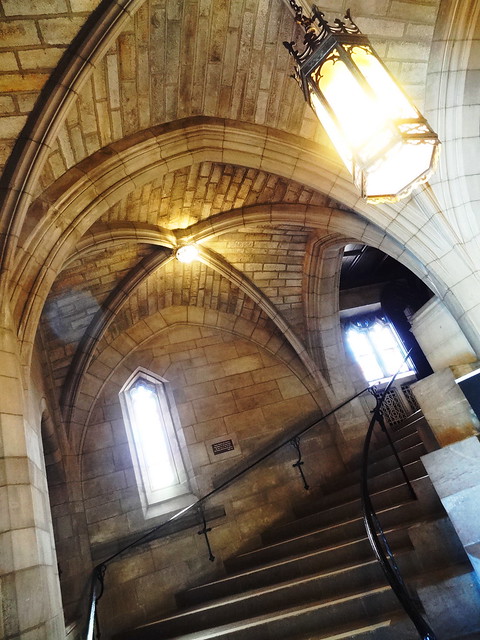
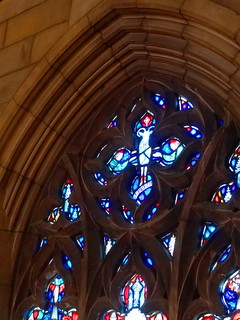
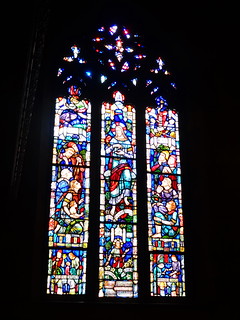
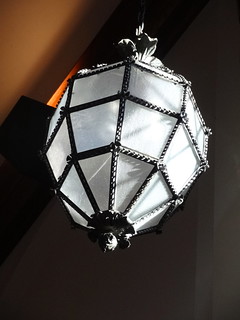
At the Gothic arch entrance wrought iron lanterns flank the opening, heavy wood doors are open, we step inside, our eyes adjusting from light to dark. Here in the narthex we are directed up the great curving stairway to the left that leads us into the chapel. Before us the nave with its main aisle and two narrow side aisles is laid out; gray Indiana limestone surrounds intricately carved English oak, dangling lantern-style chandeliers, exquisite stained-glass windows and a gorgeous wood beam ceiling. We take the steps up one more flight ending in the gallery, two short rows of pews fill the space, it’s like sitting in the mezzanine of a historic theater, the stained glass window behind is extraordinary.
christ church gp 107 (1)christ church gp 091 (1)

christ church gp 118 (1)

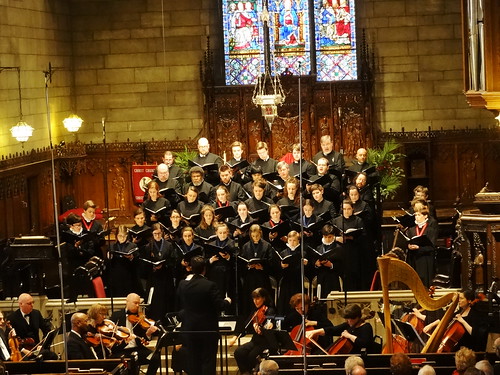
From our front-row seat we have an overview of the entire church,the high altar is set up for the performance, choir members file in and take their seats. Reverend Van Culin welcomes everyone and introduces the conductor Scott Hanoian; the Christ Church Schola is performing Herbert Howells’ Requiem. The singers begin the piece of music, I have never heard a choir quite like this before, the voices blend perfectly, the sound both soothing and enchanting. After a short break the Choir of Men and Boys, Choir of Men and Girls and orchestra join the group to perform Gabriel Faure’s Requiem, Op.48. The loveliness of the voices is now joined by violins, viola’s, cello’s, bassoons’, a harp and more, soloists make their way to the front of the choir to sing their part. 

christ church gp 129 (1)

christ church gp 074 (1)

christ church gp 133 (1)christ church gp 128 (2)

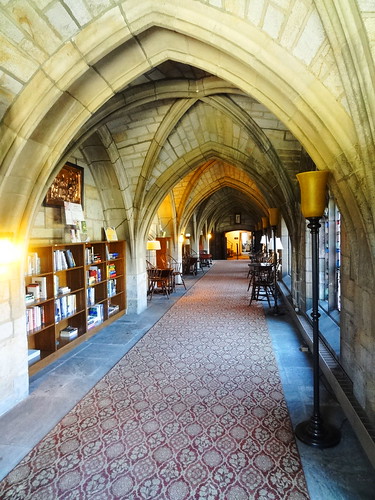
 When the concert ends a church volunteer offers to show us around the building, we accept. We descend the stairway, back to where we came in, this time we walk the other direction and find ourselves in the cloister. The long, stone, arched hall is magnificent, so Gothic, so wonderful. We learn it was inspired by the cloister of Canterbury Cathedral in England, it wasn’t enclosed until 1957. As we walk we pass bookshelves filled with all sorts of books for people to borrow, like a book exchange, reading areas are set up along the hall, sconces emit a warm glow, torchiere lamps line the cloister. Mary shows us the undercroft, a large room located under the nave used for social gatherings, receptions and funerals, it has the same stone and leaded glass window elegance as the rest of the church. We poke our head into a number of rooms including the practice room for the choirs, all are attractive.
christ church gp 153 (1)christ church gp 140 (1)

christ church gp 149 (1)

christ church gp 132 (1)christ church gp 126 (1)

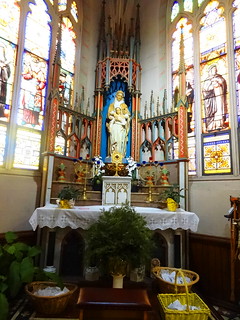
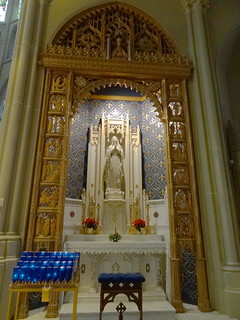
Continuing onward we view more stained glass windows, none of the great windows were here when the church was first dedicated; most were installed in the 1930’s and 40’s, all were gifts. The tradition of giving memorial windows continues today. Throughout the years parishioners and friends have given gifts of sculpture, paintings, antique furnishings, vestments, altar hangings and tapestries; we see many of these gifts on our tour. We enter the education wing, quiet classrooms are empty today, they have a nursery school co-op too. We are led into Miller Hall, a small gathering space used for weddings, funerals or as the Bride’s room, the decor is warm and comfortable with a handsome fireplace. When we have seen the whole building we thank Mary for her generosity and the tour, it was amazing.

christ church gp 154 (1)

christ church gp 155 (1)

christ church gp 164 (1)

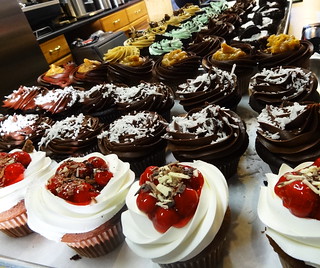
Ending the day on a sweet note we stop in at the Chocolate Bar Cafe on Mack.  Alinosi turned the space into an old-fashioned ice cream parlor back in 1990. Today, Lisa Corbin runs the show serving Alinosi ice cream, toppings and their French superfine chocolates–yum! In addition she serves gourmet cupcakes and special order cakes baked fresh in-house daily. Step inside, the place is decorated in Alinosi’s signature colors of turquoise and pink, it’s the week before Easter, multicolored eggs of all sizes hang from the ceiling, I smell cake, fresh from the oven. The piece de re` sistance is the vintage neon Alinosi sign and menu board–wow! There’s antique soda fountain equipment, stainless steel counters and old black barstools–they even have the old metal water glasses that hold the paper cup insert. 
christ church gp 160 (1)

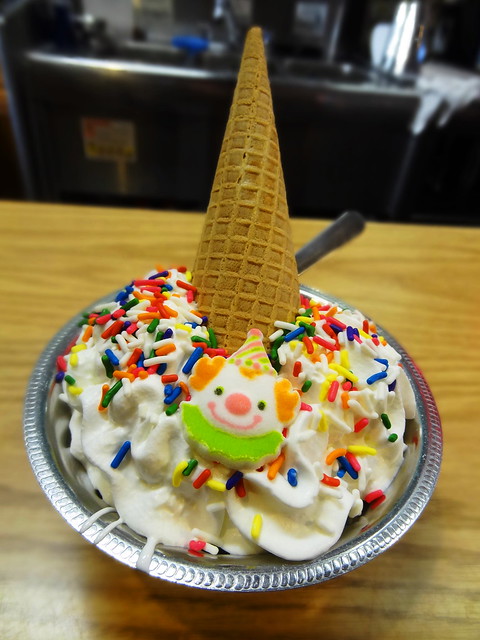
I am especially excited to be here, as a child growing up in Detroit my family always had Alinosi chocolates and ice cream. There was never an Easter basket without their foil-wrapped chocolate eggs, solid milk chocolate bunnies and even bags of jelly beans wearing the famous gold label. Childhood memories come flooding back, it feels familiar, nostalgic. We have a seat at the counter and watch one of the girls decorate giant gourmet cupcakes (next time I’m getting one) as our treats are being made. I start to drink my double chocolate malt as the finishing touches are put on Kris’s Clown Sundae–I wonder how many of those I ate through the years….. Kris spoons up Michigan Pothole ice cream doused in hot fudge and marshmallow topping, he makes short work of finishing it off. At the end of the day both my sweet tooth and spirit are satisfied.
 

HAMTRAMCK: Pierogi And Fancycakes With A Side Of Theatre …

8 Mar

ant 004 (1)

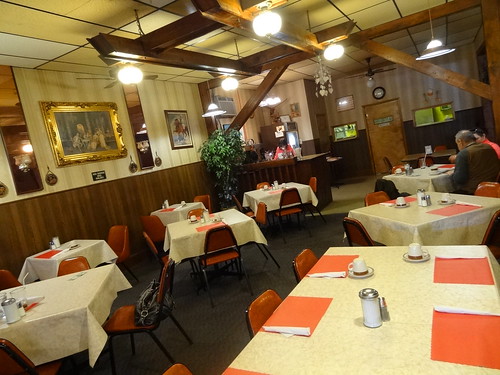
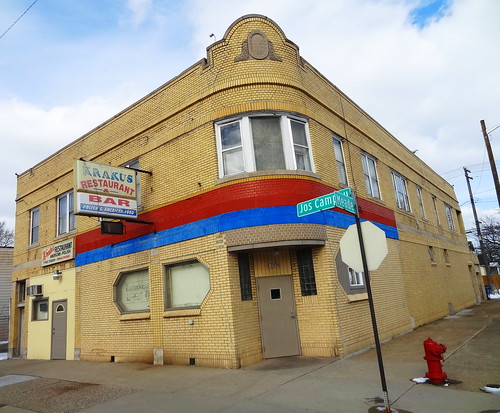
It’s the weekend, time to play. During the winter months we do more indoor things; today we are having lunch and seeing a show, the pleasant 64 degree day is quite unexpected. We are just north of the Hamtramck border on Jos Campau, we are going to the “other” Polish restaurant, Krakus Restaurant & Bar, serving authentic homemade Polish food. The yellow brick building resides at the corner of Jos Campau and Meade, we park on the side in the designated lot. The interior looks as if time has stood still–a good thing in this case. 4-top tables wear tablecloths, framed paintings hang on the wall, paneling covers the lower half of walls. Our attentive, friendly waitress greets us with glasses of water and menus, we quickly place our order.
ant 028 (1)

ant 018 (1)

ant 007 (1)

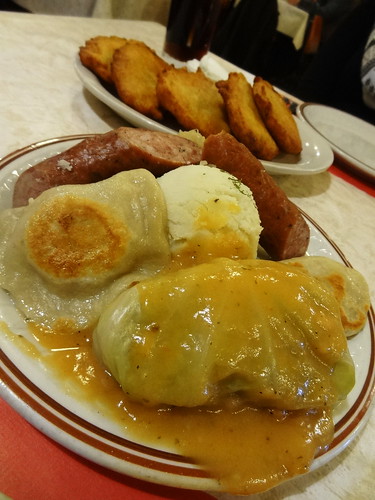
Two cups of soup arrive, Kris has the mushroom, a creamy, velvety concoction of mushrooms and noodles, it’s out of this world. I’m having the dill pickle soup, the broth resembles chowder, there’s enough tasty shredded pickle for every spoonful. Just as we finish the Polish plate and potato pancakes are set on the table with two empty plates, we’re eating family style. The golden brown potato pancakes are crispy outside, tender and moist inside, we like ours with sour cream. The Polish plate comes with stuffed cabbage, sauerkraut, sausage, mashed potato and two dumplings (all for $9.75 including the soup and bread basket). Each Polish restaurant in Hamtramck has its own family recipes, every dish has its own distinct flavor and personality. Here the stuffed cabbage is served in a gravy style sauce instead of tomato sauce, potato pancakes are deep-fried, the sauerkraut is mild. It reminds me of  when I was growing up, we have many Polish relatives and each cook has their own way of doing things, all of them delicious.

ant 002 (1)

ant 010 (1)

ant 015 (1)

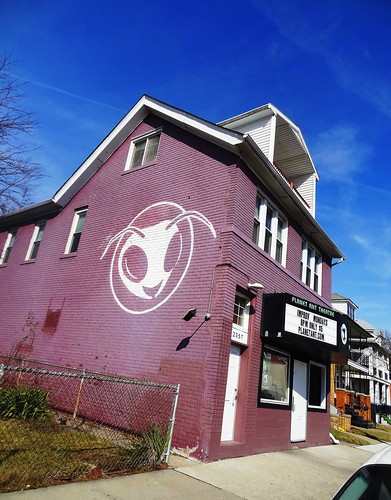
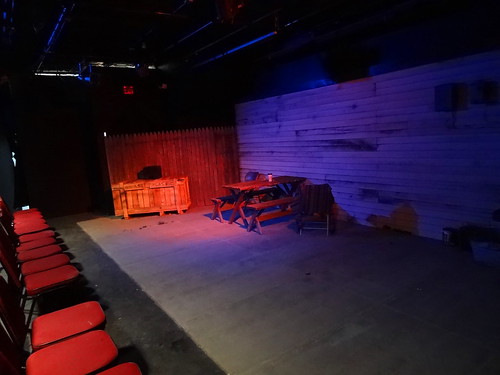
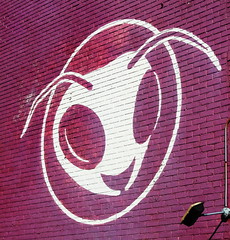
We drive over to Planet Ant Theatre on Caniff. The faded purple-painted building with the ant face painted on the side began as Planet Ant coffee house, it became a theatre in 1996. In time they created original theatrical and comedy works, formed the Improv Colony and opened a training center focused on teaching long-form improv comedy and comedy writing. Most importantly, the place is super cool! The performance space is small, I mean nano small; the first row of seats is just feet from the stage. A doorway with a curtain separates the lobby from the stage, the restroom door is barely off stage… that kind of small. We are seeing an original drama called The Aliens, the mood is serious, the emotion intense. The audience is drawn to the characters, we are caught up in the story unfolding before our eyes, it’s almost as if we’re eavesdropping. Planet Ant offers a very personal theatre experience, you should definitely check it out. If you are into comedy, check out Improv Mondays, it takes place each Monday at 8 pm for more than 15 years now.

ant 066 (1)

ant 046 (1)

ant 051 (1)

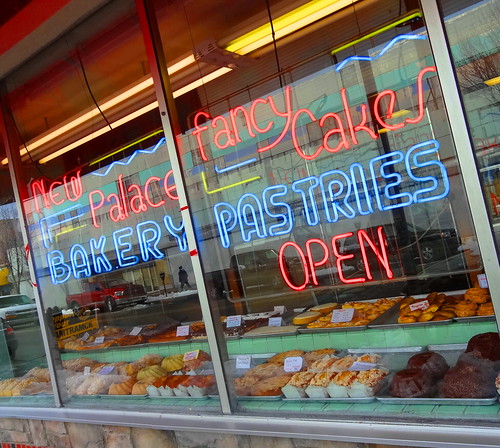
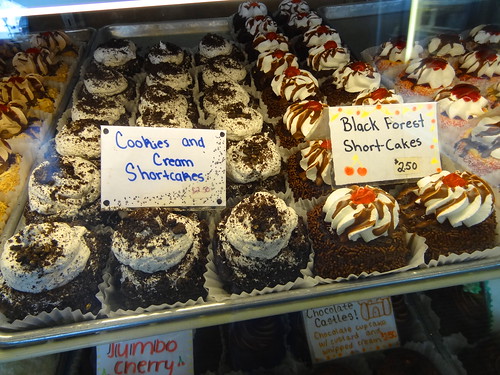
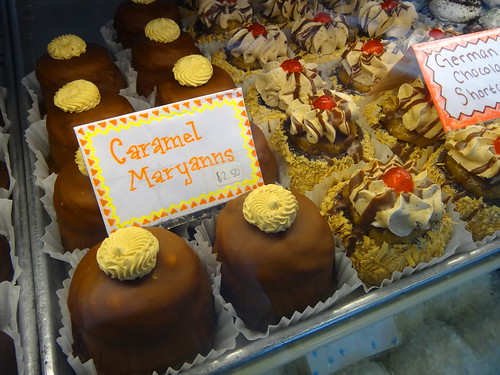
Every excursion deserves a sweet ending, New Palace Bakery on Jos Campau is just the place. A parking space is open right in front, the large window is filled with pastries, the aroma of bread, cookies, butter and sugar hangs in the air. In addition to the main front window, glass cases hold shelf after shelf of delightful pastries. I ask for a chunk of the poppyseed roll, it’s the best I’ve ever had, as the young lady is doing that I join Kris as he stares at rows of Maryann’s, shortcakes, snowballs and chocolate castles. The variety of treats runs the gamut from butter cookies to custard filled french fingers and marshmallow horns to cheesecake, donuts and the infamous chrusciki (angel wings). We leave the shop, smiles on our faces, with our poppyseed roll and caramel Maryann, life is sweet indeed.
 

METRO: War is Hell

2 Mar

wwii 013 (1)

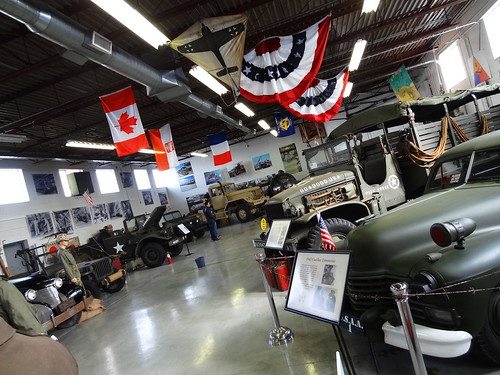
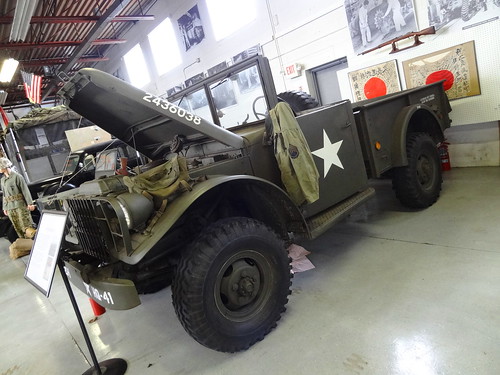
We’ve heard the stories, learned the historical facts in school and have watched Hollywood’s version of the wars involving the United States. Still many people feel disconnected to this part of our history. My parents were very young children during WWII, they had no memories or personal stories to share with me. You may not know it but if you live in Michigan, specifically the metropolitan Detroit area, you are surrounded by the historic Arsenal Of Democracy, it’s extremely impressive. Michigan-made items for the military were made here from 1900 to the present. A visit to the Michigan Military Technical & Historical Society Museum in Eastpointe really provides insight and perspective on the impact Michigan industry has made in civil defense. Let’s check out the museum….

wwii 068 (1)

wwii 057 (1)

wwii 001 (1)wwii 052 (2)

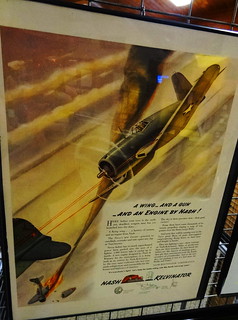
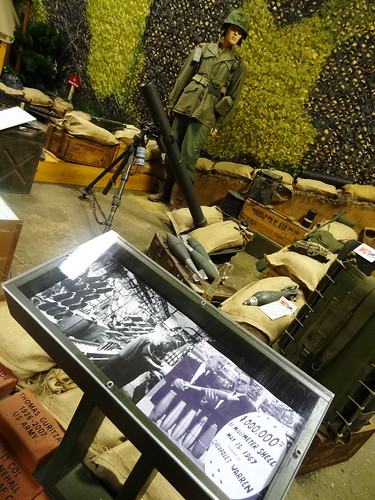
We enter the single-story building on Stephens, the lobby area doubles as a gift shop, a woman welcomes us, we pay our admission fee then begin to wander the museum. The 11,000 sq ft space is packed with machinery, vehicles, showcases and wall cases filled with artifacts. It has an old-fashioned feel to me, there are no buttons to push, no flashing lights or multi-media displays. What you will find is an amazing collection of equipment, weapons, uniforms, posters and photographs all carefully curated and detailed by placards. Exhibits begin during WWI, the US was only involved in the conflict from 1917-1919, at that time most airplane propellers were made of wood,  15 Grand Rapids furniture companies were involved in manufacturing aircraft parts. The Fisher Body plant on Fort St built the DeHavilland DH-4, the only American-manufactured aircraft to see combat in France.

wwii 021 (1)

wwii 040 (1)

wwii 051 (1)

wwii 076 (1)

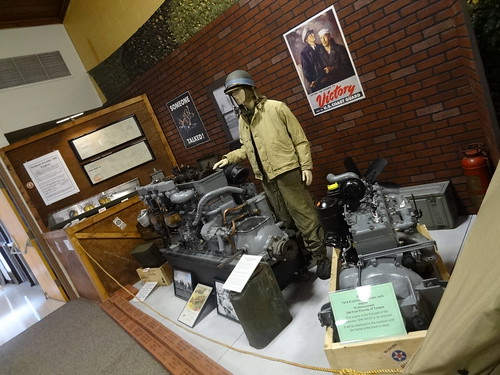
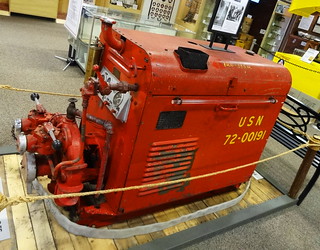
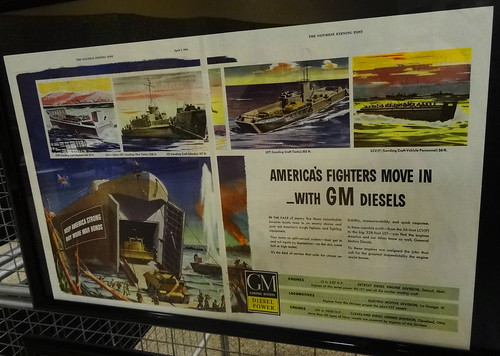
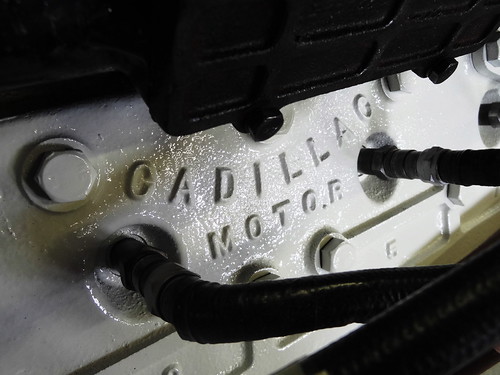
Right away I notice items from aircraft to artillery bear names like Packard, Ford, Dodge, Fisher Body. I follow the timeline along the left wall going from exhibit to exhibit, several cases display Michigan products built for WWII, it’s strange to see a manual for a Oldsmobile 37mm M4 automatic gun or an ammunition can made by Cadillac. The auto manufacturers were huge contributors; Ford made gliders, Packard built marine engines, Fisher Boat Works made the PT3 and 4, GM was the largest producer of the M1919 .30 caliber machine gun during WWII. De foe shipbuilding in Bay City built Navy and Coast Guard ships, Chris Craft built landing craft, Borg Warner made the LVT Bushmaster, Clark Equipment (Buchanan MI) built the Airborne Bulldozer. Canvas goods came from Alpena, Wolverine provided boots, magnifiers were made in Lansing, see what I mean? It’s astounding.

wwii 030 (1)

wwii 018 (1)wwii 070 (1)

wwii 067 (1)

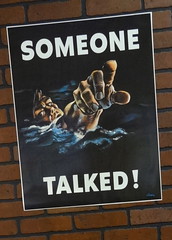
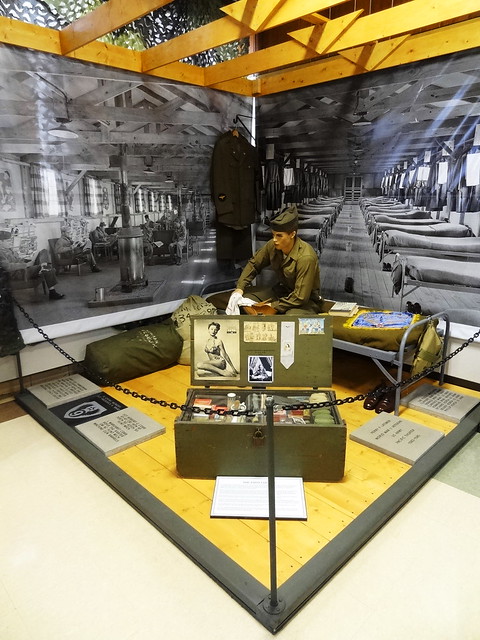
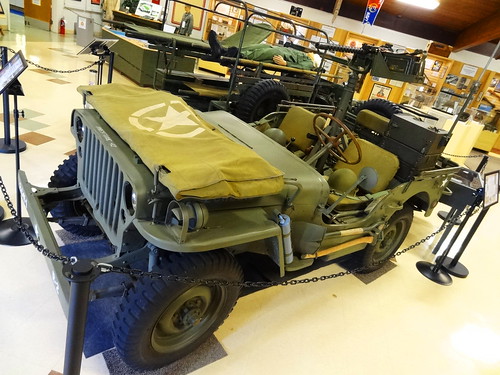
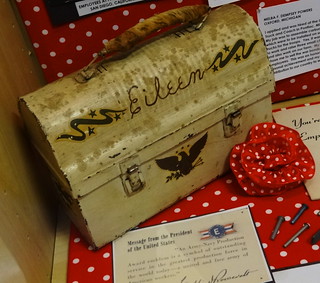
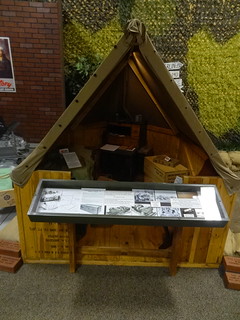
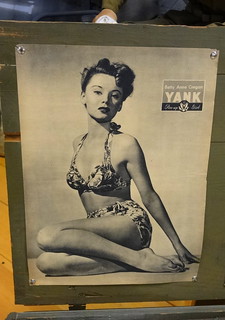
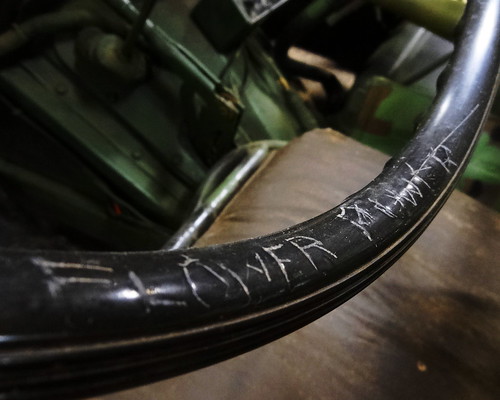
Throughout the space wartime posters hang on walls (check out the one featuring Joe Louis), engines and machinery sit out in the open, vignettes give us an idea of how campsites and bunkers were set up, complete with actual weapons. There’s a tent with a wood floor and a low wood wall that sort of pops out of a crate, we see bedrolls, footlockers and actual telegrams informing loved ones there soldier will not be coming home. The items are all real, donated to the museum, I have mixed emotions seeing everything, I can’t imagine what it was like being so far from home under such dire circumstances. The steering wheel of a Jeep has “flower power” carved into it reminding us of the real people who drove it.

wwii 108 (1)

wwii 103 (1)

wwii 117 (1)wwii 116 (1)

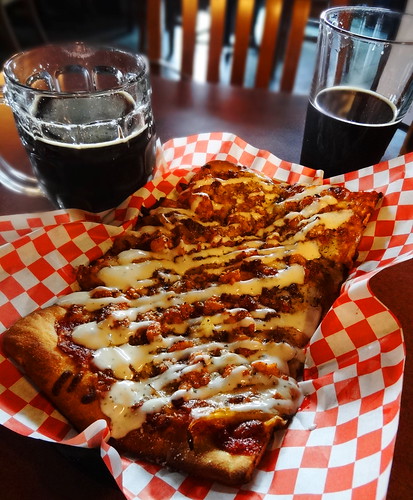
It’s just a short drive to Dragonmead Microbrewery in Warren, time for lunch. The entrance takes us directly into the bar area, a left turn leads us to dining tables. It’s a Saturday, the place is busy but we are greeted quickly by our server. The beer menu is huge, overwhelming, extensive. Styles include American, English, German, Belgian, Czech, Norwegian, Scottish and Russian, each using the grain from the country in which the style originated. We selected a flatbread in a minute, the beer took longer…. I decide on the Woody’s Perfect Porter, an English-style Ale, it’s good. Kris picks Under The Kilt Wee Heavy, a Scottish-style Ale he really enjoyed. The Wizard flatbread pizza comes with BBQ pizza sauce, BBQ chicken, bacon, caramelized onions, 3 kinds of cheese, drizzled with ranch dressing, yum! It’s the perfect size for two of us to share. 
wwii 173 (1)

wwii 128 (1)

wwii 123 (1)wwii 158 (1)

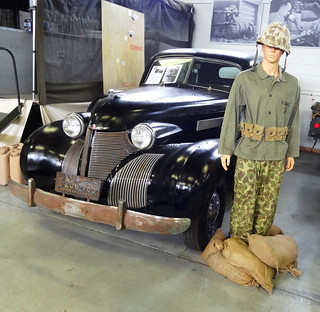
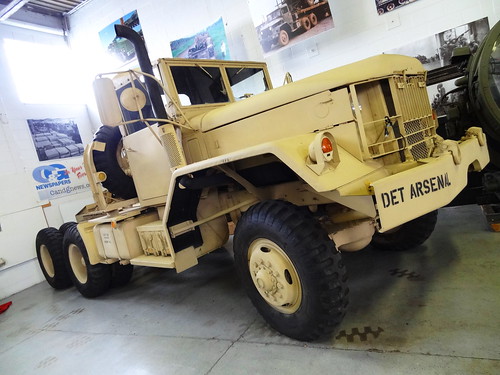
Keeping with the theme, we drive to St. Clair Shores to the Detroit Arsenal of Democracy Museum, open since May 2014, this is our first visit. The museum specializes in military vehicles and equipment from WWII to the current War on Terror. Here, again, the emphasis is on the Detroit automakers and suppliers. The 10,000 sq. ft. industrial building  display’s about 50% of the vehicle collection at a time, encouraging visitors to return. Showcases hold Italian editions of the Stars and Stripes newspaper, the Detroit Times, telegrams, medals and patches. We see and officers field dining set, a percolator, trays used by soldiers, rations and Colgate toothpaste. Black and white photos hang on the walls, there’s one of the 10,000th Chrysler-built tank from July 20, 1943. 

wwii 167 (1)

wwii 136 (1)

wwii 124 (1)

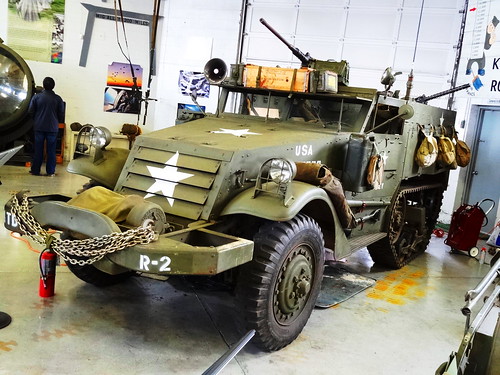
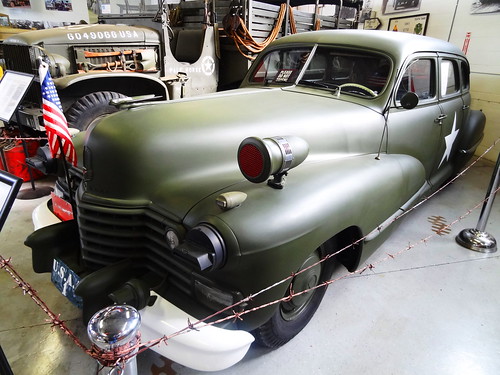
A large tent looks as though it’s set up for a strategy session, a projector faces a screen, a typewriter waits to write a message, an army green bicycle rests nearby. Mannequins are dressed in uniform; a paratrooper hangs from the ceiling, oversize military vehicles are at rest, engines are on display as well as a massive 1942 Sperry searchlight. We check out the 1942 Cadillac limo that transported General Dwight D Eisenhower, the 1941 M2 Halftrack and the 1953 Dodge M37 . Vehicles are not roped off, a young boy eagerly climbs up into the Jeep. Both the Chrysler Corp. tank arsenal in Warren and the Willow Run Bomber Plant in Ypsilanti were built specifically to increase production; here men and women assembled planes, tanks, Jeeps, trucks and weaponry. It really is a reminder of what a powerhouse of manufacturing this area used to be.

wwii 133 (1)

wwii 122 (1)

wwii 140 (1)

Be proud of our state, without Michigan’s Arsenal of Democracy many of us would likely not be here today reading this, and be thankful for all of those that have and continue to serve our country, land of the free because of the brave…

GROSSE POINTE: Dinner And A Movie…

23 Feb

gpwm 008 (1)

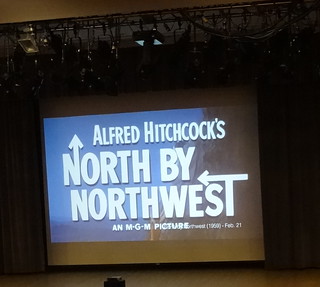
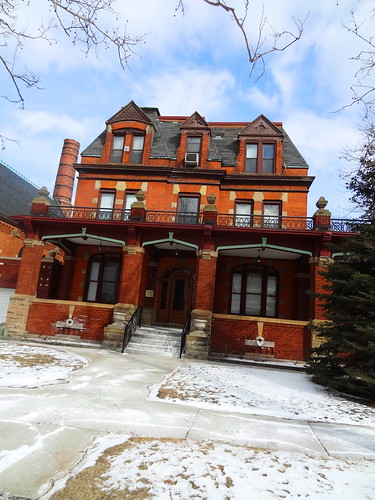
I love movies. While today’s modern theaters offer perks like reclining seats, cup holders and surround sound, I still prefer watching films in old theaters and unique venues. This evening we are at the Grosse Pointe War Memorial for their Movies on Sunday series, tonight they are showing Alfred Hitchcock’s North By Northwest. First lets talk a little bit about the venue. The Russell A Alger Jr house, also known as The Moorings was built as the family home in 1910. The Italian Renaissance beauty perched above Lake St. Clair was donated to the community in 1949 to serve as a perpetual memorial to the 3,500 Grosse Pointers who served and the 126 who died in WWII. It is also used as a center for educational and charitable activities of the community. Oh and it’s an incredible location for a wedding or party. 

gpwm 019 (1)

gpwm 026 (1)gpwm 054 (1)

gpwm 027 (1)

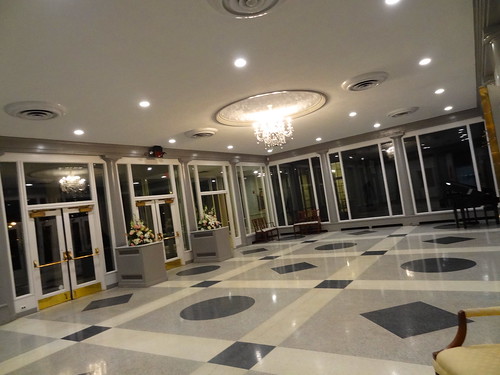
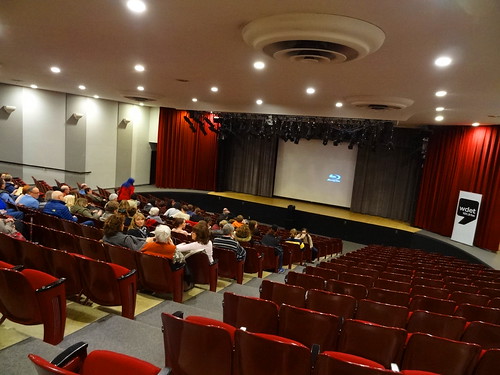
The addition of the Fries Auditorium and Crystal Ballroom came along in 1962, the ballroom is stunning! From the parking lot we take the portico past the formal garden to the Crystal Ballroom entrance; the large space decorated in grey and silver feels opulent with dazzling crystal chandeliers, highly polished floor, statues and a shiny black baby grand piano. The main ballroom has floor to ceiling windows trimmed in white, Lake St. Clair provides a fantastic backdrop, the parquet floor is perfect for dancing. A stairway leads us down to Fries Auditorium where they are getting ready to start the movie, popcorn scents the air. Patrons are grabbing snacks and beverages before the lights dim, when everyone is seated Travis Wright from WDET’s Culture City introduces the film; there will be a talk-back after the film for anybody who’s interested.

gpwm 028 (1)gpwm 035 (1)

gpwm 029 (1)

We sit in darkness as Hitchcock himself appears on the screen, a North By Northwest poster hangs prominently on the wall behind him; the music has the usual intensity of his films; Cary Grant, Eva Marie Saint and James Mason star. The film begins, Hitchcock makes his candid appearance and we’re off on a wild adventure of kidnapping, mystery, romance and chases. The most famous scenes, the crop dusting and the chase on Mount Rushmore, are just as intense today as they were in 1959. 136 minutes later the lights come back up, time for dinner.

gpwm 037 (1)

gpwm 039 (2)

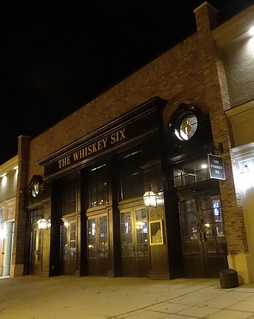
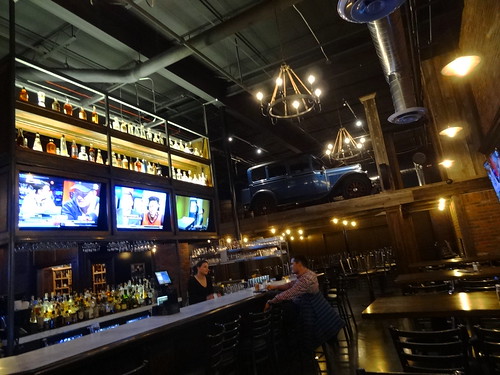
The Whiskey Six on St. Clair Street in The Village of Grosse Pointe opened last December to much fanfare. The restaurant/bar serves Michigan-made beer and spirits, fine whiskey’s and a full menu of food from appetizers and sandwiches to entrees—and they’re open till midnight on Sunday! The decor is what I would call rustic industrial; the large space is open floor to black ceiling, leaving ducting and wiring exposed. The centerpiece, of course, is the 1928 Studebaker parked on a platform above the bar–it’s sorta the bar’s namesake. Here’s a little bit of the history printed on the drink menu: “It is estimated that 75% of all of the alcohol imported into the US between 1920 and 1933 came through Detroit, mostly by boat. When the lake and river froze, the ‘importers’ turned to mostly six-cylinder Buicks and Studebakers to make the dangerous trek across the frozen or partially frozen river and lake. These vehicles came to be called ‘Whiskey Sixes’.”

gpwm 081 (1)

gpwm 072 (1)

gpwm 067 (1)

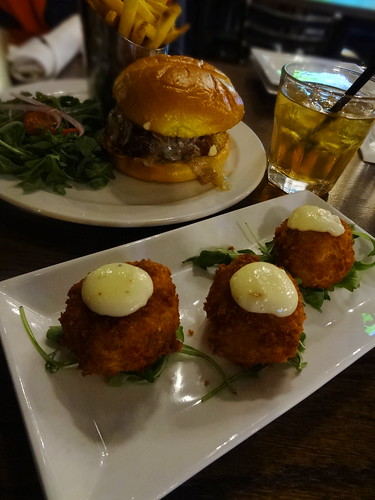
The drink menu is huge, I mean pages and pages of whiskey, gin, vodka, rum cordials and cocktails. While Kris studies his whiskey options I check out the food choices. We place our order, we are one of the few tables at this time of night, our window-side table overlooks the now vacant village. First to arrive is the Blanton’s Kris was happy to find on the list of whiskey. Shortly thereafter the crispy rice balls made with Fontina cheese, mushrooms, red pepper and asparagus topped with a dollop of lemon-lime aioli (think  Italian arancini) arrive along with the Prohibition Burger. The burger made with certified Piedmontese beef, cooked to a perfectly pink medium, is topped with creamy blue cheese, caramelized onion and black pepper mayo, it’s delicious. This is the perfect place to stop and grab a late dinner after the Sunday Movie. There’s always something going on in Detroit and the Metro; what a great way to end the weekend!


DETROIT: Historic Sainte Anne’s

16 Feb

st anne 096 (1)

July 24, 1701, Antoine de la Mothe Cadillac arrives on the banks of the Detroit River establishing Fort Pontchartrain du Detroit, a French settlement in ‘New France’ which later would become Detroit. Two days later the Sainte Anne de Detroit Catholic Parish was established; on July 26, 1701 the Feast of Sainte Anne was celebrated in a modest thatched log structure that sat near the present intersection of Griswold and W Jefferson, this was the first of 8 subsequent buildings that would house the parish of Sainte Anne. Think of it, in 1701 Detroit was part of the French colony, in 1763 Detroit passed from French to British rule, after the Revolutionary War the territory came under United States rule. Ste Anne is the second oldest continuously operating Roman Catholic Parish in the country, it was the only church in Detroit for more than a century, it has continuous records going back to 1704 (earlier records were destroyed by fire), it has borne witness to Detroit’s entire existence, I find that incredible!

st anne 001 (2)

st anne 045 (1)

st anne 014 (1)

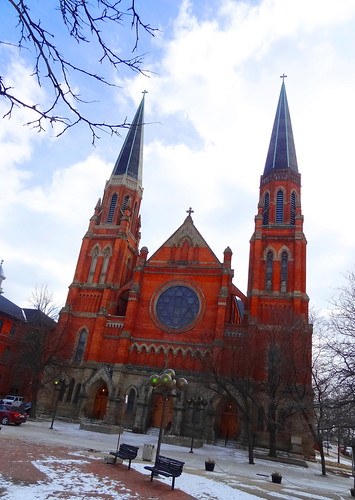
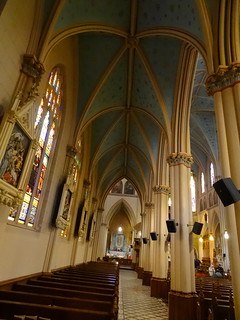
It’s Sunday and Mass is about to begin, we park across the street from the church, the wind is strong, the temperature in the teens and yet we stand in the brick-paved plaza staring at this beautiful orange-brick Gothic Revival structure built in 1886. Twin-spired octagonal towers soar to the sky, large crosses are mounted to the peaks, a large Rose window takes up much of the lower facade, a limestone first-story is decorated with gargoyles above the main entry doors. Architectural details such as flying buttresses, pointed arches, slate roof, stained glass and steep pitches flatter the structure. The 5-building complex is made up of the church, rectory, school, social hall and convent. Inside, we pause in the vestibule to take in the sight of the stunning interior as a whole, cream-colored walls rise 85 feet to a pale blue ceiling decorated with gold-leaf stars. A Gothic arcade is supported by decorative iron columns, this separates the nave and side aisles.

st anne 012 (1)st anne 029 (1)

st anne 034 (1)

st anne 060 (1)

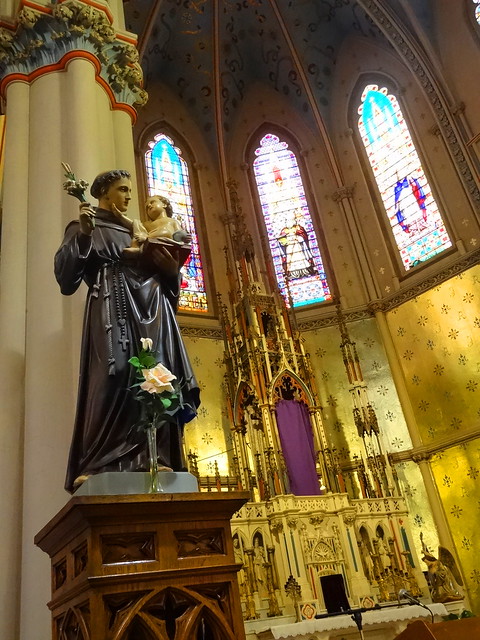
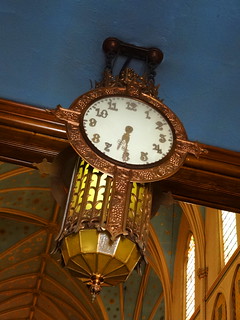
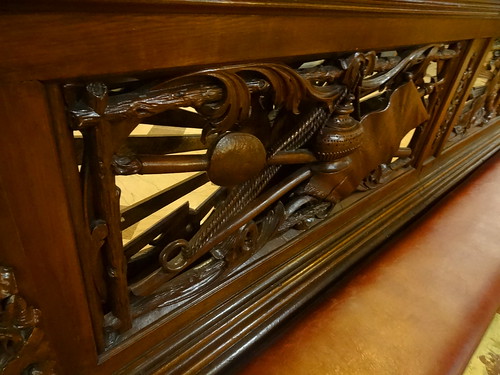
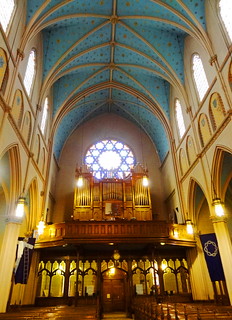
Oak pews embellished with pinnacles at each end cap hold worshipers, stained glass windows are aglow in red, blue, pink, purple and lime green, I don’t think I’ve seen such a wide variety of colors before–Ste Anne’s has the oldest stained glass in the city of Detroit. A 26 rank pipe organ rests in a loft at the back of the church, the large Rose window above is gorgeous. The beautiful, unusual clock that hangs near the vestibule doors was a gift, wrought iron and opaque glass chandeliers hang evenly spaced from long chains. The centerpiece of it all is the apse, here stained glass surrounds the upper portion while metallic gold paint covers the lower, in the center sits the magnificent altar piece with its statues, carvings, spires, pinnacles and more flying buttresses. The wood altar where Fr. Gabriel Richard celebrated mass, communion rail carved by Julius Melcher in 1851, statue of Ste Anne and church bell all came from the previous church. Several small altars fill corners and long walls, they are exquisite.

st anne 038 (1)st anne 051 (1)

st anne 020 (1)

st anne 044 (1)st anne 070 (1)

Buried below the steps of the main altar is the tomb of Father Gabriel Richard, a prominent figure in the history of both Detroit and Ste Anne. Born in France, Fr. Richard made many contributions to Detroit; he founded churches, schools, he co-founded U of M, he helped initiate a road-building project that connected Detroit and Chicago. He brought the first printing press to Detroit and started The Observer, Michigan territory’s first newspaper, he was the first priest to serve in congress. He imported spinning wheels and looms so women could learn a trade. Fr. Richard died of cholera in 1932  leaving behind a rich legacy. The church has changed as the city has changed, the once french-speaking parish came to serve Irish-Americans then Hispanics as immigrants from Mexico and Puerto Rico moved into the neighborhood. The last sermon in French was given in 1942, the first Spanish sermon was given in 1940, the Spanish tradition continues today. At the end of Mass announcements are made of a bake sale and dance performance at a luncheon taking place today.

st anne 099 (1)

st anne 086 (1)

st anne 088 (1)

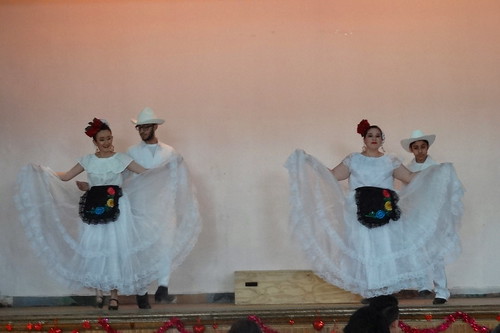
We head over to the social hall, Hispanic music plays in the background, long tables offer a buffet of Mexican dishes for only $5. We sit at a large round table near the back, the room is large, thin columns offer the only decoration to the space. A deep red curtain hangs above the stage, visitors await the performance. When the curtain opens 2 couples wearing traditional Mexican dress begin their dance; the men are all in white, the ladies wear a colorful sash. As they move the ladies twirl a lacy skirt overlay, the dance is lovely. A solo number is next, a man dances upon a wooden box, his steps strong and loud, the room is still as we all watch and listen. The troupe continues performing time-honored dances. Such an unexpected pleasure to watch.

st anne 125 (1)

st anne 107 (1)

st anne 111 (1)

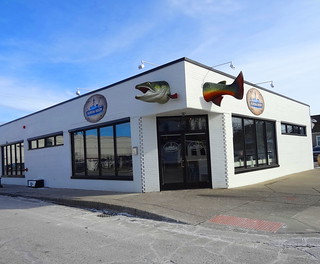
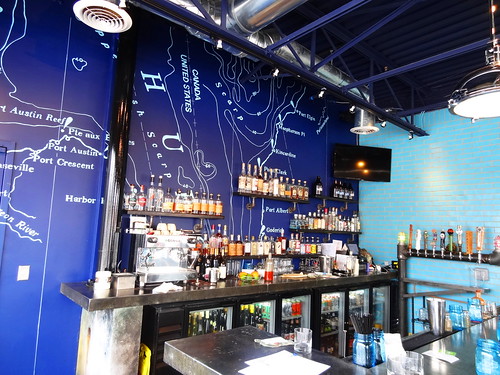
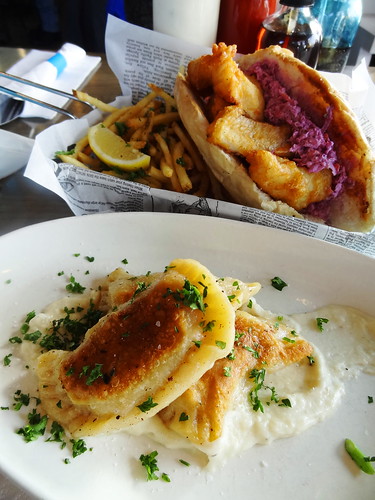
We’re having lunch in Mexicantown at the Huron Room, a fish-centric restaurant among the many Mexican restaurants on Bagley. The single-story white brick building is also home to Our/Detroit, a vodka distillery and tasting room. The restaurant is easy to spot, the head and tail of a big fish stick out from the top corner of the space. Inside it’s all about Lake Huron, the owners fondness of the great lake is apparent; the deep blue wall behind the bar is a map of the lake complete with city names, on the back wall a painting of the lightship Huron consumes the wall. Light blue glazed brick, a neon fish and fishing line put us in a lake state-of-mind. Though Great Lakes fish is the main attraction here, there are choices for every kind of diner. We are having the fish sandwich, we choose the beer-battered walleye, served on bolillo bread and topped with the house slaw it’s quite a mouthful. The sandwich is served with the same skinny fries they serve at Green Dot Stables (same owners), I douse them with the spritz bottle of malt vinegar that sits on each table. The walleye is delicious, light, and crispy–don’t forget to add the house made tartar sauce. We also ordered the U.P. pierogi, three little dumplings stuffed with up-north beef pasty filling, served with a sour cream gravy, I could eat about 6 of these! The price point is on the high side, but the food is fresh and delicious.


Cincinnati: See Ya’ Later !

3 Feb

cinci-rama! 813 (1)

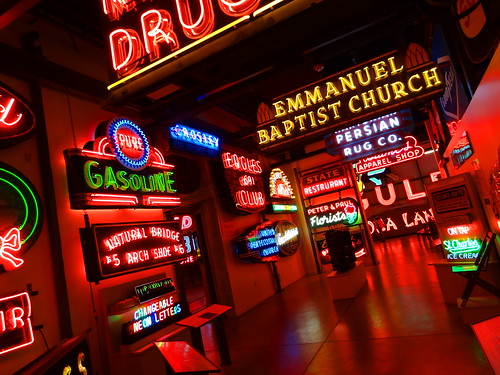
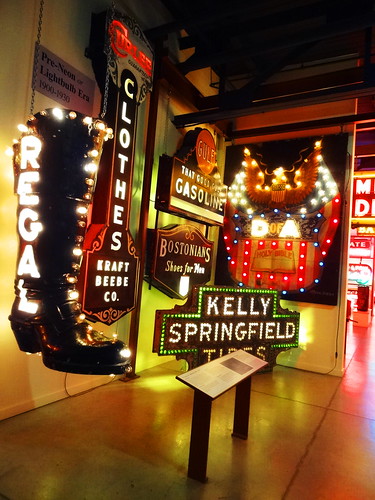
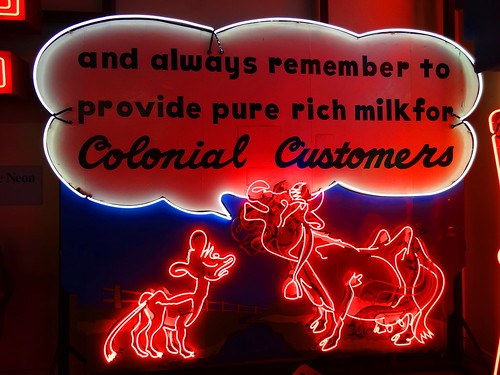
It’s our last day in Cincinnati, we’re in the Camp Washington neighborhood to check out the American Sign Museum. Tod Swormstedt, former editor and publisher of Signs of the Times magazine has taken his passion for signs and opened a museum in a former parachute factory with 19,000 sq. ft. of exhibit space. Historic signs, books, photos and documents reflecting the art, craft and history of sign-making hang from the ceiling, rest on the floor, fill walls, shelves and display cases. From the days of pictures drawn on cave entrances to colorful signs hanging from shops to the gas-lit illuminated signs of the late 1800’s on to the electrical signs of the early 1900’s, neon and finally plastics, signs have always been a part of the landscape. Signs tell us our location and how to get somewhere, the nature of a building, what brand we should buy, where we should eat, shop, play, stay. The museum highlights the sign industry from the days of goldleaf glass signs through the heyday of neon to the plastic era of the 1950’s.

cinci-rama! 730 (1)

cinci-rama! 754 (1)cinci-rama! 771 (1)

cinci-rama! 760 (1)

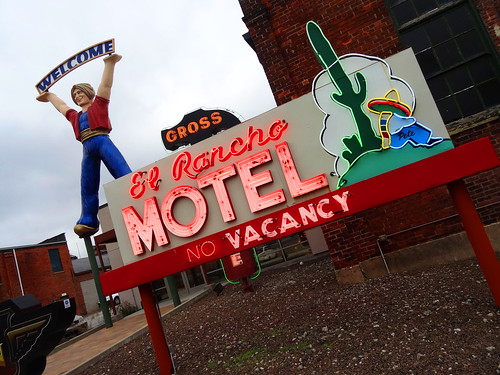
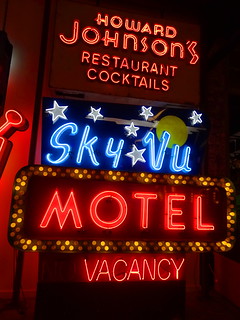
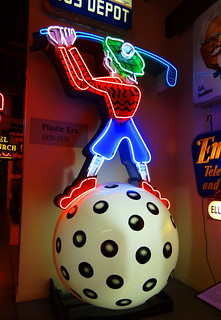
Driving down Monmouth vintage signs catch our eye; this must be the place. Parking in the lot, signs surround us, the familiar Holiday Inn with its signature green lettering, a giant hammer from a hardware store, a 20′ bowling pin. At first glance it appears a man on a ladder is in the process of painting the exterior brick wall, a closer look reveals it’s a mural depicting the old-fashioned process of painting signs on the side of a building–this one is amazing! The neon El Rancho motel sign is great, with all of this in the parking lot, I can hardly wait to see what’s inside. Crossing the threshold under the gigantic genie, inside we pay our admission then walk as directed toward the giant yellow arrow with its flashing light bulbs. A rainbow of neon welcomes us to the first gallery; a 50’s style sputnik with light bulb letters twirls, large-scale neon signs, illuminated plastic signs and art deco-style pieces compete for our attention. Neon signs in original crates, pop-culture classics such as Gulf, Shell, Greyhound and Col. Sanders fill the room. Ice cream cones, a swinging golfer on a golf ball, and a motel signs are fantastic to look at.

cinci-rama! 818 (1)

cinci-rama! 739 (1)cinci-rama! 737 (1)

cinci-rama! 841 (1)

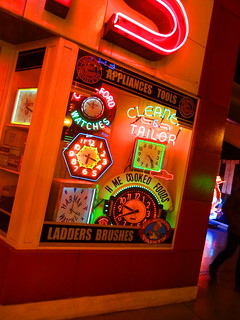
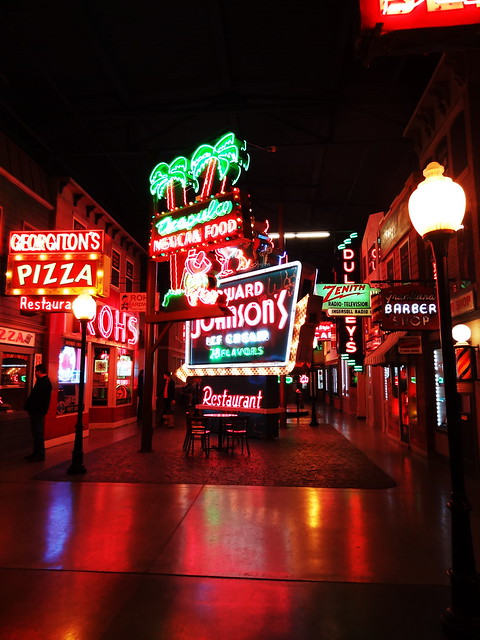
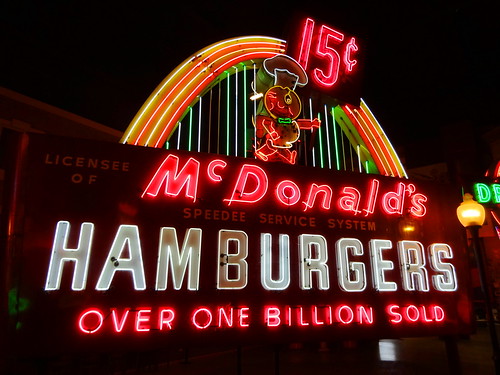
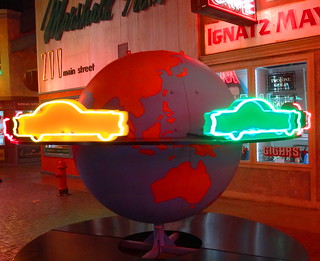
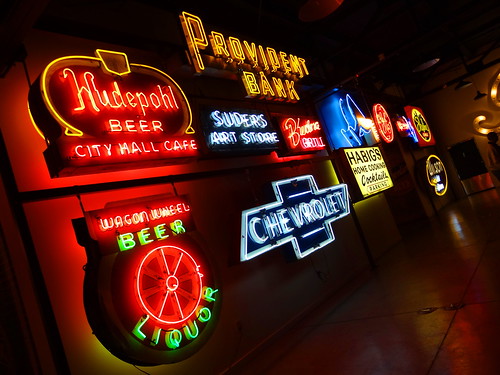
Main Street is lined with pavers, shops on both sides of the street are home to every variety of sign from hand-painted to an authentic Mc Donalds sign featuring Mr. Speedee; the original blueprint sits nearby. Taverns, motels, banks, bars and restaurants are all represented. Shop windows hold displays of the art of sign-painting; brushes, paint and alphabet samples even books teaching the skill. There are glass doors with hand-painted letters and numbers reminding me of the Fisher Building in Detroit, make your own sign kits with decals, neon art deco clocks, enameled metal signs for Goodyear. Hand-lettered showcards from Las Vegas featuring Frank Sinatra and Charo remind us that signs serve many purposes from commerce to culture. We walk up and down Main Street reveling in the colors, kitsch and memories. Cars outlined in neon circle a globe, Howard Johnson’s offers us ice cream in 28 flavors, the Acapulco sign with dual palm trees is fabulous!

cinci-rama! 782 (1)

cinci-rama! 794 (1)

cinci-rama! 837 (1)

cinci-rama! 756 (1)

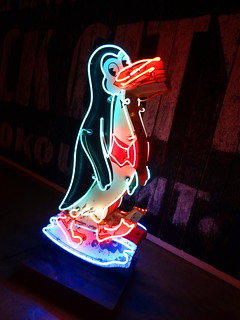
Huge signs take up space in the back section; the side of a barn is mounted on the wall, Chew Mail Pouch Tobacco is the message painted in block letters. SEE BEAUTIFUL ROCK CITY atop LOOKOUT MT reads another. Our favorite is the Habig’s sign with the tipping champagne glass, stand close and you can hear the mechanics of the light bulbs flashing off and on, so cool! A working neon shop, Neonworks has their own section where they create and repair neon signs, sometimes you can even watch them work. We finish up our visit, stopping to read placards along the way, the histories and timelines are fascinating. The museum is absolutely delightful, so glad we came.

cinci-rama! 884 (1)cinci-rama! 885 (1)

cinci-rama! 871 (1)

cinci-rama! 865 (1)

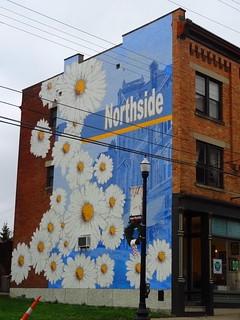
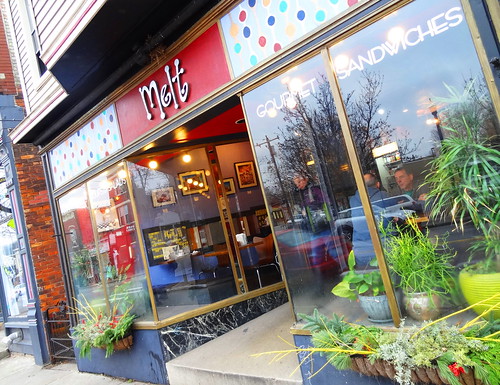
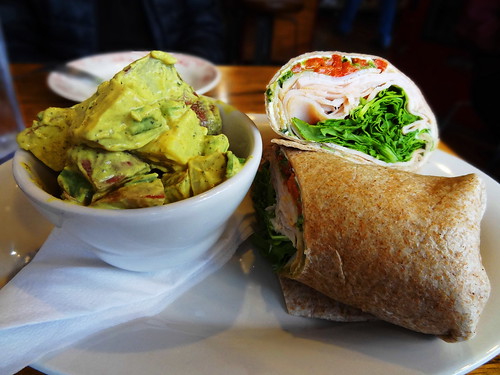
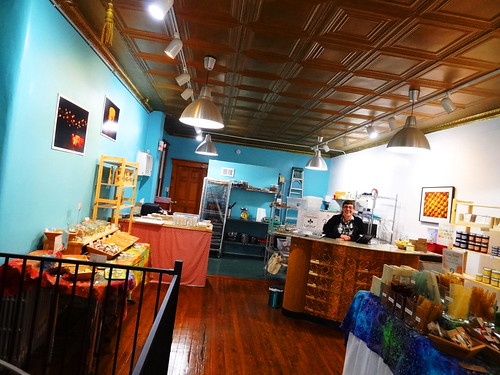
We’re having lunch on Hamilton Ave in the Northside neighborhood, Melt Eclectic Cafe offers healthy gourmet sandwiches, fresh salads and soups. We order at the counter then sit in the front window section to wait for our food. Our East Village wrap arrives; rosemary goat cheese, pesto, roasted red peppers, smoked turkey and arugula wrapped up tight and a side of curried potato salad–both are delicious. After lunch we stroll down the street, except for one new development Northside looks much the same as it always has; local entrepreneurs fill street level shops in beautiful historic buildings, a lovely selection of housing stock is available. I love the mural with daisies covering a powder blue background. We stop in at Bee Haven which sells a variety of products including honey, beeswax candles and chocolate, we try a few samples, I grab some lip balm and we’re off. Taking our time we wander in and out of Happy Chicks Bakery, a Cluxton Alley coffee shop called Collective Espresso, Shake It Records selling new and used vinyl, CD’s and DVD’s, a vintage shop called Chicken Lays An Egg with racks and racks of funky clothing, shoes and accessories. The neighborhood is home to a diverse population; college students, the creative class, young professionals and GLBTQ all live in the historic district. 

cinci-rama! 877 (1)

cinci-rama! 891 (1)

cinci-rama! 904 (1)cinci-rama! 908 (1)

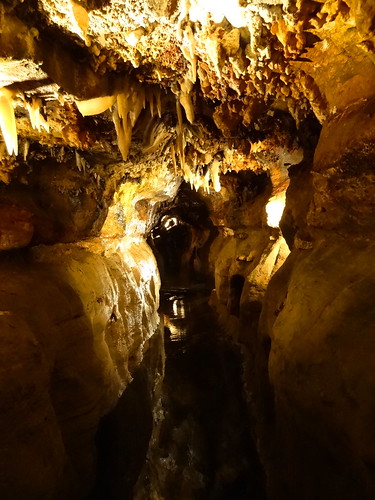
We grab a coffee at Sidewinder, hop in the Jeep and start our journey north. It has been a great few days in Cincinnati but it’s time to head home. Kris is taking the scenic route; in West Liberty OH he veers off on State Route 245, it is here you will find the largest of all the cave systems in Ohio at the Ohio Caverns. The caverns were discovered in August 1897 by farm hand Robert Noffsinger, when he informed the landowner of his discovery, William Reams explored the caverns for himself then opened the cave to the public in September 1897. After 25 years of people removing crystals, touching formations and writing their names on walls and ceilings with smoke from oil lamps, the area was destroyed. In 1922 two brothers bought the land and spent 3 1/2 years digging out mud left in the tunnels by the underground river that formed the cavern, they dug out a 1-mile route, strung light bulbs powered by a Fordson tractor on the surface and opened the business as the Ohio Caverns in 1925. Concrete floors were put in in the 1970’s and a lighting professional came in the 1980’s creating concrete sconces and less obstructive lighting. The tour still uses the 1925 route.

cinci-rama! 141 (1)

cinci-rama! 007 (1)

cinci-rama! 021 (1)

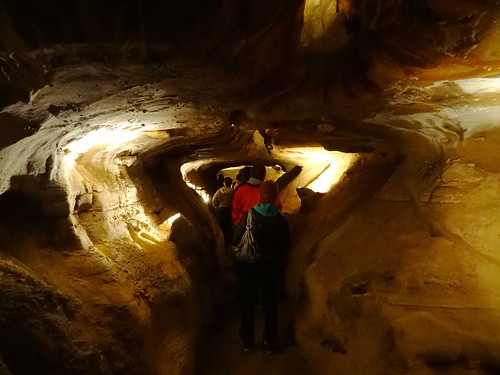
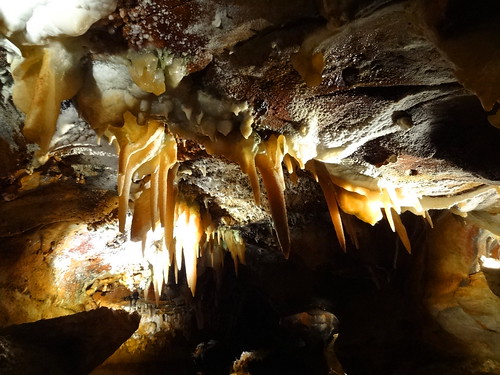
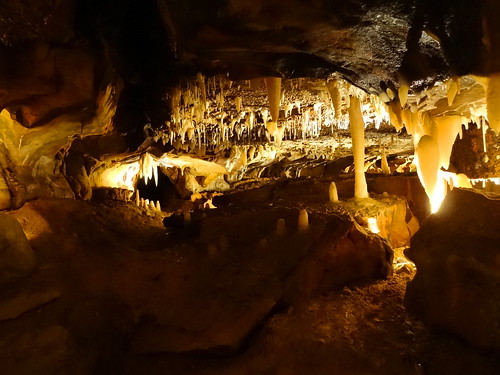
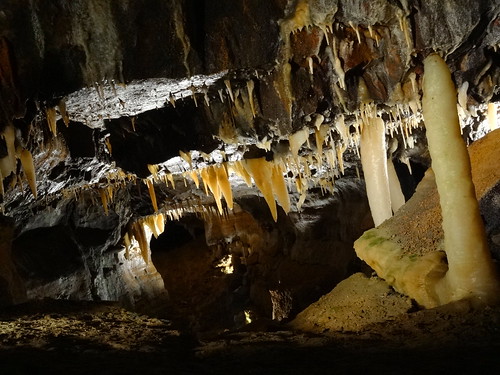
We purchase tickets in the gift shop, a tour is just about to start, good timing… We descend the concrete stairway to the cave entrance, though the pathway is narrow it does not feel constricting, water drips from the cave ceiling, it has been raining for days, shallow puddles form on the walkway. Our tour guide is friendly and informative, she shines the beam of her flashlight on significant formations as we go. Artificial light from nearby bulbs has caused moss to grow in a few areas, care is now taken to turn off lights as the group progresses through the cave. The pathway is smooth, the ceiling low, formations are everywhere. Stalactites cling to the ceiling, stalagmites sprout from the floor, soda straws hang from above. Walls vary in patterns, textures and colors. The Crystal Sea is a water retention pool that holds excess water out of the walkway, the ceiling reflects on the surface of the pool, a bevy of crystals clustered together, so pretty. The Natural Bridge holds nearly 20 crystal columns and is the original floor of the tunnel, they left the columns intact when they dug the pathway, digging under the columns, forming the natural bridge.

cinci-rama! 059 (1)

cinci-rama! 030 (1)

cinci-rama! 062 (1)

One section holds more soda straws and helictites than any other area of the cavern, they call it Fantasy Land, yep, I can see that. Our guide shines her light on a formation and asks the group what it looks like, this is Old Town Pump, it really does look like a hand pump. The formations remind me of icicles, carrots, coral. Crystal King is estimated to be over 200,000 years old and was last measured at almost 5′ long. There’s a tranquility in the cave that’s hard to describe, maybe it’s being so far underground. We stop to look at the ‘good luck’ crystal, the top now stained brown from years of being touched by visitors, a no-touch rule has now been established. We enter the Palace of the Gods, rich in color it feels lavish compared to the other areas. The variety of colors on the walls come from iron oxide and manganese dioxide, lavish surfaces of flowstone, calcite formations, columns and dual formations make this section unique. The Jewel Room is the most colorful, the color splits down the middle of the room making one side a rusty iron oxide color, the other a darker color from manganese dioxide deposits. This is the end of the tour. A recording of Beautiful Ohio starts to play, a time-honored tradition since 1928. 

cinci-rama! 095 (1)

cinci-rama! 121 (1)

cinci-rama! 139 (1)

This is the end of our tour too. We hope you have enjoyed tagging along with us on our southern Ohio adventure. See you back in Detroit!

Cincinnati: So Much To See…

27 Jan

cinci-rama! 481 (1)

We are in the Queen City, Cincinnati Ohio, she is like an old friend to us. Each time we visit we make time to get re-acquainted; we walk her streets, take in her charm and southern ways. We go back to favorite districts, restaurants and a cozy bar called the Blind Lemon, inevitably we discover something we haven’t done before. The Taft Museum of Art is a perfect example. Built on this spot in 1820 and a stone’s throw from our hotel, somehow we have never managed to check it out, today is the day we change that. Martin Baum, Cincinnati’s first millionaire built the home, Arts patron Nicholas Longworth lived here from 1829 until his death in 1863, he was responsible for some big changes, more on that later….Iron magnate David Sinton purchased the home in 1871 and lived there with his daughter Anna and her husband Charles Phelps Taft, older half-brother of William Howard Taft. The younger Taft accepted his party’s nomination for the U.S. Presidency from the portico of this house in 1908 and went on to become President. Upon Sintons death Anna became one of the wealthiest women in the country, Charles was wealthy in his own right. Through the years the couple amassed one of the most impressive private collections of fine and decorative arts in America. The Tafts signed papers bequeathing their home and collection to the people of Cincinnati. The Taft Museum opened to the public in 1932. After a major expansion and renovation the museum re-opened in 2004. Let’s take a look.

cinci-rama! 572 (1)

cinci-rama! 503 (1)cinci-rama! 537 (1)

cinci-rama! 546 (1)

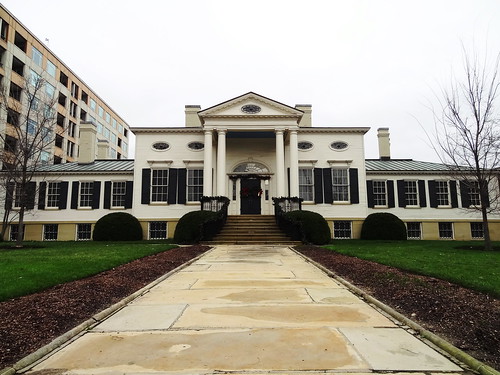
I read an article that called the home “The Other Mr. Taft’s White House”, the house is indeed white, one of the finest examples of Federal architecture in the Palladian style, today the exterior is draped in holiday garlands, wreaths and bright red bows–it really is quite lovely. We enter on the side, the new section, hang our coats and have a look around. The current exhibitions are Jacob Lawrence: Heroism In Paint and Antique Christmas; there are a lot of people checking them out today. We make our way to the hallway that leads to the historic house, here walls are covered with text and photographs featuring the history of the house and its residents. I am pleasantly surprised that the house still resembles a home, sure the family furnishings have been removed, but important American furniture remains, the museum is a combination of historic home and art museum, it’s intimate, elegant and comfortable. Rooms have been turned into galleries, soothing fern green paint covers the walls, trim is accented in white, arched doorways lead us from one area to another. There’s something special about going to a museum during the holidays, extra effort has been put forth to ‘deck the halls’ as they say. Miniature Christmas trees are enclosed in glass cases, each with its own unique-themed decorations, glass ornaments, whimsical figures. One display is filled with Christmas-themed advertisements, cards, porcelain figures, teeny trees and assorted collectibles, pretty cool!

cinci-rama! 542 (1)

cinci-rama! 547 (1)cinci-rama! 526 (1)

cinci-rama! 561 (1)

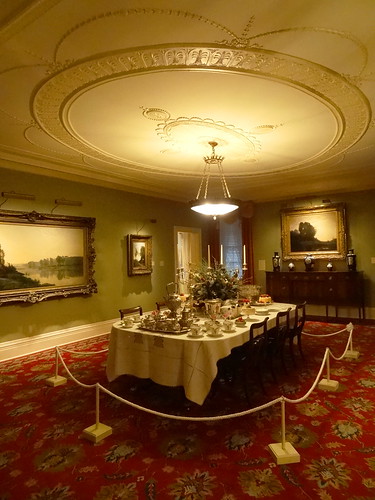
 As we wander from gallery to gallery we notice much of the home’s integrity remains; fireplaces, ceiling medallions, crystal chandeliers; the dining room’s ornate plaster ceiling is outstanding, the table is set for Christmas dinner. The music room is bright yellow, a portrait hangs above the fireplace, the room is illuminated by stunning chandeliers. Landscapes and people are surrounded by ornate frames, masterpiece-quality paintings by Rembrandt, Joshua Reynolds, John Singer Sargent and Frans Hals can be found throughout. Decorative arts include European candlesticks and boxes covered in gilt metal, an extensive enamel collection including snuff boxes, portraits, enamel and gold watches and Chinese porcelain from the Tang and Qing Dynasty. Nicholas Longworth extensively redecorated the home, in 1851 he brought Robert S Duncanson in to paint a series of 8 landscape murals, each 9′ tall and 6.5′ wide, they are absolutely gorgeous. At one time they were actually covered by wallpaper–yeah, I know, crazy! It’s possible the wallpaper actually protected the murals, they are as lovely today as when they were painted before the Civil War. Not sure what to expect when we arrived, we were pleasantly surprised and thoroughly enjoyed the experience. 

cinci-rama! 455 (1)

cinci-rama! 456 (1)cinci-rama! 483 (1)

cinci-rama! 502 (1)

The Over-The-Rhine (OTR) district is the largest collection of Italianate architecture in the country. Built in the mid-19th Century it was the heart of the German community in Cincinnati. At that time the Miami and Erie Canal divided the district from downtown, Germans affectionately referred to it as the “Rhine”, reminding them of the river back home, thus deeming the area north of downtown OTR. Eventually the canal was capped, plans to use the underground tunnel for a subway system never came to fruition; today Central Parkway takes the place of the canal. There’s a lot of walking to do in this 360 acre neighborhood, we park the Jeep in the underground lot at the recently revamped Washington Park, grab the umbrellas and go… 

cinci-rama! 462 (1)

cinci-rama! 464 (1)cinci-rama! 469 (1)

cinci-rama! 472 (1)

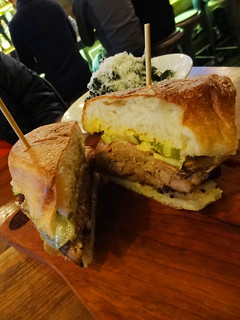
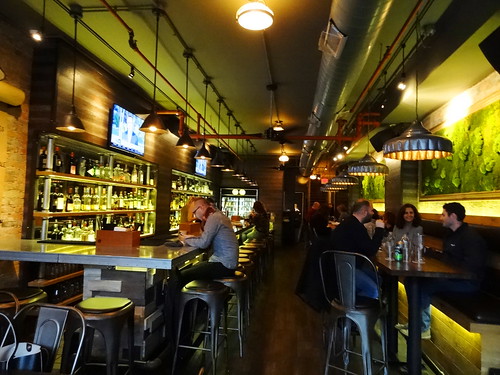
Streets are packed with beautifully ornate buildings built from 1865 through the 1880’s; Italianate, Queen Anne, Greek Revival and even a few Art Deco structures sit side by side. After years if neglect and decay, a pile of money and sweat equity is being poured into the neighborhood. Three to Five-story brick buildings are now home to restaurants, bars, boutiques, galleries; places to live, work and play. Main Street is the main thoroughfare, here you will find trendy restaurants, coffee houses and one-of-a-kind shops. Vine is also dense with new businesses, it’s on this street we find a place to have lunch. Krueger’s Tavern is housed in a single-story white terracotta building with large front windows. The interior is sort of modern-industrial, wood floor, metal tables and bar, exposed pipes, the artwork is framed Moss, yes, I did say moss–it looks good!  We are enjoying the Tuscan kale salad with Parmigiano Reggiano, breadcrumbs and a tasty lemon vinaigrette along with the Cuban sandwich. The braised pork shoulder is so tender it falls apart, topped with ham, Gruyère, homemade pickles, Dijon mustard and black bean puree stuffed inside a house made Cuban roll, absolutely delicious!

cinci-rama! 478 (1)

cinci-rama! 458 (1)

cinci-rama! 486 (1)cinci-rama! 491 (1)
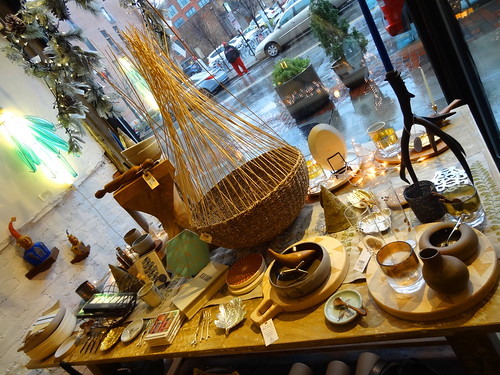
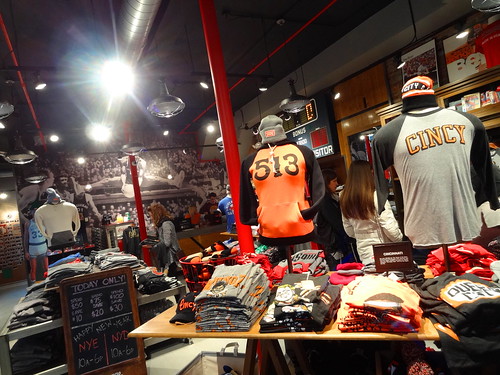
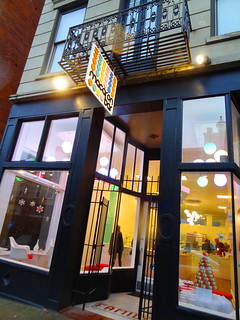
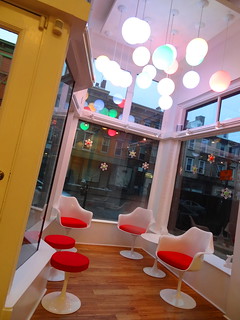
Back outside we stroll from storefront to storefront wandering in and out of shops, Homage, an Ohio-centric shop sells clothing and accessories representing Cincinnati’s professional and college sports teams, music and pop culture.Wait, does that sign say Macaron Bar? Indeed it does. An entire shop dedicated to those little French meringue delicacies…. I think we should try a few. The space is cute, white Tulip chairs with Red cushions, dangling globe lights and rows of Macarons in 12 flavors. We pick Pistachio, Blackcurrant and Salted Caramel, my favorite is the Pistachio, Kris votes for the Salted Caramel, all are yummy.

cinci-rama! 674 (1)

cinci-rama! 671 (1)

cinci-rama! 672 (1)

cinci-rama! 669 (1)

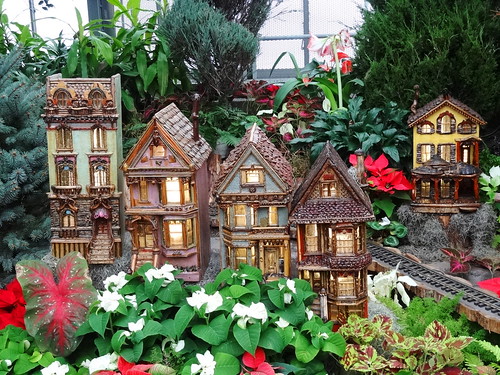
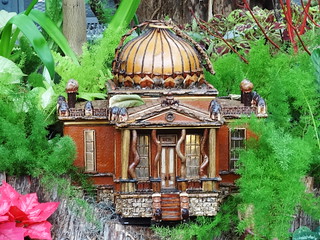
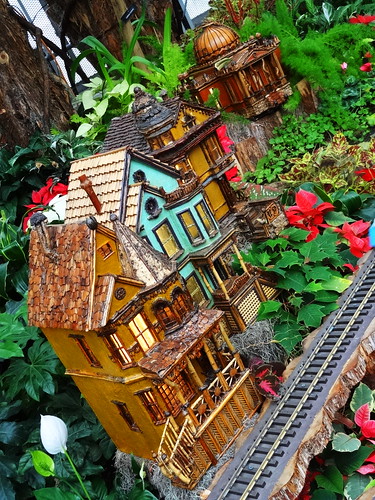
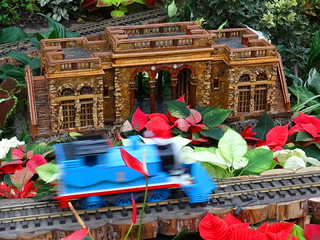
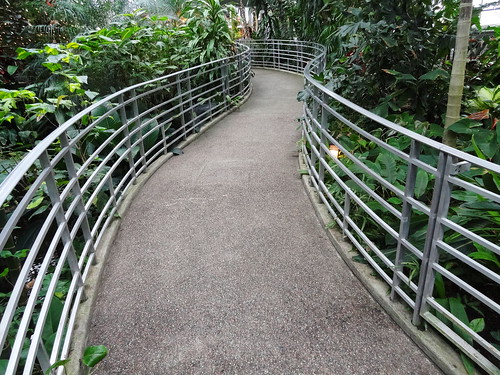
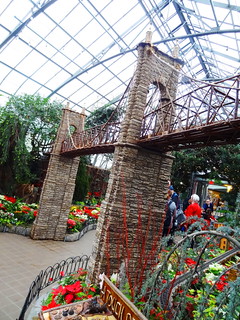
We make our way up to Mt Adams, the Krohn Conservatory at Christmas time is a sight to behold! I can tell by the number of cars parked nearby it’s crowded inside. This is the kind of place people come to with their whole family: mom, dad, grandma, the kids and they’ve been doing it for generations. Inside these glass and aluminum walls a Christmas wonderland awaits; a train runs on elevated tracks winding through a city of Poinsettia, ferns and arborvitae, crossing ponds and mingling with tropical foliage. 3-story townhouses and iconic Cincinnati buildings create a miniature version of the city, there’s even a recreation of the Roebling Bridge. The Rainforest Waterfall is quite popular for photos. Built in 1933 the building has great Art Deco details, I love the railings. The conservatory is one of our favorite places in Cincy.

cinci-rama! 700 (1)

cinci-rama! 660 (1)cinci-rama! 659 (1)

cinci-rama! 684 (1)

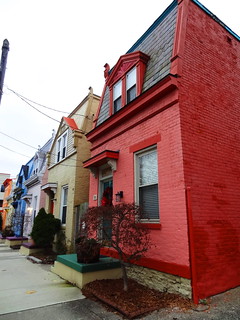
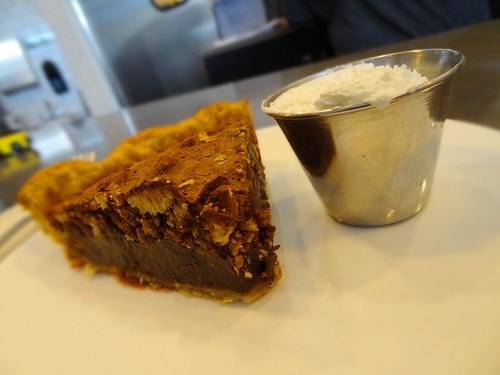
While in this neck of the woods Kris drives around to see what else is going on in the area. It looks as though new development is going on in E Walnut Hills, a diverse and historic Cincinnati neighborhood. We drive down Woodburn Ave and see a couple of Vintage/Antique shops, so we check them out. Unfortunately Leftcoast Modern is closed today, but Hi-Bred is open. It’s a great shop with a nice selection of vintage clothing, shoes, hats and accessories in addition to funky items like lamps, drinking glasses, housewares and the like. We turn left off of Woodburn Ave onto Madison Rd and there it is, a gorgeous stone building with a sign that reads O Pie O. Can’t resist. Inside, the space looks like an old-fashioned diner; white subway tiles, hanging lamps, counter seating, charming. The menu offers a selection of sweet and savory handcrafted pies, a wine list, local beers and food (the Guatemalan Empanadas look amazing). Varieties change with the season, we’re told the Honey Vinegar is the biggest seller, but it’s the Malted Chocolate Pecan that gets our attention. We sit at the counter and eat our tasty piece of pie, happy to have discovered yet another trendy, up-and-coming Cincy neighborhood.

cinci-rama! 710 (1)

cinci-rama! 717 (1)

cinci-rama! 723 (1)

cinci-rama! 720 (1)

Roadtrip: Cincinnati…ish

20 Jan

cinci-rama! 326 (1)

We arrived in Cincinnati OH late, tired and hungry. We checked into the Residence Inn Downtown, had dinner in at the Phelps Bar in our hotel, then got a good night’s sleep. This morning we’re crossing the Ohio River into Kentucky to visit the Newport Aquarium. This 100,000 sq. ft. building at Newport On The Levee rests on the banks of the Ohio River, directly across from downtown Cincinnati. The aquarium has specially designed underwater tunnels that give you an up-close look at marine life, it’s pretty impressive. We park in the structure, ride the elevator up to the deck where it’s cold and raining. A tent has been set up to shelter those of us zigzagging through the line to purchase tickets; it seems everyone had the same idea today.

cinci-rama! 152 (1)

cinci-rama! 154 (1)

cinci-rama! 176 (1)

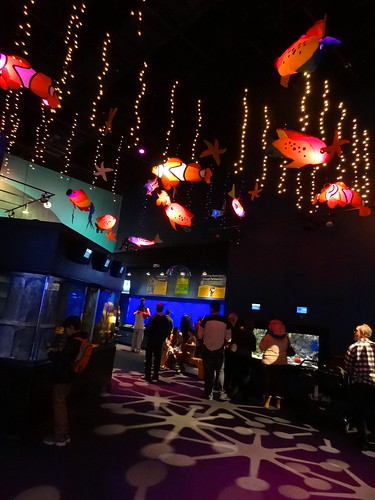
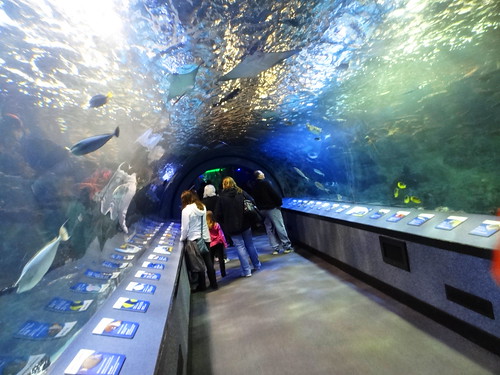
We begin at the World Rivers exhibit showing us life in 9 different rivers on 5 continents. We move from tank to tank, the fish seem to be as interested in us as we are in them. At the Shore Gallery grown-ups and children are all eager for a chance to pet a horseshoe crab, a whelk, touch a Sea star; a young woman demonstrates the two-finger method of touching. We follow the pre-determined path past tank after tank of fascinating creatures, large placards explain what’s inside the tanks, illuminated fish and starfish mingle with dangling lights overhead–in here, everybody is a kid. The Coral Reef tank is burgeoning with colorful fish, a Morey eel and Cownose Rays with 2-foot wingspans. The fish in the Dangerous and Deadly tank really do look creepy! 117,000 gallons of freshwater fill the 32-foot-long acrylic tunnel featuring fish from the Amazon.

cinci-rama! 231 (1)

cinci-rama! 213 (1)

cinci-rama! 165 (1)

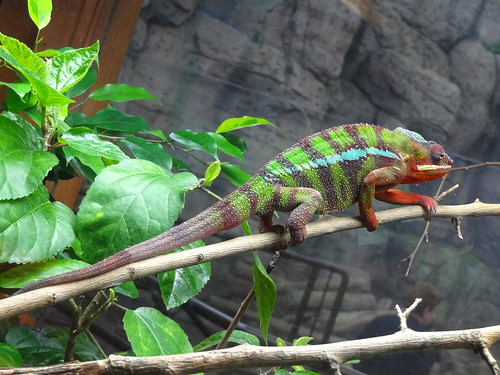
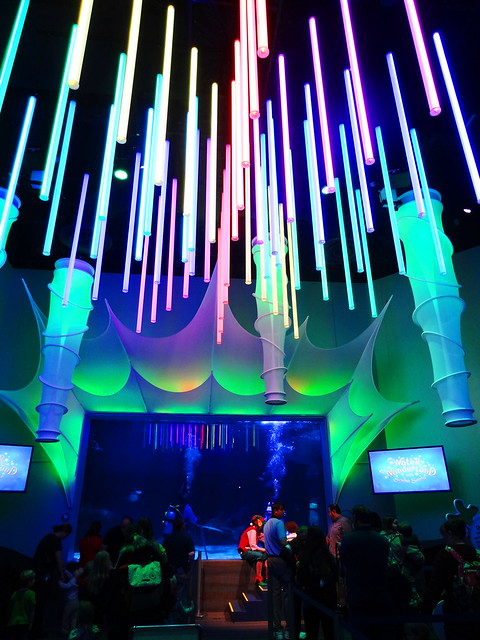
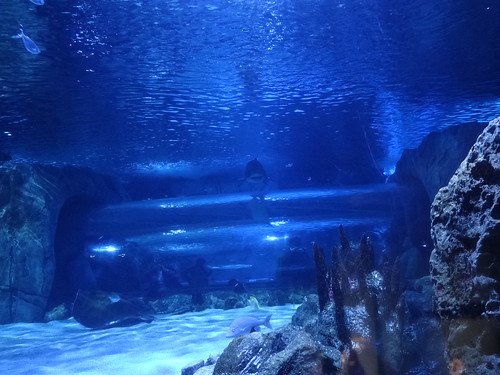
Room to room, section to section we go seeing the Frog Bog filled with exotic frogs, Gator Alley, where Snowflake and Snowball, 2 White American Alligators live–be sure and check out Mighty Mike at 14 feet, weighing 800 pounds. Snakes, lizards and a fabulous Panther Chameleon all call the aquarium home. The otters are sleeping when we show up at Canyon Falls, bummer, people of all ages are checking out the Turtle Corral, you can even touch a tortoise. Scuba Santa is putting on a show in the theater area, this is one of the largest windows to view the giant shark tank. For us the seamless acrylic tunnels are the main attraction; it’s a strange feeling to be surrounded by sharks, sting rays, and a variety of marine life. Everybody takes the same photograph, the shark swimming directly overhead, it’s fun to watch. Where the other fish and turtles seem mildly amused by our presence the sharks just give us that cold, dead stare as they glide by.

cinci-rama! 317

cinci-rama! 318 (1)

cinci-rama! 248 (1)

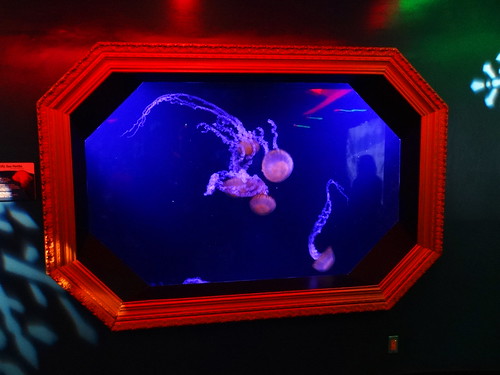
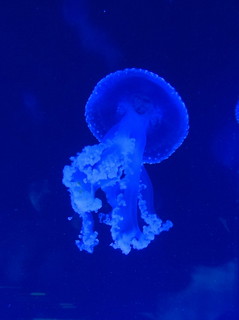
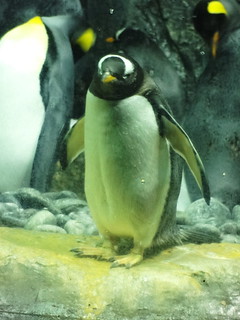
The Jellyfish Gallery is pretty cool, more than 100 jellyfish from around the world capture our attention with their unique shape, the way they move inside cleverly lit tanks.Then there’s everybody’s favorite, the penguins! Penguin Palooza is home to 5 species of cold-weather penguins, they’re so much fun to watch. Newport Aquarium now offers a walk along the top edge of the shark tank, the shark tank overlook. Here you can view 2 dozen sharks, 4 exotic shark rays, 2 sting rays, and more than 300 fish. If you are so inclined you can even cross the “shark bridge”, a 75-foot long v-shaped rope bridge strung across the tank.We try and get to the aquarium every couple of years, there’s always something new, and we’re never disappointed.

cinci-rama! 237 (2)cinci-rama! 311 (1)

cinci-rama! 312 (1)

cinci-rama! 323 (1)

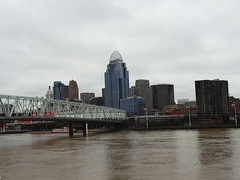
Outside the rain has let up, we make our way to the Newport On The Levee Riverwalk and take in the view. Here we overlook the mighty Ohio, after days of rain the water level is high, multiple bridges criss-cross the waterway, to the right Mt Adams rises above downtown Cincy, skyscrapers dot the skyline. Next we leave the city of Newport, cross the Licking River and arrive in Covington KY. Founded in 1815 this is the largest city in Northern KY. There are 16 historic districts; gorgeous neighborhoods include Licking-Riverside, Mainstrasse Village and Wallace Woods– the area is steeped in historic structures. St Mary’s Cathedral Basilica of the Assumption is located on Madison Ave, we’re going to tour the building, c’mon in.

cinci-rama! 337 (1)

cinci-rama! 355 (1)

cinci-rama! 399 (1)cinci-rama! 356 (1)

 First a little history. Construction on the building began in 1894 and ended in 1915. The sanctuary was designed by Detroit architect Leon Coquard, inspired by Notre Dame in Paris. Vaults, columns and walls of the nave, transept and apse were finished in 1897. January 1901 the second stage of construction concluded, funds were depleted. A plain brick wall closed the nave and plain glass windows were installed for the dedication January 27, 1901. Once more funds were raised; the facade was completed in 1908, stained glass windows were installed in 1910, the interior beautification was finished in 1915. Churches obtain the title of Basilica because of their antiquity, dignity, historical importance or significance as a center of worship; St Mary’s was elevated to the rank of Minor Basilica in 1953. There are 35 minor Basilicas in the U.S. and 4 Major Basilicas in the world–all in Rome.

cinci-rama! 381 (1)

cinci-rama! 438 (1)cinci-rama! 410 (1)

cinci-rama! 426 (1)

No description I can give will do justice to this incredibly beautiful church, in a word, it’s breathtaking. Once inside my eyes are drawn 81 feet upward, the height of the arched Gothic ceiling, it’s incredible. I take in fluted columns, organ pipes and magnificent stained glass windows–81 of them, made in Munich Germany. The grandest one fills the north transept at 67′ tall and 24′ wide.  I want to walk around but my feet seem glued to the floor; I look from side to side, top to bottom, I take in the altar, rose windows, light reflects off polished marble floors. The interior is 180′ in length, transepts extending on either side give the entire edifice the shape of a cross with the apse forming its top. Kris calls my name, bringing me back to the moment. Each of us wanders aimlessly, the lighting is tricky for photos but Kris has captured some nice ones. It’s late December, red and white Poinsettia decorate the church, a nativity is set up near the altar, miniature white lights are strung on evergreen trees.

cinci-rama! 350 (1)

cinci-rama! 432 (1)cinci-rama! 429 (1)

cinci-rama! 341 (1)

I walk the length of the nave to the Baptistry, 4 different types of Italian Marble were used in the construction of the octagonal font in 1934; the marble pattern of the center aisle was put in at the same time.  Mural paintings are the work of Covington artist Frank Duveneck and were placed on the chapel walls in 1910. There are 14 mosaic stations of Christ’s Passion and death made up of 70,000-80,000 tiny porcelain ceramic tiles with gold and mother-of-pearl highlights crafted in Venice, the detail is amazing. Chandeliers hang from long chains though most of the light is provided by the windows. We walk up and back the center and side aisles, we amble in and out of the 4 different chapels, gawk at the Appalachian Oak pulpit, the altar table with its relief sculptures of wheat and grapes, the oak cathedra (Bishop’s chair) painted in the coat of arms of the current bishop.The carved Baldachino (think of it as an architectural canopy) over the altar features 16 prominent saints, 7 patrons of preachers surround the pulpit. You are free to come and experience St. Mary’s Cathedral Basilica of the Assumption yourself, it’s open daily.

cinci-rama! 608 (1)cinci-rama! 613 (1)

cinci-rama! 597 (1)

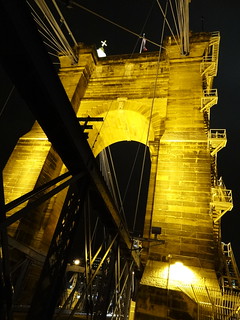
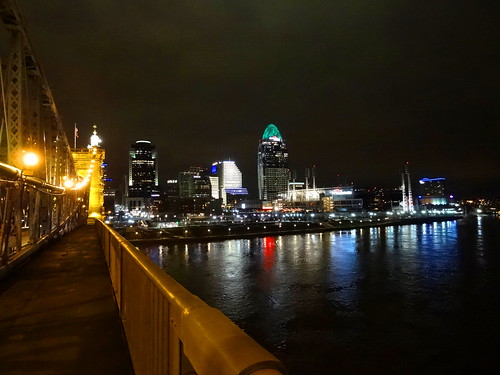
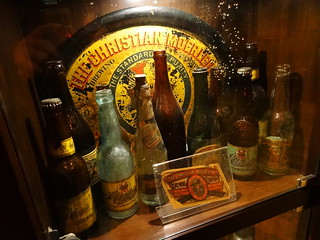
After a little rest and relaxation at the hotel Kris and I take a walk down to an area by the river called The Banks. Newly opened and located between the Great American Ballpark and Paul Brown Stadium, you will find a variety of restaurants and bars. Inspired by the beautiful evening, we walk over to the John A Roebling Suspension Bridge, this was the prototype for the Brooklyn Bridge–it looks just like it. Pedestrian friendly, we decide to walk across the bridge to Kentucky and back, stopping mid-point to take in the dazzling panoramic view. Having jump-started our appetite we decide to have dinner at Moerlein Lager House  on the riverfront. The Christian Moerlein Brewing Company started in 1853 in Cincinnati’s Over The Rhine (OTR) neighborhood. Christian was a Bavarian immigrant noted for brewing hearty European beers. His beer’s popularity extended all the way to Europe and South America. Prohibition forced the closure of the brewery. In 1981 the Moerlein brand was re-intorduced to Cincinnati, the company was bought in 2004 by beer baron Gregory Hardman. 

cinci-rama! 643 (1)

cinci-rama! 638 (1)

cinci-rama! 634 (1)

cinci-rama! 628 (1)

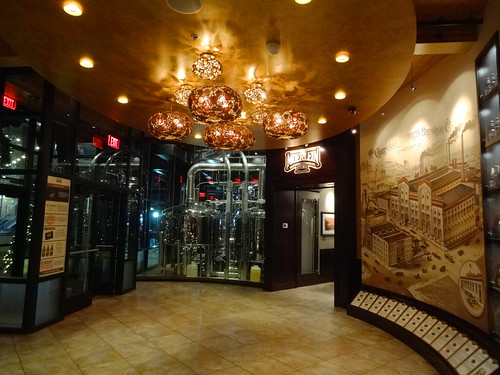
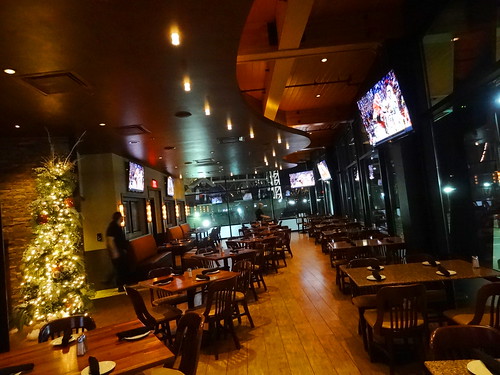
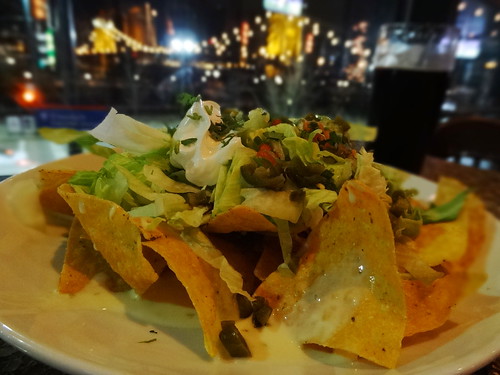
The restaurant is loaded with Moerlein artifacts from old beer cans and bottles to corkscrews, glasses and signs. The place is huge, modern, with lots of glass taking advantage of its ideal waterside location. The beer menu is endless. I order a Christian Moerlein Shiver Chai Porter, Kris chooses the Kentucky Bourbon Honey Ale, both of us are satisfied with our choices. Mine has a hint of spices–cinnamon, nutmeg, maybe clove. The BBQ Nacho plate is huge; layers of corn chips smothered in white queso, pickled jalapeno, lettuce, pico, sour cream and guacamole. Good food, good beer, good scenery and good company….. I can’t think of a nicer way to end the evening.


Dayton: Looking Back….

13 Jan

dayton 326 (1)

Somehow we manage to find a little of Detroit wherever we go. We are in Dayton Ohio at America’s Packard Museum, also known as The Citizens Motorcar Company. This is the world’s only restored Packard dealership operating as a museum and the only full-time museum dedicated exclusively to the Packard Motorcar Company, its products and philosophies. The museum is housed in an original dealership built in 1917, there are over 50 automobiles on display throughout the Art Deco showroom, service department and pavilion. Packard was an American luxury automobile, the first was built in 1899, the last in 1958. In 1903 the legendary 3,500,000 sq. ft. Packard Plant built on over 40 acres on E. Grand Boulevard in Detroit opened, designed by Albert Kahn (who else), it was considered the most modern auto manufacturing plant in the world; skilled craftsmen practiced over 80 trades in the building. Today the long abandoned plant is owned by Fernando Palazuelo, developer and CEO of Arte Express, he has big plans for revitalizing the building, check out the website for more information on The Packard Plant Project.

dayton 134 (1)

dayton 129 (1)dayton 127 (1)

dayton 208 (1)

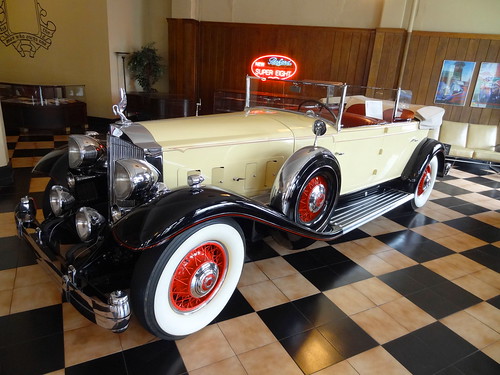
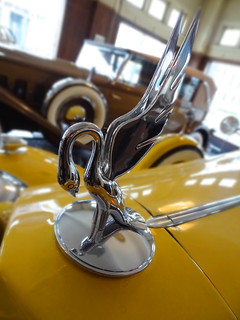
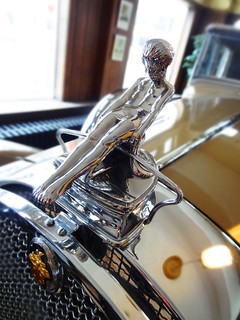
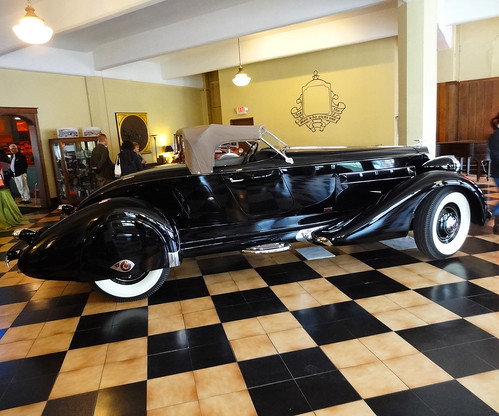
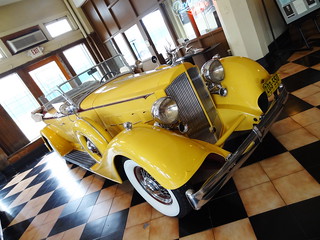
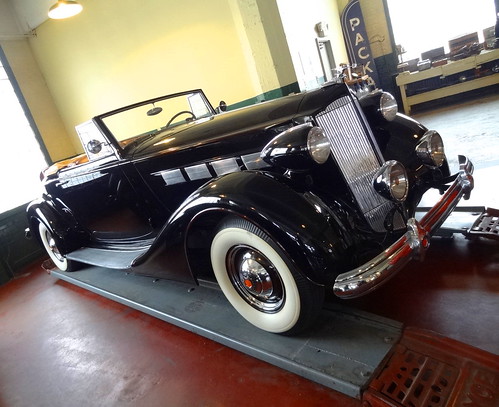
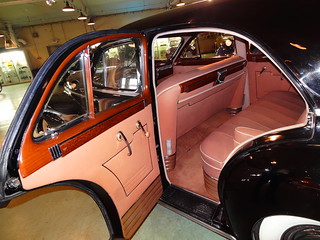
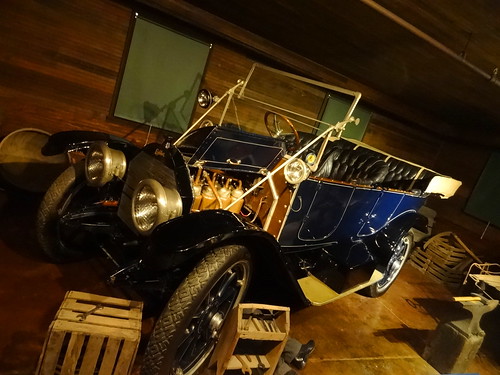
We park on the street in front of the museum building, inside the showroom we purchase tickets from a woman who then tells us a little about what we’re going to see. The cars in our immediate vicinity are magnificent! There’s a 1932 Packard Twin Six convertible with coachwork by Walter M Murphy, so elegant in cream with red accents and black running boards–this one was built for Michigan’s own Gar Wood. A black beauty with a boattail is a 1936 Fernandez Darrin Speedster, notice the single step below the door in place of running boards. It hits us that there are no ropes around the cars, you can walk right up, look in the windows, admire them up-close. There’s a gorgeous tan and chocolate-colored model by the front window and another convertible in deep yellow; each is unique and has its own hood ornament selected by the original owner. In addition to automobiles the showroom has neon signs, vintage photographs hang on walls, glass showcases contain Packard artifacts, there are still salesmen desks and customer seating.

dayton 125 (1)

dayton 138 (1)

dayton 177 (1)

dayton 151 (1)

Back in the Service area the parts counter still stands, shelves hold original Packard replacement parts. Antique diagnostic equipment, vintage pedal cars and engines share the space with additional Packards in two-tone green, burgundy, black, silver and red. There are hard-tops, convertibles, seats are leather, dashboards, grills and fenders are highly stylized.  Between 1924-1930 Packard was the top-selling luxury brand of automobiles, in 1928 the company grossed $21,889,000–wow! Packard introduced the first modern steering wheel, they were first to produce a 12 cylinder engine, they made the first passenger car with air-conditioning; their tagline was “ask the man who owns one”. At a time when a Oldsmobile Runabout cost $650, a Packard started at $2,600. At one point they had markets in 61 countries, in 1931 Japan’s royal family owned 10 Packards.

dayton 160 (1)

dayton 200 (1)

dayton 195 (1)

dayton 165 (1)

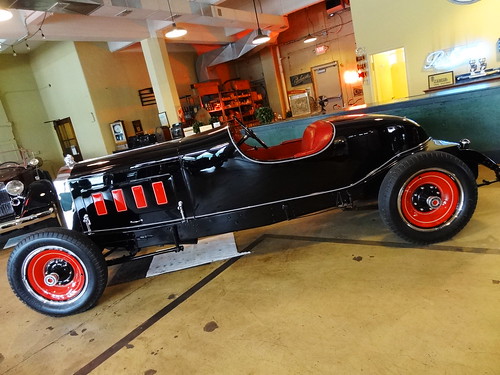
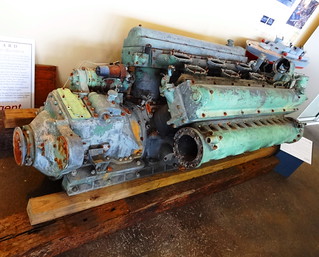
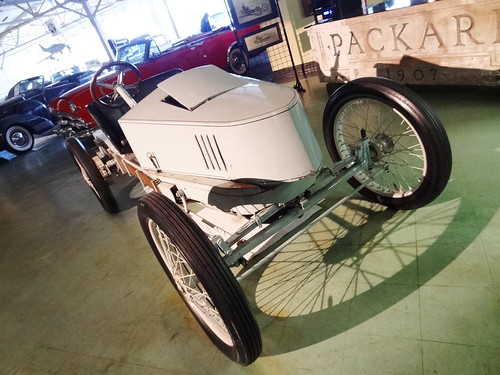
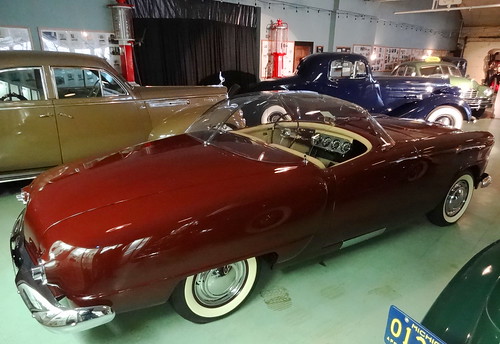
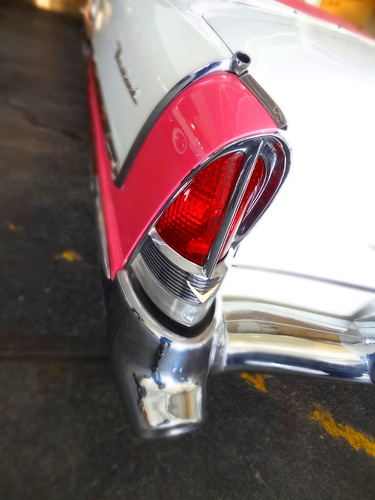
The next building holds even more cars, the Packard library, filled with manuals, catalogs and advertisements and the large stone piece that says “Packard 1907” from the plant here in Detroit. Walls are covered with photos and a historical timeline of the company. The Gray Wolf, one of the most famous cars of early racing, attracts a crowd. Engineered and driven by Charles Schmidt in 1904, at a cost of $10,000, the speedster set two land speed records at Ormond Beach FL. There are Caribbean models from the 50’s, I love the combination of white, pink and black, a Woody is packed for a roadtrip, a couple of Studebaker’s join the mix. We check out an old race car, a 1948 Henney Landau hearse, a gorgeous Art Deco model and more. There are aircraft engines, a military vehicle, an antique gas pump and scale models…so much to look at, so little time.

dayton 278 (1)

dayton 299 (1)dayton 293 (1)

dayton 314 (1)

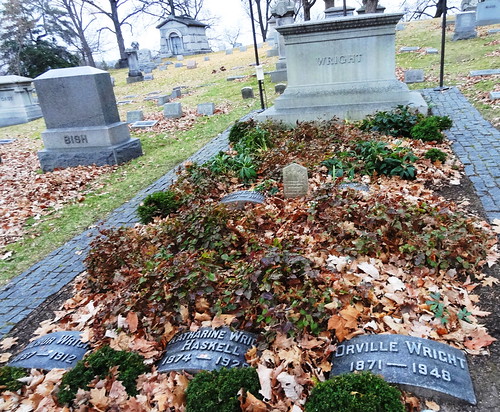
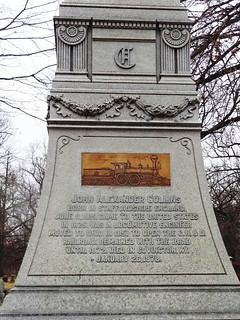
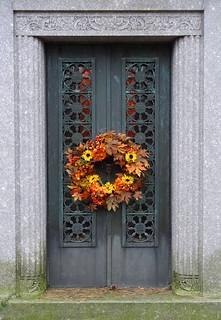
Our next stop is Woodland Cemetery, this is where Dayton’s aviation heroes, inventors and barons of business are laid to rest. Opened in 1843, this is one of the oldest ‘garden’ cemeteries in the country, it’s also recognized as one of the areas finest arboretums—many of its trees are more than a century old. There are 200 acres of rolling hills, a Romanesque gateway, chapel and office were completed in 1889. We are here to visit the graves of the Fathers of Modern Aviation, Wilbur and Orville Wright. The brothers successfully achieved the first powered, sustained and controlled airplane flight on December 17, 1903. They subsequently became successful businessmen filling contracts for airplanes in Europe and the United States. Wilbur died in 1912 at the age of 45 of typhoid fever, Orville sold the company in 1915.

dayton 331 (1)dayton 279 (1)

dayton 308 (1)

dayton 283 (1)

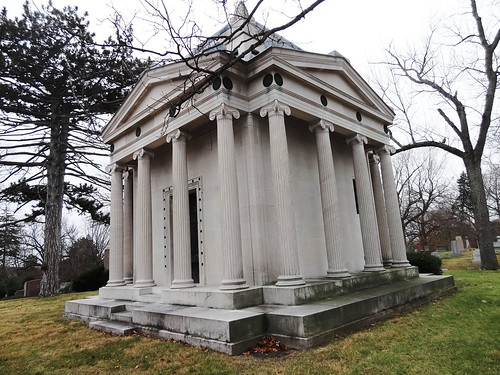
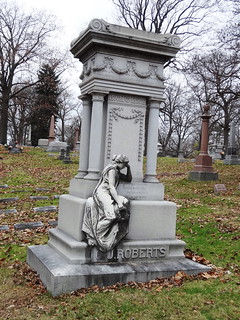
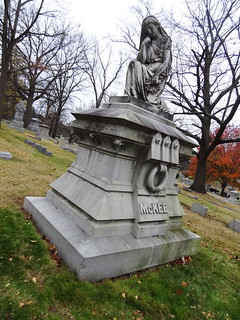
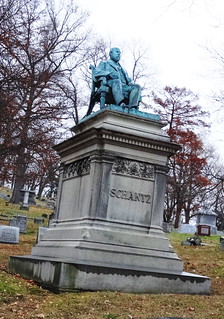
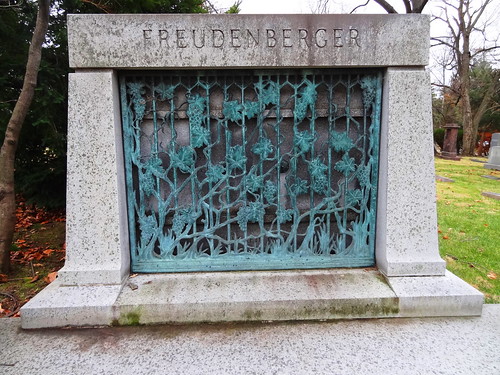
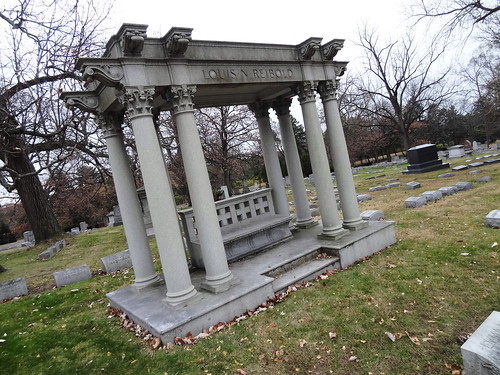
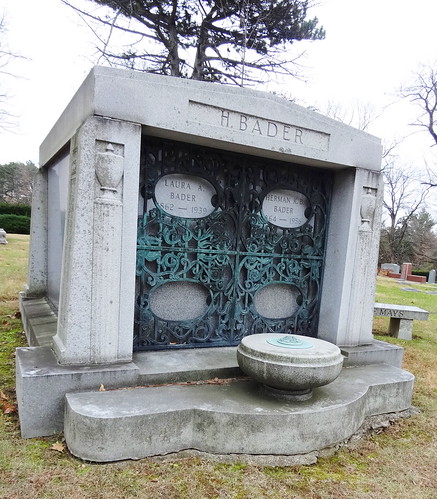
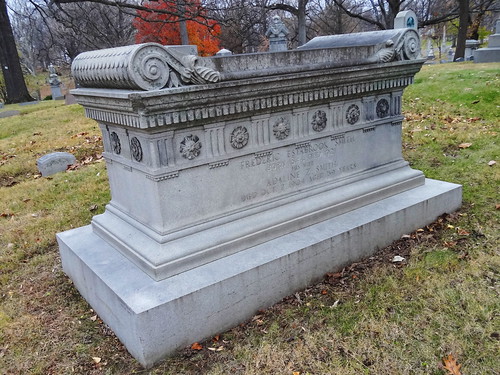
We drive down narrow lanes past beautiful monuments belonging to families named Bader, Reibold and Willoughby. We pass Greek Revival mausoleums, obelisks, rugged boulders, bronze statues of men, stone angels and Art Nouveau  gravestones. The road climbs to Lookout Point, the highest point in Dayton, we stare out over the city, Lookout Tower provides a spectacular view. At last we reach the Wright gravesite, a simple gravestone is engraved with the Wright family name. There Wilbur, Katharine and Orville rest side by side, brick pavers surround the site, a series of flagpoles is the only thing that makes this particular spot stand out from the rest. We note the same names we have seen elsewhere in the city: John Patterson of NCR, George P Huffman of Huffy Bicycles, George Mead of Mead Paper and writer Erma Bombeck. Living in Detroit and traveling through states like Ohio and Pennsylvania we see the impact the movers and shakers of the Midwest had on this country; we put the world on wheels, put men in flight, created magnificent cities from the wealth of inventors and the labor of the working man. It’s pretty amazing.

dayton 274 (1)

dayton 290 (1)

dayton 324 (1)dayton 305 (1)

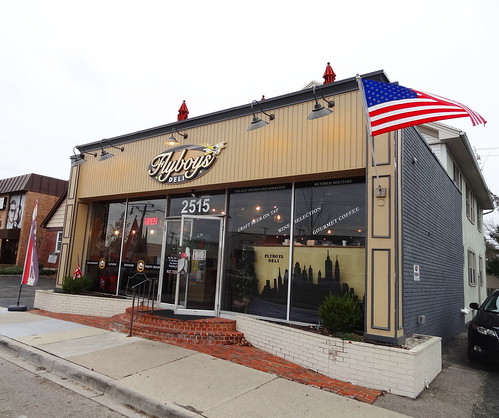
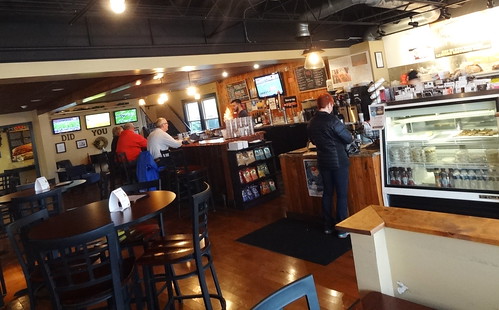
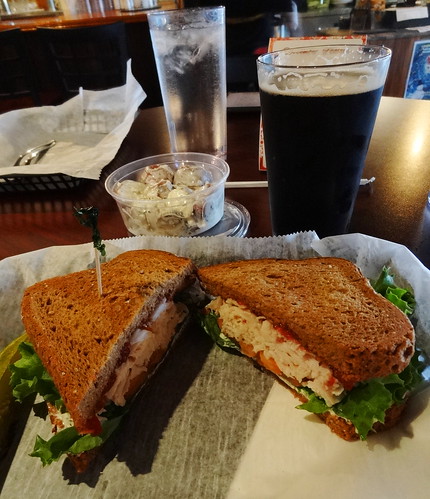
We are having lunch at Flyboys Deli in Oakwood, a residential city just south of Dayton. Worth noting: Orville Wright lived here, his stately home still stands at the corner of Harman and Park, John Patterson (NCR) also called Oakwood home. I read the menu while standing at the counter, the server at the register makes a few suggestions, making our decision easier. In addition to food the deli also serves beer, as we sit at the table and wait for our food I peruse the drink menu and settle on a Rhinegeist Panther Porter–good choice by me! Rhinegeist Brewery is located in Cincinnati. In no time our food arrives; The Wright is a roast turkey sandwich with cranberry-orange chutney, herb cheese, lettuce and tomato on multi-grain bread and a side potato salad, both are delicious. We take our time eating and relax a bit before jumping back in the Jeep……next stop Cincinnati.

dayton 273 (1)

dayton 262 (1)

dayton 268 (1)

Road Trip: Dayton

6 Jan

dayton 031 (2)

Weekends are made for adventures. Often we have only 2 or 3 days at a time to get away, making Ohio an obvious destination. In about an hour we can be looking at Masterpieces at the Toledo Museum of Art, in under 3 hours we can be walking around Westside Market in Cleveland, just over 3 hours gets us to Historic German Village in Columbus where we can roam quaint neighborhoods with brick streets and sidewalk cafes. Today we are headed to Dayton, about a 3 1/2 hour ride from the D; it’s just the first stop on our extended getaway spanning the time between Christmas and the New Year. The Jeep is loaded and ready to go, climb in and come along as we explore southern Ohio.

dayton 042 (1)

dayton 029 (1)

dayton 019 (1)

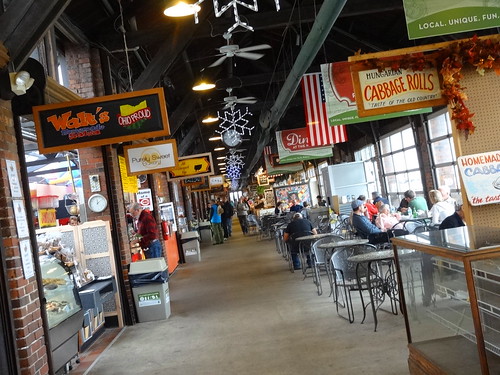
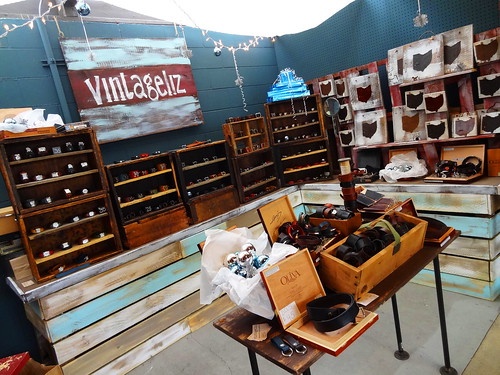
We haven’t spent much time in Dayton, we’ve visited the National Museum of the U.S. Air Force, which is pretty awesome; this time we’re hitting the streets of downtown Dayton, first stop 2nd Street Market. Who doesn’t love a market? Local vendors selling fresh produce, baked goods, wine, chocolate and handmade items line the interior of this historic block-long building. Built in 1911 for B & O Railroad the former freight house was saved from demolition and renovated in 2001, giving the market a year-round presence. Home to about 50 vendors the rustic space is quaint, holiday decorations make it festive today. We stroll the single aisle, grabbing a peanut butter cookie along the way, checking out Ohio-centric items. Artisans offer goods such as jewelry, leather pieces, Alpaca sweaters, scarves and hats, some good old-fashioned Maple syrup. Light seeps through roll-up glass doors, it must be wonderful to have them open in the summer. Cafe tables are full of diners enjoying a snack or lunch from one of the many food stalls.

dayton 018 (1)

dayton 022 (1)

dayton 014 (1)

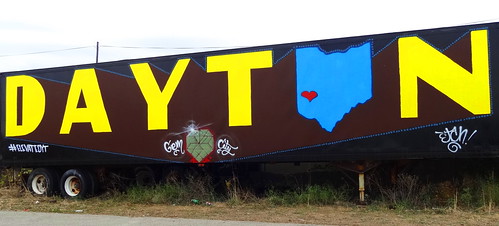
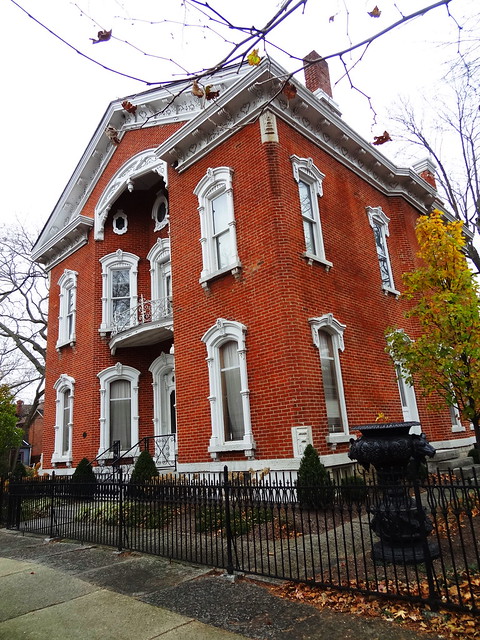
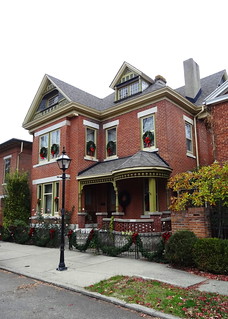
A short drive away is the Oregon District, a historic neighborhood and business district in the heart of downtown Dayton. Art displays and colorful graffiti fill the space between the market and the district. The city of Dayton is on the banks of the Great Miami River, the Miami-Erie Canal opened in 1829 bringing wealth and prosperity to the city. The 12-block Oregon Historic District is Dayton’s oldest surviving neighborhood, homes range from simple the architecture of early German settlers to the mansions of prominent citizens on Jackson Street. It has just started to drizzle, we grab our umbrellas and set out for a walk. Red brick Victorian’s and Queen Anne’s grace the streets along with Italianate, Federal and Greek Revival styles.

dayton 055 (1)dayton 063 (1)

dayton 068 (1)

dayton 050 (1)

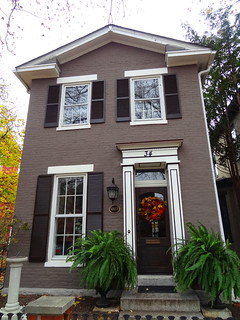
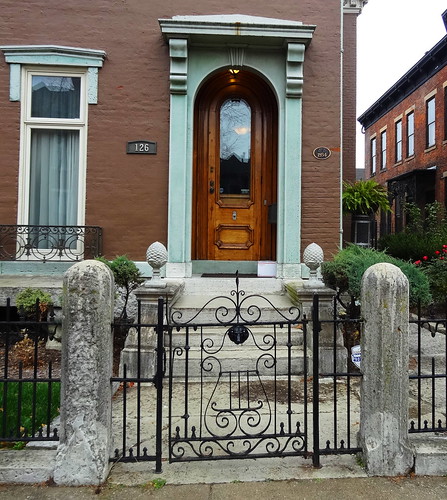
Large covered porches are common, quite lovely. Stained glass windows are surrounded by ornate window pediments, gorgeous wooden doors welcome visitors. Here it is common practice to paint the brick, giving owners a wide pallet to choose from; blue, gray, taupe and red all make an appearance. One of the most unusual was a red-brick-beauty decked out in fanciful white trim, a center section of the house is inverted, kind of like a reverse turret, haven’t seen that before.We make our way to the business district, we stop in at Press Coffee Bar to have a coffee and dry out. The space has an open airy feel to it; light wood accented with a painted tin ceiling adds character. The shop roasts and serves Wood Burl Coffee. We order at the counter, before we know it were back outside, cups in hand, meandering down 5th Street.

dayton 076 (1)dayton 052 (1)

dayton 072 (1)

dayton 084 (1)dayton 099 (1)

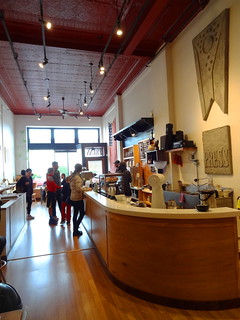
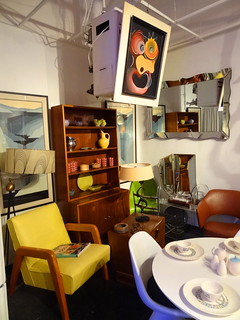
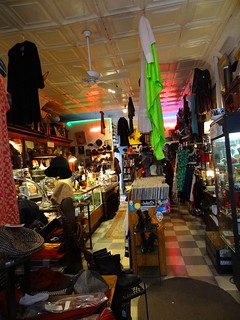
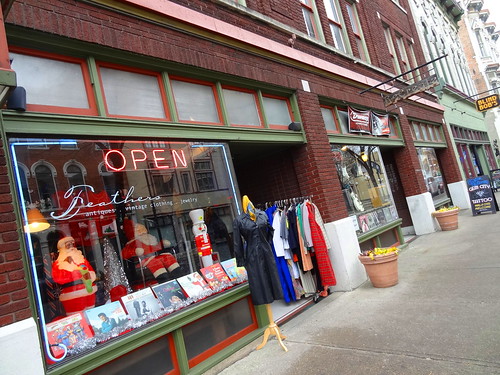
5th Street is the heart of the Oregon business district between Patterson and Wayne. Here historic architecture is brought to life with restaurants, bars, galleries and shops. The vintage glass display in the front window of Jimmy Modern draws us inside, a Tulip table and chairs set, fabulous light fixtures and Mid-Century Modern furnishings bring smiles to our faces. The shop has a wonderful array of lighting, furniture, glassware and accessories. Old-fashioned lamp posts line the street, most buildings are three-stories tall, tables and chairs are holding out for one more nice day in front of a cafe; businesses are locally owned. We traverse both sides of the street, in and out of shops, lingering the longest in vintage stores Feathers, Eclectic Essentials and Clash.

dayton 102 (1)

dayton 092 (1)dayton 112 (1)

dayton 115 (1)

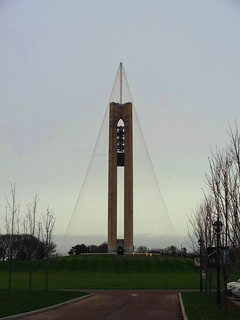
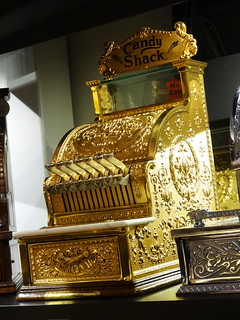
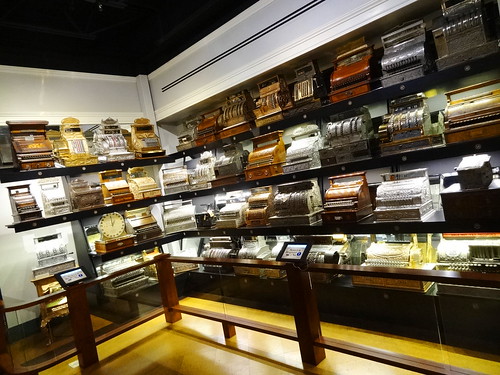
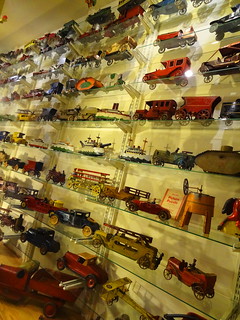
Back in the Jeep, we drive to Carillon Historical Park, a 65-acre park and museum built in 1940 containing historic buildings and exhibits telling Dayton’s history from 1796 to the present. Getting out of the car we direct our attention to the 151 foot-tall Deeds Carillon, an Art Moderne style carillon tower built in 1942. Ohio’s largest carillon it has 57 bells and from May to October you can catch a live concert every Sunday. Currently it is draped in lights for the holidays, it must be quite a sight when it gets dark. Inside the Heritage Center Museum the history of Dayton unfolds in exhibits featuring the people and manufacturers that developed the city in the early years. One of the first exhibits features old-fashioned cash registers, you know, the kind you see on all those antique and picker shows. These are amazing. Turns out John H Patterson founded the National Cash Register Company right here in Dayton Ohio, he was the maker of the first mechanical cash register. These stunning cash registers are found throughout the museum, I have to stop at each one and marvel at the different cabinet styles, the press down keys, the patterns on the brass, bronze and nickel models; fine scroll, wide scroll, fleur-de-lis and Art Nouveau, they are magnificent!

dayton 260 (1)dayton 215 (1)

dayton 210 (1)

dayton 219 (1)

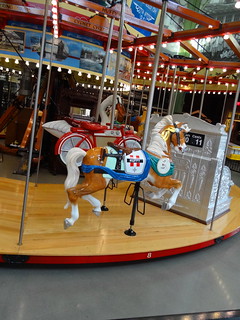
I read placard after placard trying to take it all in; I recognize names like Patterson, Deeds and Kettering from street and building names in town. Dayton has a pretty impressive resume, Huffy, Delco, Frigidaire, NCRC all called the city home. Manufacturing was huge; Kramer Brothers Foundry, Dayton Malleable Iron Co., Dayton Wright Airplane Company, General Motors Engine Plant, just to name a few….. The museum is fascinating, so well done, so enjoyable to visit. Full size displays of automobiles, appliances, toys, novelties, bicycles, even a carousel. The Ohio-made Carousel of Dayton Innovation is truly one-of-a-kind, in addition horses you can sit on a cash register-style bench, a bicycle, streetcar or locomotive, gaze at hand-painted murals depicting the Wright Brothers, all to the sound of 1930’s tunes, very cool. 

dayton 225 (1)

dayton 231 (1)

dayton 245 (1)

dayton 223 (1)dayton 258 (1)