Tag Archives: Explore

DETROIT: The Colony Club

7 Apr

colony 061 (1)

They say, “you can’t judge a book by its cover”, they’re right! There are so many beautiful building interiors in Detroit hiding behind ordinary facades. Today we are visiting The Colony Club on Park Avenue. Let me set the stage. It was the Roaring 20’s, the United States was experiencing economic prosperity never seen before; electricity, automobiles, radios and telephones were attainable by the average working man. Charles Lindbergh made his first solo, non-stop, Trans-Atlantic flight from NY to Paris, Duesenberg’s Model J was unveiled, Jazz music blossomed, movie stars and sports heroes graced magazine covers. Women joined the work force and were given the right to vote. Here in Detroit, women were keeping pace with the changing times; four women’s clubs opened within four blocks of each other providing a place for women’s functions, recreation and socializing. The Colony Club opened in 1928.
colony 065 (2)

colony 003 (1)

colony 008 (2)colony 013 (1)

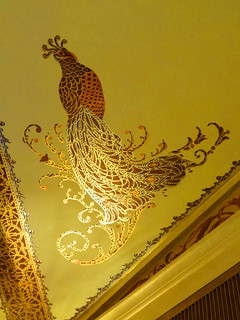
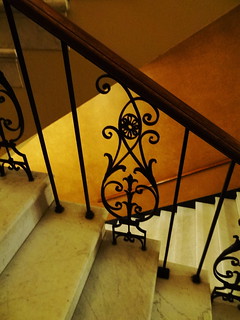
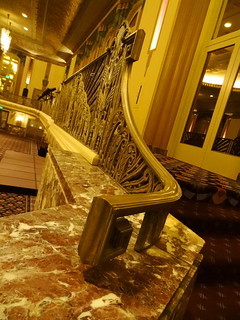
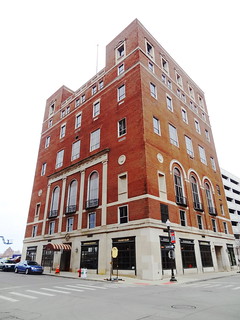
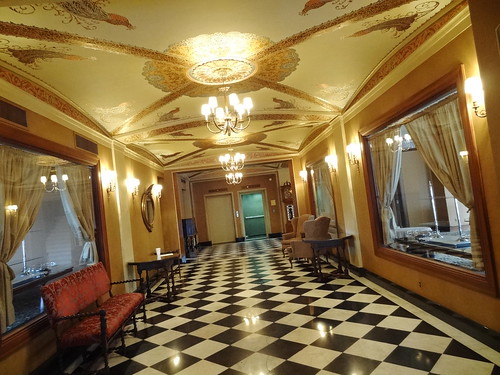
Kris and I haven’t been in this building for almost two decades, we have arranged a special tour with Director of Sales and Marketing, Nicole. The red brick, Georgian-style building was designed by the Smith, Hinchman and Grylls architectural firm (think Buhl, Penobscot & Guardian Buildings). At seven stories tall the exterior is simple, limestone and iron grill-work add a touch of elegance. The lobby is stunning! An artist by the name of Victor is responsible for the gorgeous restoration paint work. The lovely peacock pattern is not original but fits the time period perfectly; gold and silver dance off delicate lacy designs. The black and white marble floor gleams, years of being covered with carpet protected the finish.When the building opened in the 20’s, three small shops were located on the ground floor, today, these are used as reception areas. We ascend marble stairs to the third floor, the ballroom.
colony 031 (1)

colony 017 (1)

colony 018 (2)

colony 021 (1)

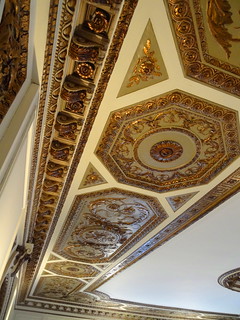
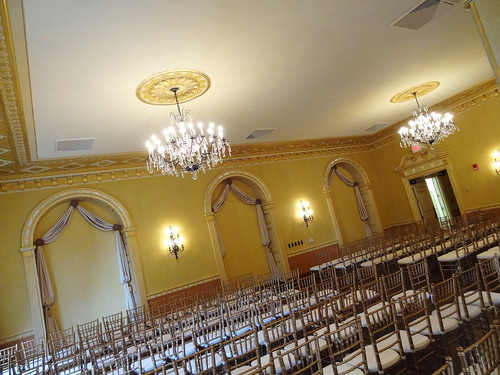
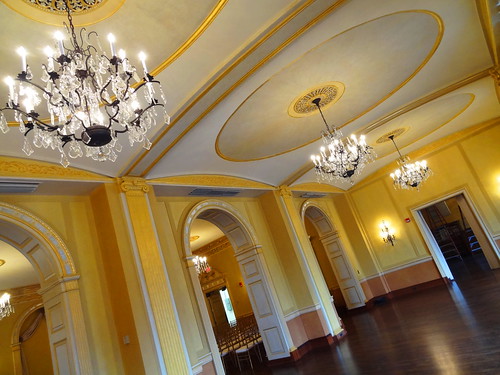
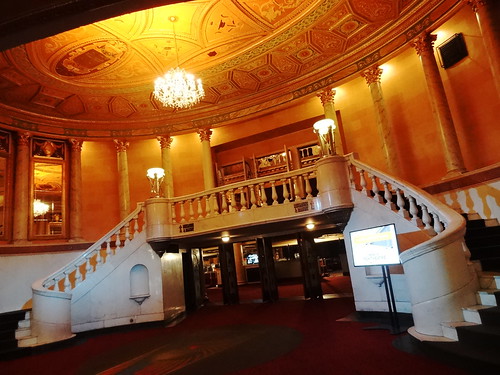
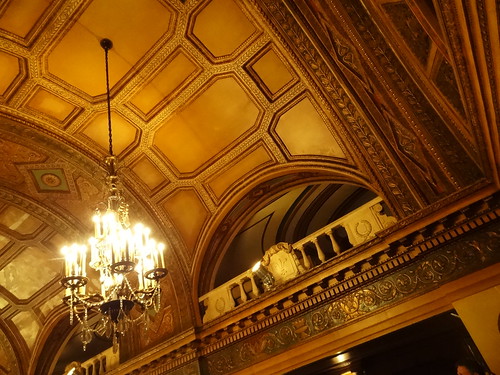
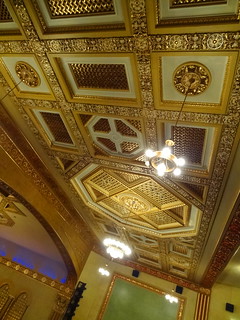
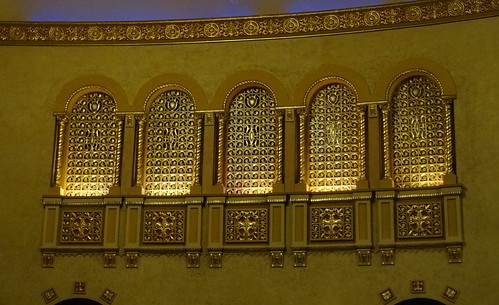
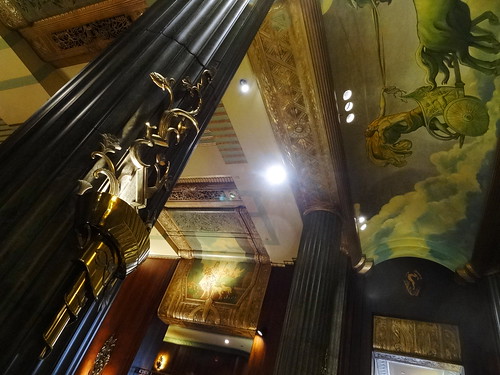
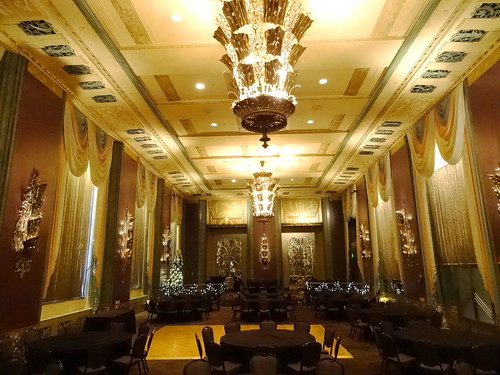
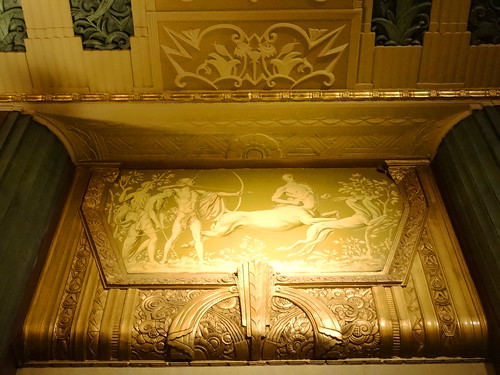
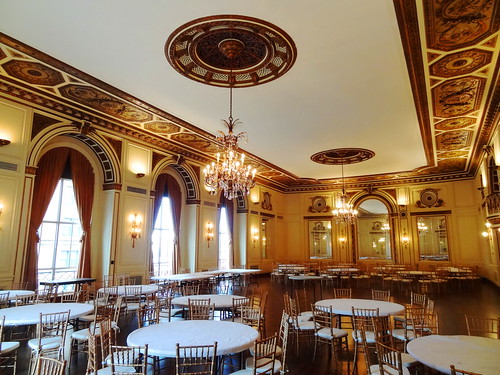
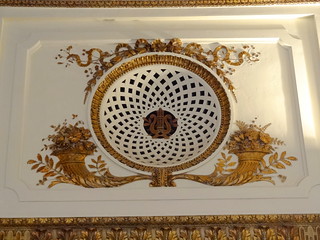
Done up in Louis XVI style, lavish, opulent, resplendent and grand are just a few of the words I would use to describe this space. Decorated in Versailles cream and gold gilt with a splash of bronze, Victor has done his magic once again! Original crystal chandeliers sparkle in the sunlight, plaster details are impressive, huge arch-shaped mirrors make the room feel so open and airy. Delicate wall sconces are also original, pale blue inserts appear to be Wedgwood, iron grill-work creates faux balconies. It’s easy to imagine Audrey Hepburn or Grace Kelly gliding across the dance floor. Speaking of the floor, it’s unique in the sense that it’s wood and not carpet, re-laid about a month ago, it too is splendid. Twin stairways lead to the next level, I’d guess many a bride has stood on these steps for photos. From here we have a panoramic view of the breath-taking ballroom. The 4th floor was the original dining room, a commercial kitchen resides in the same place as the first kitchen. The dining room itself has been transformed into another rental space for smaller gatherings; today it is set up for a wedding ceremony. Soft yellow, peach and more dazzling gold cover the walls and plaster details, quite stunning. Chandeliers and sconces are brand new, made special for the space. 

colony 016 (1)colony 039 (1)

colony 045 (1)

colony 049 (1)

Back in the day men were not allowed above the ballroom level, it was a women’s club after all. There were 16 sleeping rooms on the 6th floor, card rooms, salons, squash and badminton courts on the 5th, even a solarium on the roof (currently being restored). The Depression brought economic hardship, the building fell into foreclosure and the women of the club disbanded. Occupied by several businesses, the UAW purchased the building for its Detroit headquarters in the 60’s, after that, Wayne County Community College had it for a while. Preservationist Charles Forbes bought the building in 1984, thank goodness! It was leased to the Detroit Police Department to be used as its Police Academy (this is the time period we were here). With Superbowl XL on the horizon, Forbes management began an extensive restoration of the club, ESPN used the building for Superbowl functions. Today Colony Club has become a popular venue for weddings, dinners and special events.
colony 097 (1)

colony 083 (1)

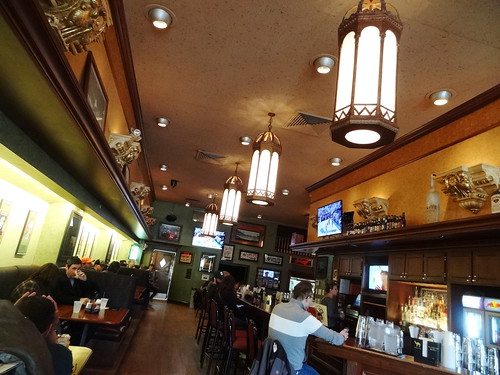
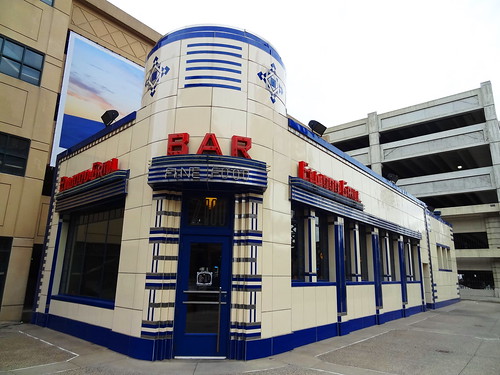
Moving forward in time to 1936, we are having lunch at Elwood Bar & Grill, another of Chuck Forbes buildings, it seems a natural choice. If you’ve lived in the metro Detroit area for a while, you may recall in 1997 the Elwood was relocated, as was the Gem/Century Theatre which moved 1,850 feet to make room for Comerica Park and holds the Guinness World Record as the heaviest building (2,700 tons) ever moved on wheels. Today the cream and blue enameled steel Art Deco diner resides on Adams Ave behind the Detroit Tiger’s left field. The swanky interior has been completely restored. Today the whole area is bustling with activity in preparation for opening day.
colony 092 (1)

colony 081 (1)colony 076 (1)

colony 073 (1)

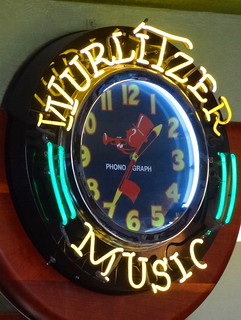
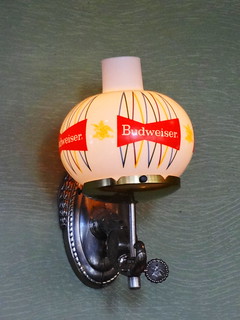
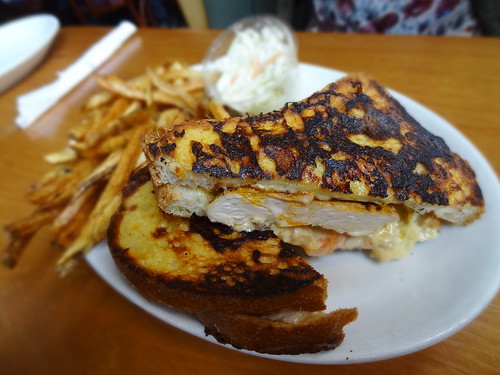
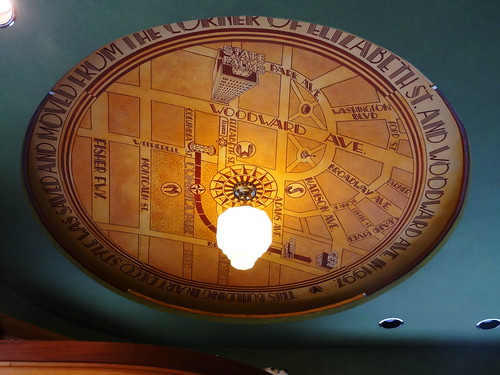
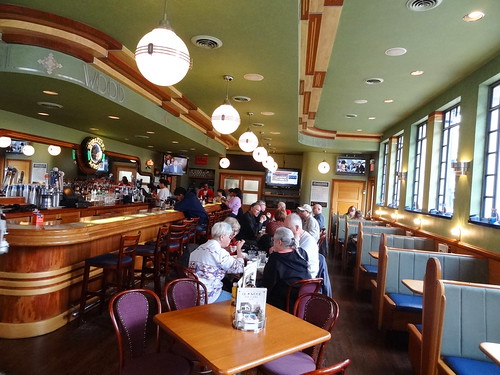
Sitting in a booth window-side we take in the details of the diner, walls are painted green in a textured technique, narrow chrome strips orbit white globe lights , two-toned wood  makes up the bar. The most unique feature is the mural street map of Detroit that fills the circular recess in the ceiling, it details the path of movement the Gem and Elwood took to their new permanent locations. A large plate of food is set on the table, we are sharing the Blackened Chicken Melt: Cajun-spiced chicken breast grilled and topped with pepper jack cheese, tomato, Dijon and mayo served on egg-dipped grilled sourdough bread–delicious! Alongside the sandwich is a side of tasty cole slaw and a pile of fresh hand-cut fries, yum! Detroit is filled with treasures such as these. These days it seems more and more buildings are being restored and re-purposed,  that’s good news for all of us!
DETROIT: Joe Louis Arena

31 Mar

JLA 059 (1)

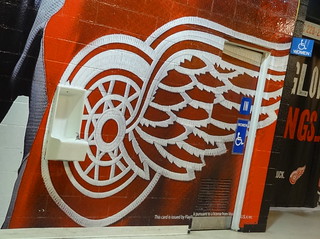
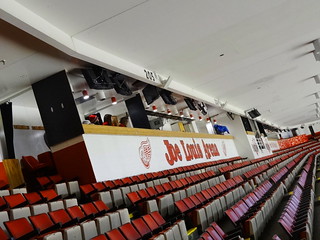
Today we are taking you on a tour of Joe Louis Arena, home of the Detroit Red Wings. I guess I should start with the team itself. The Wings originated as the Victoria Cougars of the Old Western Hockey League, the roster was sold to Detroit in 1926 and became the Detroit Cougars. That first season home games were played in Windsor Ontario, they moved into the brand new Olympia Stadium for the 1927-28 season. The name was changed to the Detroit Falcons in 1931, in 1932 James Norris Sr purchased the team, changed the logo to the Winged Wheel we all know today and called the team the Red Wings.  One of the original 6 NHL teams, the Wings have won eleven Stanley Cups…eleven; the first came in the 1935/36 season, the most recent in the 2007/08 season. In December 1979 the Wings moved to their current home, Joe Louis Arena. The Norris family sold the franchise to current owners Mike and Marian Ilitch in 1982.  The team has made the playoffs in 28 of the last 30 seasons and has the longest current streak of post-season appearances in all of North American professional sports.

JLA 007 (1)

JLA 016 (1)

JLA 009 (1)

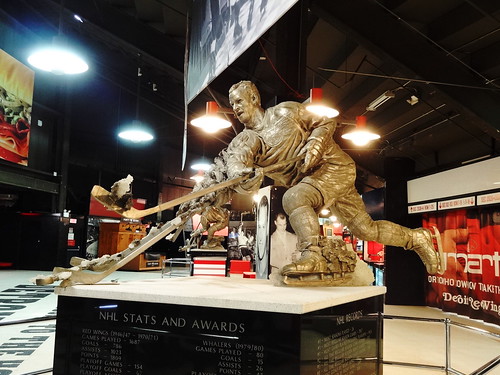
We enter the arena at the West Press door, a crowd of people are gathered just inside. It feels as if we have entered a private world, a city operating independently inside the building. Out on the main concourse it becomes clearly evident this is much more than a building tour, it is walk through Red Wing history. Our guide Stanley (I’m not kidding, that’s his real name!) leads us to statuary hall, here 3 larger than life bronze statues capture the true spirit of Gordie Howe, Alex Delvecchio and Ted Lindsay; our group takes turns posing for photos in front of the statues.  Vintage black and white photos have been blown up to banner size and hang from the ceiling throughout the concourse. The winged wheel logo is everywhere, old photographs connect the past to the present. Conversations within our group reveal the distances folks have traveled to be here; 4 women have driven 8 hours from Wisconsin, there’s a group of 3 from the Vancouver/Seattle area, a young couple has come all the way from Australia, Kris and I are the only locals.

JLA 022 (1)

JLA 027 (1)

JLA 042 (1)

JLA 040 (1)

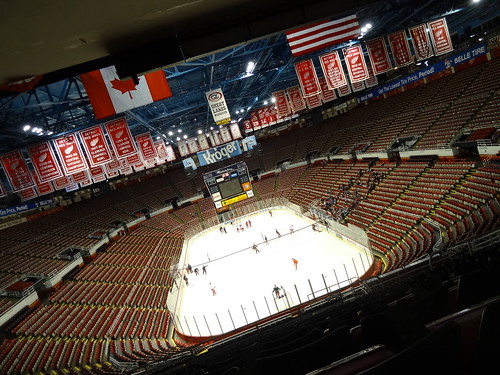
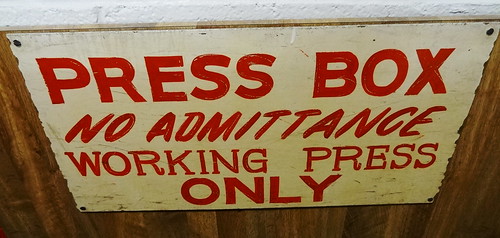
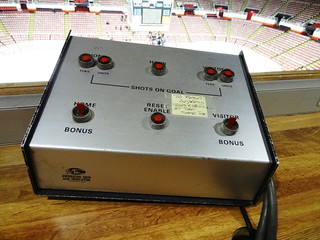
While making our way inside the arena itself, Stanley tells us about Ted Lindsay, Sid Abel and Gordie Howe, the original ‘production line’, he explains the tradition of throwing the octopus onto the ice which began in 1952, he throws out names like Red Kelly, Steve Yzerman and Scotty Bowman. We get our first look inside, we have a complete view of the ice, 20,058 seats and the rafters……. Banners hang like clothes on a clothesline, really, really good clothes, one after another representing division championships, Stanley Cups and retired sweaters. American and Canadian flags dangle side by side; it’s quite a sight. We are at Suite level, there is little space between rows of seats, we shimmy along until we reach the Press Box, this too is a very narrow space, just enough room for a long counter and a row of red upholstered stools. Tags mounted to the counter identify who will be sitting where, Kris spots a funky old contraption that appears to control the scoreboard. Out of the press box we pause at the far end of the ice, smiles are plastered to the faces in our group, Stanley speaks with pride of the team and organization.

JLA 050 (1)

JLA 058 (1)

JLA 055 (1)

JLA 056 (1)

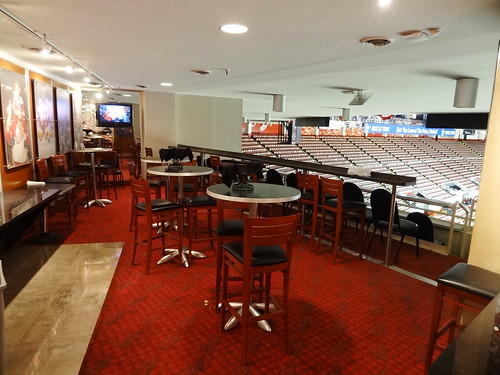
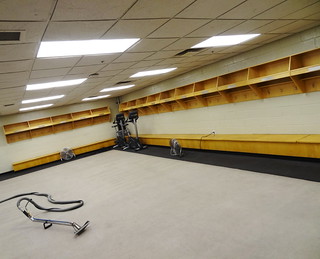
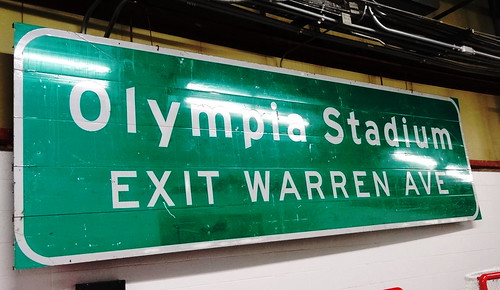
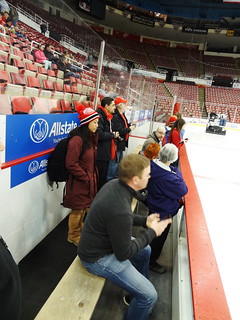
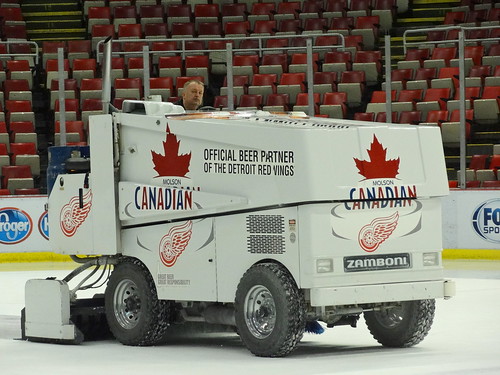
There is much going on at the Joe today, the Wings are in the building for practice, a youth tournament is about to begin, there are meetings and groups throughout. We reach Super Suite D and all file in, pretty fancy! The suite is spacious and includes two rows of seating, high top tables, a TV and the best part, a private bathroom, no waiting in lines. We take the elevator down to ice level, doors are cracked open to huge rooms with giant machinery, furnaces, that kind of thing. The tour can be re-routed at any time depending on where the players are; we see the visitors locker room but the Wings locker room is in use. An old street sign for Olympia Stadium is mounted to a wall, sweet! We take a wide hall out to the ice passing the Zamboni garage along the way. We are ushered into the players box area taking seats on the bench as we watch the Zamboni refresh the ice. It’s pretty cool to be sitting here, cameras and smart phones are capturing the moment. The Humane Society is also here, various players are posing with dogs, there is a great deal of whispering and finger-pointing taking place, it’s an awesome feeling being here.

JLA 065 (1)JLA 063 (1)

JLA 066 (1)

JLA 078 (1)

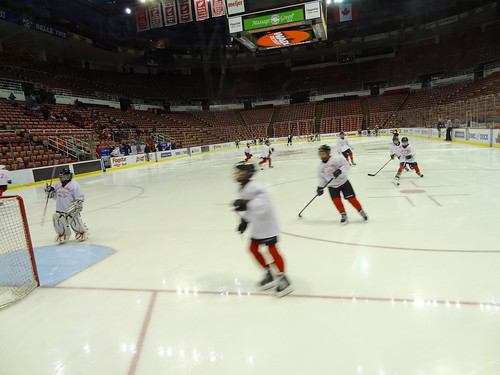
When the ice is finished a group of uniformed boys take the ice, the tournament is about to begin; I wonder if they feel the significance of skating here or if that’s something that only sinks in later in life. Stanley has been most generous with his time and we have all enjoyed the opportunity to wander through this amazing building. For me, hearing the names of the old-timers takes me back to my childhood, my parents would speak of Gordie Howe as if he were a family friend, I think that might be a Detroit thing. Our sports heroes become household names, we address them casually, Stevie, McCarty, Zetterberg, Datsyuk, we feel we know them. The thing that surprised me most was the connection people from as far away as Australia have to this building and this team; seeing their excitement made our experience even more fun. The Red Wings move to their new arena for the 2017-18 season, so there’s still time to check out The Joe.

JLA 094 (1)

JLA 092 (1)

JLA 091 (2)

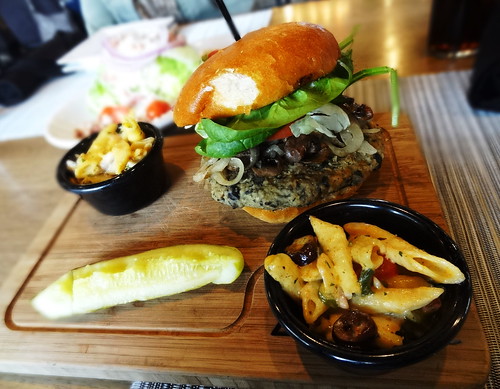
Lunch is next on our agenda, 24 Grille is located on the ground floor of the Book Cadillac Hotel just a couple of blocks away. The restaurant is cozy and attractive, decorated with lots of wood and black accents. The lunch crowd has diminished, we have our choice of tables, Kris chooses a window-side table facing Washington Blvd. Our server is friendly and helpful. A quick scan of the menu and we place our order. Before we know it lunch arrives, the Wedge salad is nearly half a head of iceberg lettuce smothered in tasty blue cheese dressing sprinkled with crumbled bacon and chopped tomato. The veggie burger is huge! The house made patty is delicious, it sits on a brioche bun and is loaded with tasty toppings, served with a side of pasta salad it’s definitely big enough for two to share. 


DETROIT: The Fillmore

25 Mar

Fillmore 129 (1)

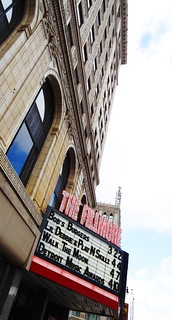
Picture this: Detroit, 1928, Saturday night. You are dressed up, walking down Woodward Ave with a group of friends to see a movie; theaters seem to line the streets, marquees are dazzling. You pass the newly opened Fox Theatre followed by the State, entering Grand Circus Park, the Madison, Wilson, Capitol, Adams, United Artist and Michigan Theatres all compete for your 35 cents, the cost of a ticket. For that 35 cents you will see a newsreel, a cartoon and feature film, if you’re lucky, you may even see a Vaudeville show. Charlie Chaplin and Buster Keaton dominate the big screens, Disney’s Steamboat Willie premiers, making the official introduction  of Mickey Mouse, Janet Gaynor stars in Street Angel, for which she will win the Oscar for Best Actress, Greta Garbo stars in the Divine Woman. The smallest of these theatres, the Adams, seats 1,770, the largest, the Fox seats 5,041, that’s a lot of popcorn!

Fillmore 020 (1)

Fillmore 027 (1)Fillmore 086 (1)

Fillmore 059 (1)

Our deep affection for 20th Century architecture is clearly evident in the photos alone contained in DetroitDvotion. The ultimate objects of our affection are old theatres; the designs drip with the ornate, indulge in fantasy. We are taken to far away places that may or may not exist. Every day folks were surrounded by beauty and fine things: enormous chandeliers, marble columns, murals, grand staircases; the reality of daily life shelved for a few hours. Today we are joining Preservation Detroit for a tour of the State Theatre, now known as the Fillmore; designed by C Howard Crane, who also designed the Adams, Detroit Opera House, Madison, Orchestra Hall, Fox, United Artist, Garden Theatre, Majestic, Bonstelle and Olympia Stadium, thank you Mr Crane. The State opened in 1925 with 2,967 seats. At the time of its opening, the State was one of America’s grandest film palaces featuring oversized chandeliers, paired ionic columns, rich draperies and an elaborate ceiling dome. The theatre operated continuously from 1925-1981, in 1937 the name was changed to Palms-State, then The Palms in 1949. Thankfully, Charles Forbes, a pioneer of Detroit historic preservation purchased the building in 1979, (He also saved the Fox, Gem, Century, Colony Club and Elwood Grill)  it re-opened as the State once again in 1983

Fillmore 084 (1)

Fillmore 083 (1)Fillmore 037 (1)

Fillmore 094 (1)

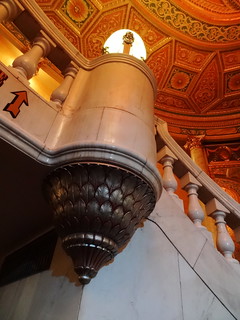
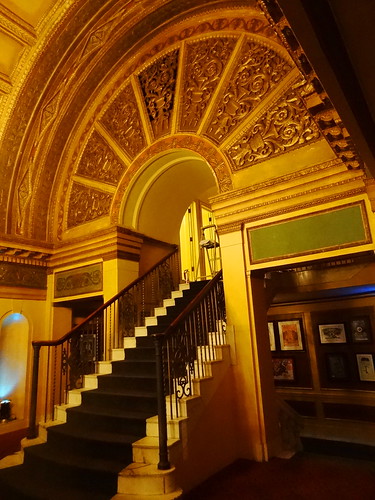
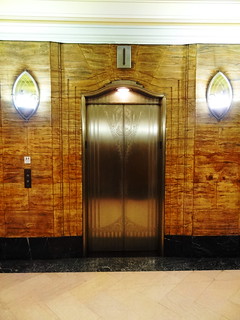
Our tour begins in the lobby of the Palms Building, it was common in those days for a theatre to adjoin an office building, that way if the theatre did not succeed, the office building covered the expenses of the building. This section was modernized in 1960, a few original Beaux-Arts touches remain such as the gorgeous elevator doors, one elevator is still original too. We make our way through the State Bar into the outer lobby of the theatre, here the ceiling is coffered, burgundy, green and gold cover the walls and plaster details, gold leaf adds pizzazz. Moving toward the auditorium, a beautiful, curving, marble staircase leads to the mezzanine level, above it the entire ceiling is an oval medallion of design. We ascend the staircase and find ourselves in the inner lobby, a barrel-vaulted ceiling rises overhead, the original 1925 chandeliers are aglow, walls are decorated in high detail from top to bottom, giant mirrors reflect beautiful images, original sconces cling to the walls. On ground level side exit doors are stained glass framed in dark wood, at this moment they are lit up by afternoon sun.

Fillmore 053 (1)

Fillmore 107 (1)Fillmore 123 (1)

Fillmore 116 (1)

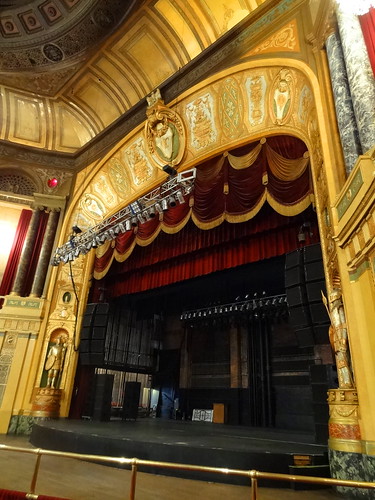
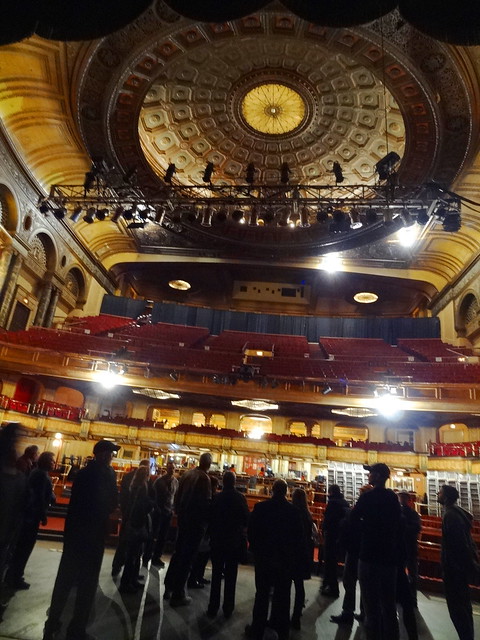
We proceed into the auditorium itself, walking all the way to the front of the house and onto the stage, the uninterrupted view spectacular. There are three levels, the main floor has been converted to cabaret-style seating as has the mezzanine level, the balcony retains theatre seating. At first my eyes are drawn all the way up to the dome ceiling, it feels stately and serious, further down the walls semi-circular grates rest upon pairs of columns, below that are more archways. A scallop design defines the mezzanine level it appears as if individual box seats fill this level, the facade highly decorated; we get a sense of the immense seating arrangement.  From this position we are in close proximity to the knights decked out in full armor guarding stage right and left, they appear at the ready if the need arises. We make our way back to the Main Floor, walking toward the back we turn and face the stage to take in the proscenium, it’s spectacular, the green and gold color scheme carries over into the theatre, an eagle rests on the highest peak. From here we notice huge stained glass ceiling panels, the off-white glass pieces are embellished with a spider web design, high on the walls grates are backlit in red, the original organ pipes are still tucked away in these walls. As we make our exit we take notice of the framed rock and roll posters clinging to the walls, fitting now that Live Nation leases the theatre.

Fillmore 048 (1)Fillmore 119

Fillmore 122 (1)

Back in the State Bar & Grill the last group begins their tour, leaving plenty of open tables, we choose one near the front windows and order lunch. The State Bar opened in 2000 and features rescued architectural remnants from Detroit landmarks such as Downtown Hudson’s and an eastside church, the space is quite attractive. Directly across the street is Comerica Park, I imagine this place is pretty busy on a game day. We order the Spicy Western Burger; a half-pound burger topped with BBQ sauce, deep-fried jalapenos, pepper-jack cheese and onion rings, served with a pile of homemade chips, we split the burger and an order of cheese sticks, yum! There was more than enough food for the two of us. It has been another great afternoon in the D, we walk away from the building with a feeling of contentment. The building has withstood the test of time, for the last 90 years people have been entertained in this theatre, the current tenants have been thoughtful caretakers of this palace, we appreciate that.

Fillmore 126 (1)

Fillmore 139 (1)Fillmore 137 (1)

Fillmore 133 (1)

YPSILANTI: Redux

18 Mar

ypsi 103 (1)

 As DetroitDvotion nears its 4th anniversary, Kris and I thought it would be fun to go back to one of the places we wrote about in the beginning. Today we are revisiting Ypsilanti, just 35 miles west of Detroit, 6 miles east of Ann Arbor, it’s a short drive and always makes for an interesting day. Ypsi is probably best known as the home of Eastern Michigan University, here are a few other notable facts: The B-24 Bomber Plant was located here at Willow Run, later, that same plant produced Kaiser Frazer automobiles, followed by production of a number of GM vehicles and their Hydramatic Division. In 1960 Tom Monaghan founded Domino’s Pizza as DomiNicks Pizza at 507 W Cross St. In 1929 Miller Motors Hudson opens, it is now the last remaining Hudson Dealership in the world and our first stop in town.

ypsi 060 (1)

ypsi 137 (1)ypsi 120 (1)

ypsi 122 (1)

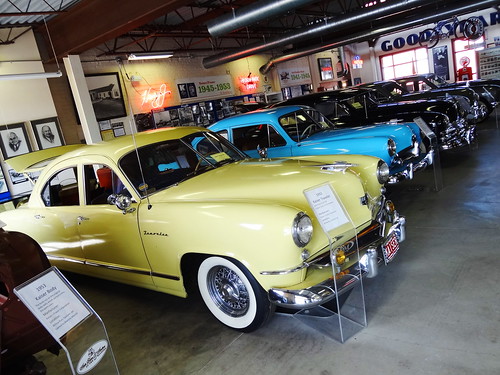
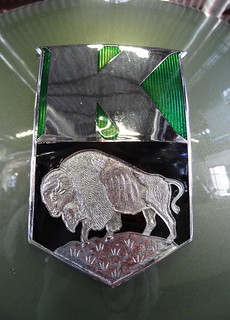
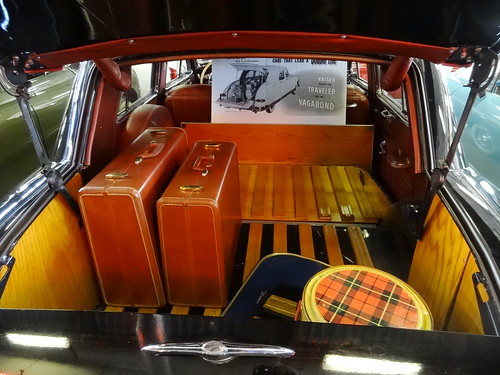
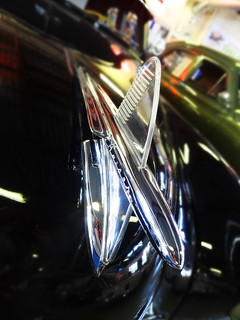
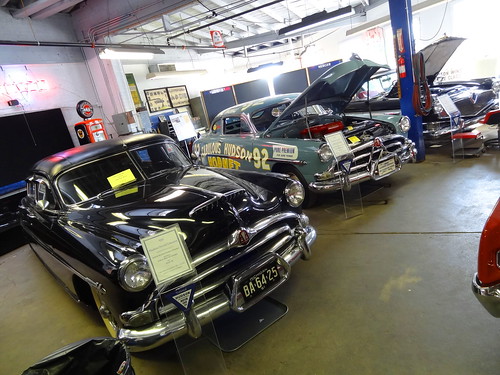
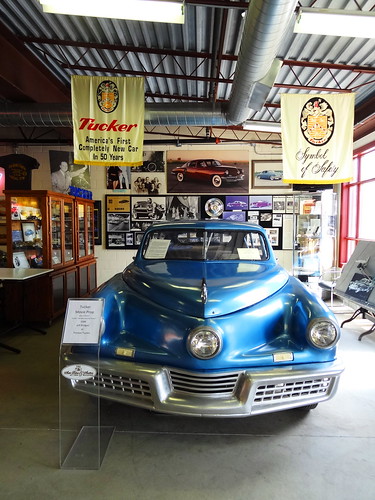
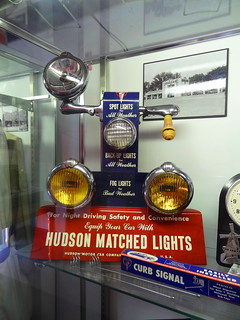
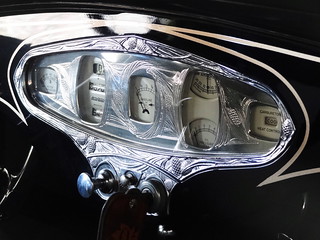
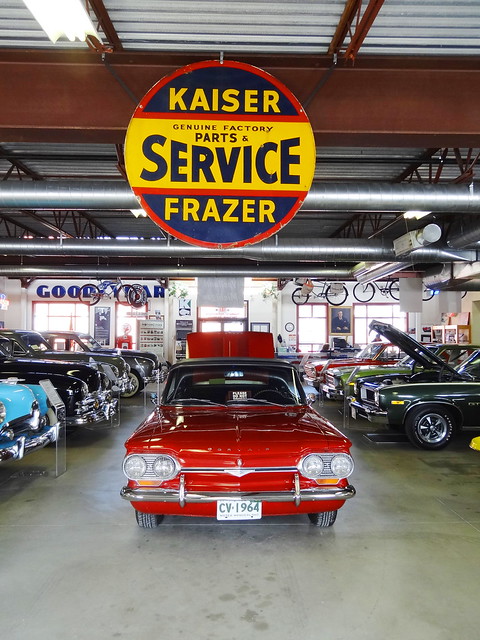
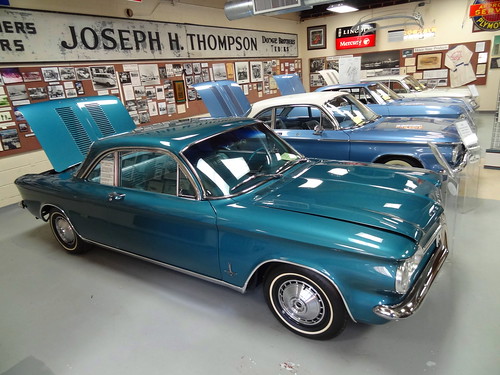
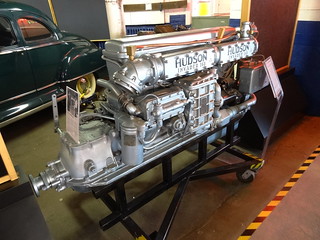
What used to be Miller Motors is now the National Hudson Motor Car Company Museum located within the Ypsilanti Automotive Heritage Museum; automobiles from each of Hudson’s five decades are on display. The museum tells the stories of Kaiser Frazer, Tucker, Hudson and General Motors Willow Run. You need not know anything about cars to enjoy this museum, between the beautiful automobiles, attractive displays and great stories, you’re sure to be entertained. Vintage signs hang from the ceiling, photos and drawings line the walls, engines and transmissions are on display, showcases are packed with memorabilia; the vehicles themselves are the star attractions. Hood ornaments are serious attention-getters, dashboards are gussied up with chrome details, Kaiser models look ready for a roadtrip, the cargo area is varnished wood. 

ypsi 092 (1)ypsi 132 (1)

ypsi 074 (1)

ypsi 057 (1)

A pale blue 1952 Hudson Hornet #92 is a visitor favorite; a NASCAR champion driven by Herb Thomas, his story is the inspiration for the 2006 Pixar film “Cars”. Hudson Hornets won 27 out of 34 NASCAR Stock Car races. We move through the decades from open carriage vehicles right through the 1970’s with a cool green 1974 GTO. One area features the Tucker story, Preston Tucker lived about 4 blocks from the museum, the home has been restored and you can drive by it and take photos. The 1946 Tucker touted safety features such as a rear engine, center headlight and pop-out windshield. There are great photos of the family and props from the movie Tucker: The Man and His Dream. 

ypsi 083 (1)

ypsi 088 (1)

ypsi 085 (1)ypsi 081 (1)

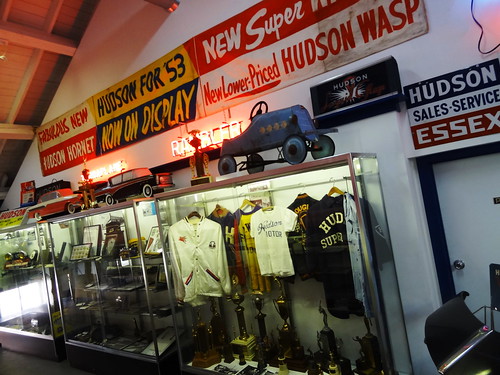
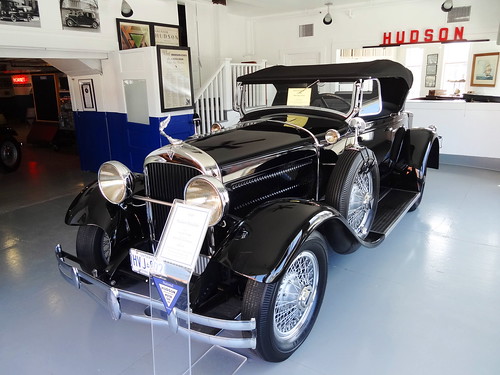
Up in the loft area we see a personal view of Ypsi; a showcase is filled with jackets, jerseys and trophies won by local sports teams sponsored by Hudson dealerships. Mechanic’s overalls, plaques, scale cars are all nestled into the small space. We overlook the main floor, a banner announces the new Terraplane, once popular names such as Rambler, Nash and Essex are recalled. back downstairs, there’s a sleek black Essex Terraplane 6, the 1929 Hudson Roadster in the Showroom is stunning. Throughout the space old gas pumps, neon signs and banners add to the atmosphere, a white 1954 Kaiser Darrin and a red Corvair are parked lengthwise against a row of Kaisers.

ypsi 067 (1)

ypsi 096 (1)

ypsi 059 (1)

Hydramatic transmissions fill the front room, operations were moved to the Willow Run plant after fire destroyed GM’s Detroit Transmission Plant in Livonia. Hydramatic manufactured automatic transmissions for 11 automobile companies outside GM’s own divisions, including Rolls Royce. In 57 years, 82 million automatic transmissions were built there. During the Viet Nam War M16 Rifles and aircraft cannons were also manufactured at that site. Willow Run Assembly produced the Corvair from 1959-69, it also manufactured Nova, Ventura, Omega, the 1974 GTO and other models for Pontiac, Buick, Oldsmobile and Chevrolet, I told you there was some amazing history here! On a sad note, after GM’s restructuring, the plant closed in 2010…..Ugh.

ypsi 044 (1)

ypsi 053 (1)

ypsi 043 (1)

ypsi 065 (1)

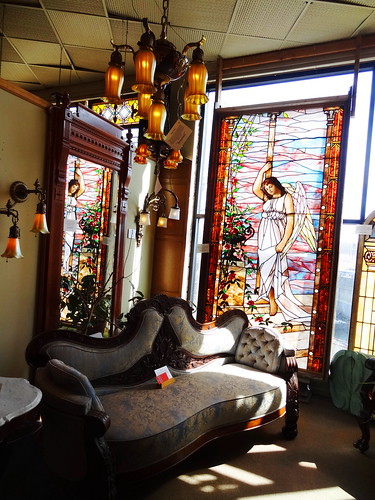
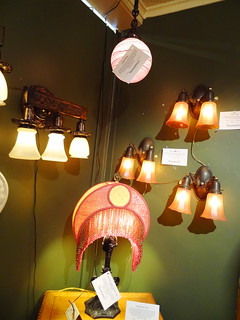
Over on West Michigan Ave we’re going to look at some more old stuff at Materials Unlimited, an architectural salvage store. I could wander around this place for hours. The selection of antique lighting is extraordinary; straight from mansions, ballrooms and historic homes, pieces run the gamut from humble to extravagant. Candle wall sconces, ceiling fixtures powered by gas or electricity and table lamps that range in style from Neoclassical, Victorian, French, Colonial Revival to Louis XVI. Materials are antique brass, wrought iron and cut crystal. I’m a fan of colored glass; blue opal, cranberry, rose and amber are just some of my favorites.

ypsi 015 (1)

ypsi 002 (1)

ypsi 005 (1)

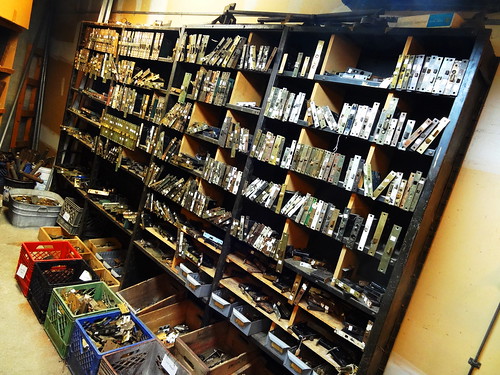
Everything in the store is beautiful! Items are neatly arranged and organized; individual pieces wear tags listing the origin, era and in some cases where it came out of, I stop and read every tag on the pieces I like the most. Glass shades are neatly arranged on shelves, brass door knobs and back plates are lined up in rows. Stained glass is displayed in the large front windows, one piece by Karl J Mueller has a price tag of $24,750.00. Crates of hardware seem endless; bronze mail slots, ice box hinges, pulls, knobs and door knockers can all be found here. Dining room sets feature enormously long tables, crystal wine glasses and decanters are lovely.

ypsi 041 (1)

ypsi 018 (1)ypsi 025 (1)

ypsi 016 (1)

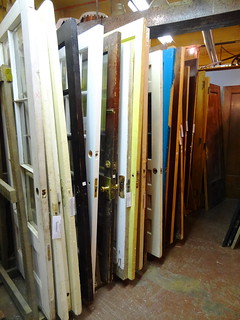
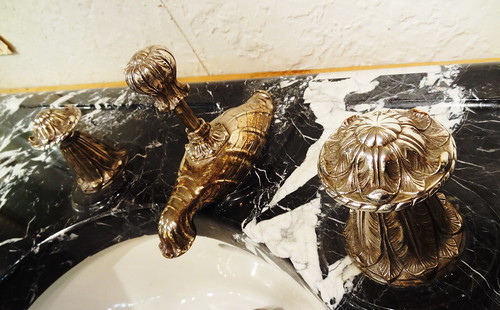
Some areas are set up as vignettes; fireplace mantels and surrounds are decorated with andirons, chenets and beveled mirrors. Bathroom furnishings such as sinks and toilets are available in an array of colors, doors and windows come in every shape and size. Standing, neck craned, reading a tag, Kris comes and finds me to show me a piece he knows I’ll love, a black and white, Italian marble, double sink and vanity that belonged to the Fisher family. The marble is exotic, the faucet and spigot, a work of art. It was purchased for their home in Palmer Woods, they took it when they moved out and now it’s here for sale in Ypsi, check out the photo. 

ypsi 026 (1)

ypsi 034 (1)ypsi 007 (1)

ypsi 036 (1)

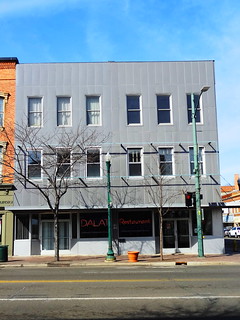
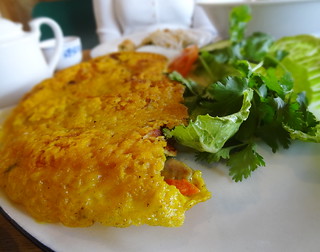
All this browsing has made us hungry, just up the street we stop in at Dalat for a late lunch. Both of us like Vietnamese food, but are not necessarily big fans of Pho; the menu here is HUGE, so much more to offer than a big bowl of soup. Our server greeted us quickly with menus and asks us what we want to drink; she returns with a pot of tea, answers our questions and takes our lunch order. We start with a fresh roll served with a tasty peanut sauce. A short while later our entrée’s arrive, since I’m not fluent in Vietnamese I can’t tell you the exact name of the dishes we had, but, what I can tell you is the food was delightful, fresh and tasty. A noodle dish; chopped romaine lettuce, chunks of egg roll, tender strips of seasoned beef and shrimp over steamed noodles. The other was a large, crispy crepe of sorts, yellow in color it was stuffed with shrimp, chicken and stir-fried vegetables. Portions are big but prices are not, each entrée was about $7.

ypsi 150 (1)

ypsi 144 (1)

ypsi 141 (1)

We drive around the city a little bit before heading home, Ypsi is loaded with beautiful architecture, there’s a quirky charm about Michigan Avenue, parts of it look like time has stood still—-I like that. Cities are like people, no two are exactly the same, each has its own personality and that’s what makes exploring them so much fun.


ANN ARBOR: Dinner and a Movie

11 Mar

AA2 053 (1)

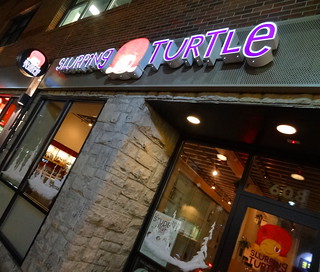
The cold spell has finally broken, we are celebrating the freedom to walk about leisurely without fear of frostbite with a night on the town in Ann Arbor. The Michigan Theater is mid-way through their Noir Film Series, playing tonight is The Lady From Shanghai, the 1947 film starring Orson Welles and Rita Hayworth. First things first, on-street parking is non-existent on this balmy March night, fortunately there’s a parking structure just around the corner from the theater. With the Jeep neatly parked for the next several hours we head to the Slurping Turtle for some dinner.

AA2 066 (1)

AA2 064 (1)

Renowned Chef Takashi Yagihashi opened his second Slurping Turtle restaurant right here in Ann Arbor nearly a year ago. You may recognize his name from such shows as Iron Chef and Top Chef Masters. Yagihashi has successful restaurants in Chicago, including the original Slurping Turtle. He has close ties with Michigan; he operated Tribute in Farmington Hills from 1996 until 2005, in 2003 the James Beard Foundation named him “Best Chef Midwest”. It was those ties and two children in Michigan colleges that brought him back to the mitten. The Ann Arbor location is on the main floor of the old Borders building on Liberty Street.

AA2 056 (1)AA2 055

AA2 061

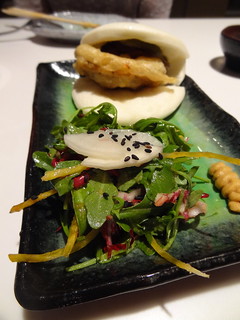
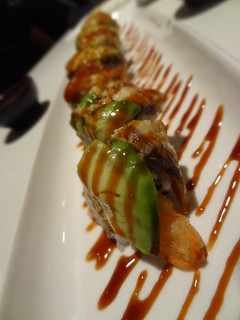
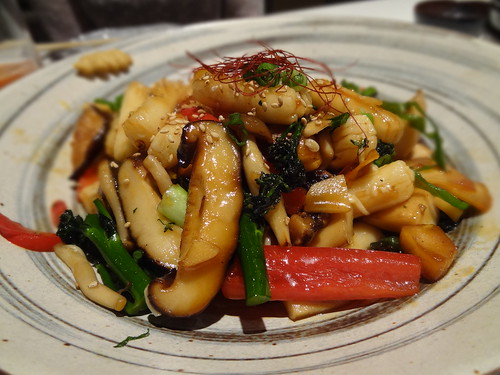
The dining room has a bright, clean look to it, matching pendant lights hang above communal tables, there is an open kitchen, counter seating and a few booths. Our server greets us quickly, delivers menus and takes our drink order. There’s a wonderful selection of authentic Japanese Ramen (noodles are made in house), sushi, street food and comfort food. Not really in the mood to Slurp, we choose 4 dishes to share. First out are the Hamachi Tacos: tartare of yellowtail, truffle soy and a taro root shell, really good and a nice starter. The vegetarian Bao is out next, I’m crazy about these steamed bao buns, this one has a tempura mushroom along with other goodies tucked inside, served alongside a tasty little salad; we’d both get this again. The Dragon Roll arrives looking quite tasty; shrimp, bbq eel, avocado, sauce, delicious. Our favorite dish is the Kinoko Mochi; plump tube-shaped rice cakes, a medley of Japanese mushrooms, boccolini, parsnip, sweet bell peppers and Parmesan in a chili soy sauce, fantastic!

AA2 080 (1)

AA2 049 (1)AA2 019 (1)

AA2 020 (1)

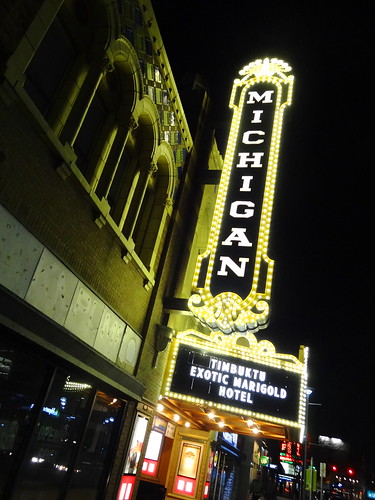
Outside, we cross Liberty and are standing in front of the Michigan Theater, opened January 5, 1928, the marquee looks just as it did then. When the theater originally opened vaudeville and silent films were the regular fare, shows were accompanied by live music from the Barton Theatre Organ which is still in place. During the 30’s and 40’s the theater thrived, movies drew a big crowd, there were also live stage shows and University of Michigan events. Television came along in the 50’s, film audiences declined as more and more people got their entertainment right in their living room from their TV set. In an effort to draw folks back, the Michigan was modernized in 1956; plasterwork was covered with aluminum, polished marble and a false ceiling. The theater stopped operating in 1979 and the building’s future was “uncertain”. Sadly, the Michigan Theater’s story is not unique.

AA2 043 (1)

AA2 040 (1)

AA2 041 (1)

Folks joined together in effort to save the theater and organ, in the end, the City Council purchased the theater and dissolved the mortgage debt. In 1982 a management team was hired along with a restoration architect to bring the “Shrine to Art” back to life. Classic films, concerts, theater productions and touring shows filled the building, in 1985 the grand foyer and auditorium were restored, heating and electric were modernized, a screening room was added and the balcony was restored to its original 1928 color scheme. Today the Michigan is vibrant and alive, films once again grace the big screen, it is home to the Ann Arbor Symphony Orchestra and numerous stage productions, the Barton Theatre Organ plays on……

AA2 035 (2)AA2 034 (1)

AA2 013 (3)

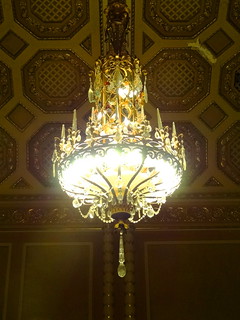
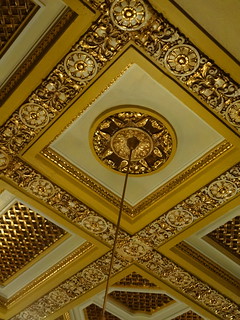
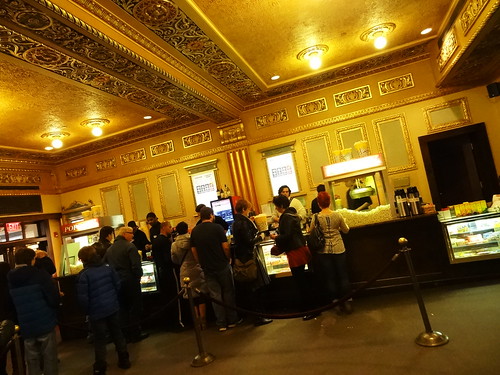
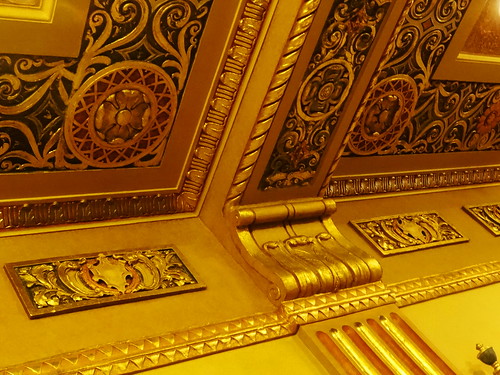
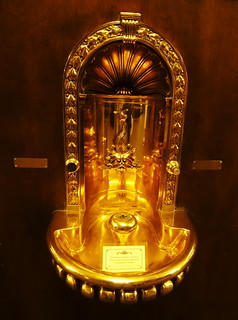
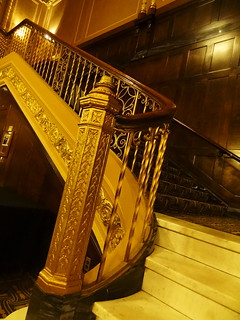
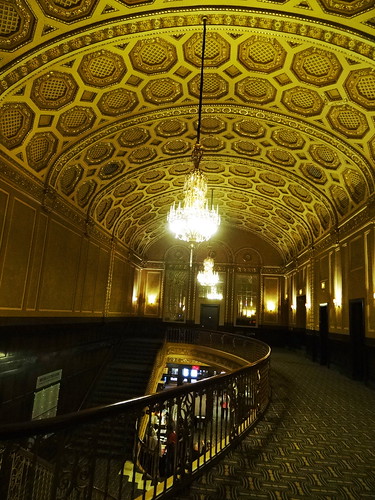
We purchase our tickets at the ticket window under the flashing marquee, inside, the aroma of fresh-popped popcorn fills the air. With a small popcorn drizzled with melted butter in hand I follow Kris into the Grand Foyer; grand it is! The entire theater is decorated in ivory and gold, here the ceiling is coffered, raised designs sparkle in gold leaf, a dramatic staircase leads to the balcony level, crystals dangle from elaborate chandeliers, a drinking fountain built into the wall is exquisite, the lower portion of the walls are beautiful dark wood panels. From the balcony we have a panoramic view of the auditorium; a red curtain hangs above the stage, the organ is being expertly played, gold leaf geometric patterns decorate the ceiling, a series of arches covered in lovely gold grates flank the side walls. Circular chandeliers with exposed round bulbs light the large space, ornate plaster moldings surround the walls.

1a 044

AA2 051 (1)AA2 015 (1)

AA2 007 (1)

There’s nothing like watching a film on the big screen, especially an old film, this one is black and white. Orson Welles and Rita Hayworth were married when this film was made, her long red hair cut short and dyed blonde for the role, she’s stunning as always. In true noir form, the story has its twists and turns creating suspense and tension, leaving us uncertain ‘who done it’ right up until the end.

AA2 075 (1)

AA2 072 (1)

AA2 070 (1)

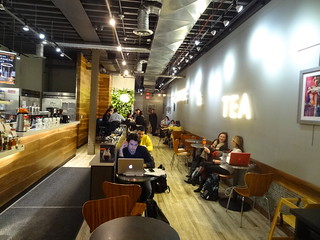
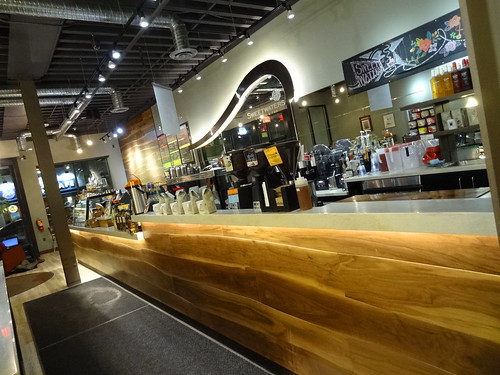
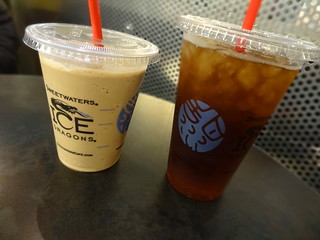
Back across Liberty Street we stop in at Sweetwaters Coffee and Tea for a little post movie chill before driving home. This is the first time we’ve been at this location, it’s quite attractive inside; narrow wood panels are mounted to the walls horizontally, a large mirror behind the counter gives the space a big, open feel, toward the rear, a partial wall is covered in lush green plants. Serving coffee, tea, blended frozen drinks, pastries and light food, there’s something for everyone. Kris gets a cold brew and I go with my longtime favorite, coco cafe. Vanilla ice cream, chocolate syrup and espresso blended together until smooth, it’s the perfect sweet ending to a wonderful night.


DETROIT: Corktown Vintage

3 Mar

corktown 066 (1)

With temperatures firmly in the double digits we leave the confines of the indoors to see what’s happening in Corktown. New businesses are opening at a rapid rate in Detroit, many of them in Detroit’s oldest neighborhood. Located west of downtown, Corktown was best known as the home of old Tiger Stadium, many predicted the neighborhood wouldn’t survive the loss of the ball park; the results are quite the opposite. Slow’s Bar B Q was the catalyst followed by Astro, Sugar House, Mudgies, Detroit Institute of Bagels, Motor City Wine, Two James, well, you get the idea….. Historic streets are lined with Victorian era buildings and homes; it’s the hot spot to grab a meal, craft cocktail, beer or a cup of coffee and do a little shopping.  

corktown 016 (1)

corktown 038 (1)corktown 021 (1)

corktown 029 (1)

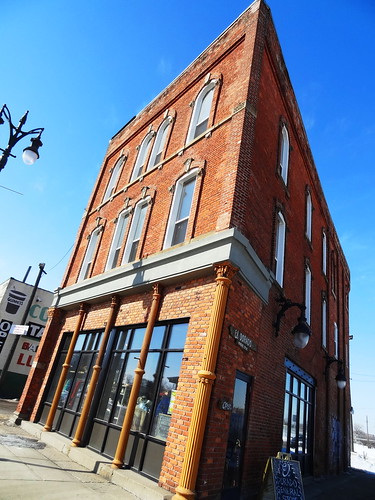
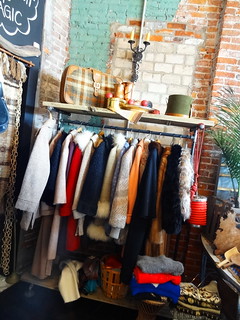
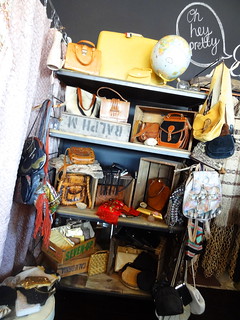
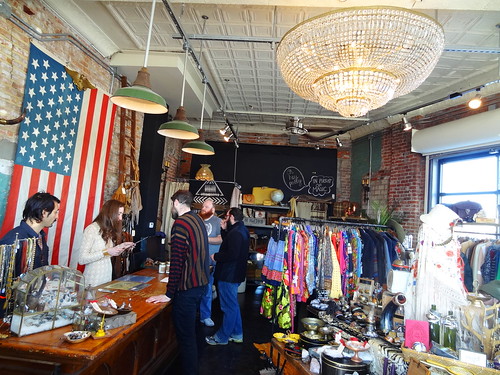
Eldorado General Store is tucked into an attractive red brick building on Michigan Ave. A sandwich board out front alerts potential customers of the shops location. Inside a virtual smorgasbord of vintage goods awaits. A fantastic crystal chandelier clings to the tin ceiling; sunlight sparkles off the facets, a large American flag is draped behind the counter, a deer head mount guards the front door.  Beautiful clothing, jewelry and accessories are artfully arranged in the space, today there’s a lovely display of fur hats and muffs straight out of an Audrey Hepburn movie. Mod-patterned coffee cups and glass pieces from the 70’s are among the many home goods, trinkets and handcrafted items fill tabletops. Each time we come the shop is filled with different merchandise—one of the things I love about vintage stores. Owner, Erin is a pleasure to talk with, be sure and say hello when you stop in.

corktown 043 (1)

corktown 047 (1)

corktown 053 (1)

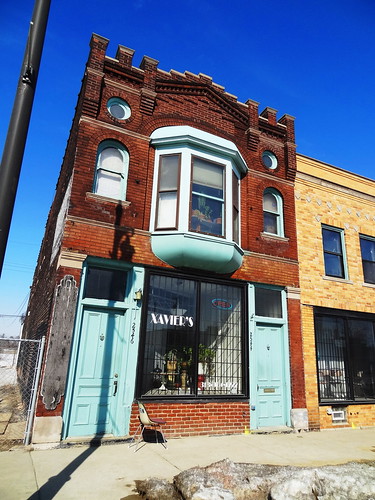
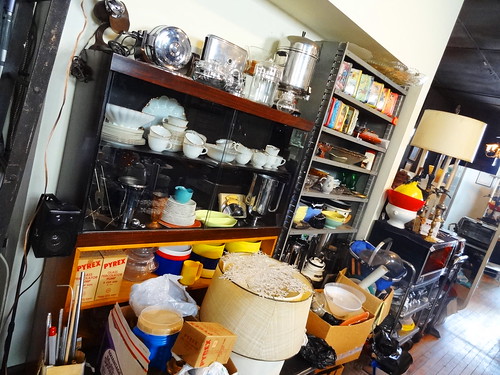
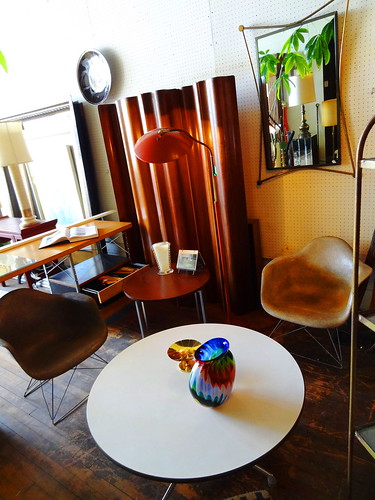
Xavier’s 20th Century Furniture is a bit further down Michigan Ave, we’ve been coming to the shop for many years now and always look forward to seeing his latest finds. As soon as we step in Kris points out a gorgeous wood room divider along the left wall, a variety of tables, chairs and a desk bear the name of famous designers such as McCobb, Knoll, Eames, Herman Miller and George Nelson. Mid-Century design is as fresh and appealing today as it was then. Throughout the shop we see an assortment of pieces from machine-age Art Deco  to vintage lunchboxes, American pottery and glassware from Italy and Scandinavia. Coffee servers, tureens, waffle irons and toasters are crowded into the kitchen area, the old glass Pyrex percolator reminds me of my childhood.  Nothing we have to bring home today, but there’s always next time!

corktown 013 (1)

corktown 008 (1)corktown 003 (1)

corktown 001 (1)

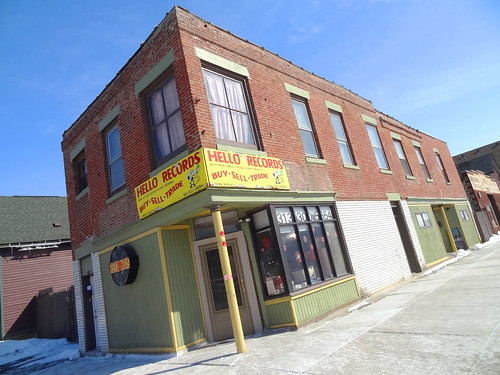
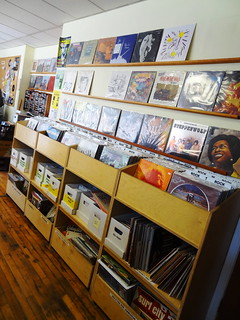
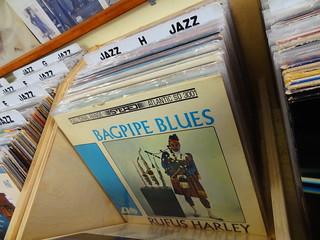
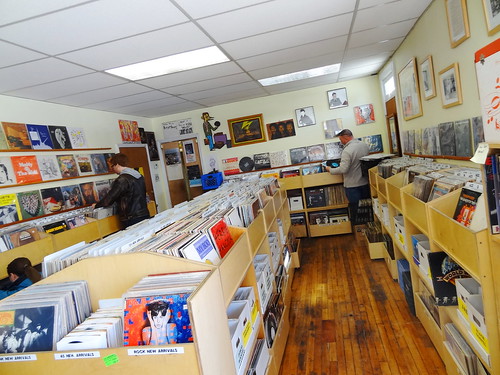
Hello Records occupies a tiny space in a building on the corner of Bagley and Trumbull, it you’re into vinyl, check it out. It’s Saturday and it seems record collectors are out in full force, well-organized bins, boxes, crates and drawers are stuffed with vintage recordings. Records spin on the house turntable, tunes from the 60’s and 70’s fill the air as we browse through albums. We are not collectors but really enjoy the cover art, album names, and groups we’ve never heard of, Bagpipe Blues anyone? Cool old record cases are available for purchase, great photos cover the walls, the staff is extremely knowledgeable and friendly. Genres include soul, funk, jazz and rock, new arrivals have a section to themselves. Over in Jazz the cover of Bob James “H” features a hot dog topped with mustard, reminding us it’s time for lunch.

corktown 056 (1)

corktown 068 (1)

corktown 054 (1)

corktown 058 (1)

St CeCe’s is right across Bagley, we cross the street and duck inside. The former home of Baile Coraigh, all of the beautiful wood paneling, stained glass, lamps and huge stone fireplace remain. The from-scratch kitchen has developed a loyal following as is evident today by the crowd that fills booths and tables. The restaurant features rotating artwork, the pieces currently on display are great. On Tuesday’s guest chefs come in and take over the kitchen, it’s always something new and different. Today we order off the house menu, we get our order in before another big group arrives, there’s something for everyone, meat eaters and vegetarians alike. We start with a house salad, a nice variety of greens and a tasty dressing, the Glazed Tempeh Wrap is stuffed with cucumber, carrot, sunflower sprouts, kim chi and cilantro, really tasty. The Shitake Sliders are yummy; shitake mushrooms topped with gooey melted Gruyere and a nice sauce. Since we ate so healthy we decide to treat ourselves to a beer, and we know just the place!

corktown 082 (1)

corktown 069 (1)

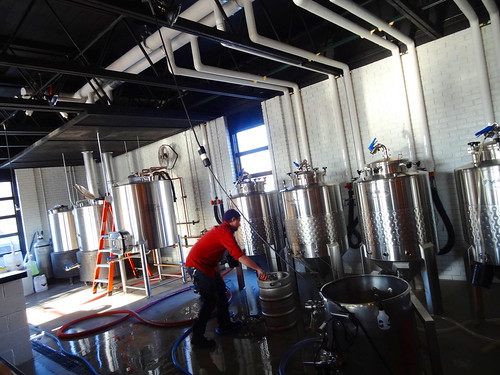
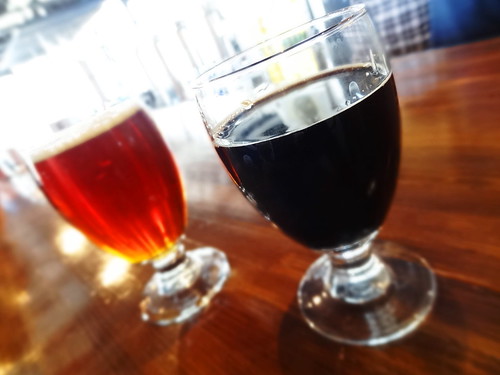
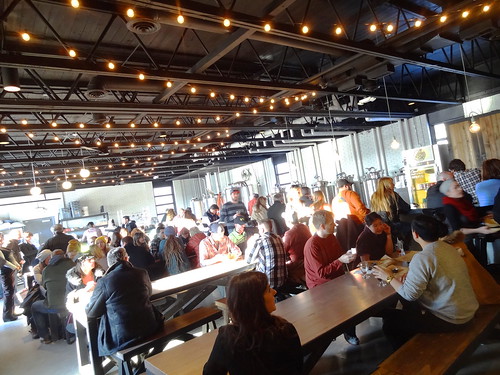
Batch Brewing Company, winner of the 2013 Hatch Detroit contest, opened to rave reviews in February. It’s just before 4 pm, we are one of three or four other cars in the parking lot, we reach the door as it is unlocked, communal tables are empty at this early hour, we head straight to the bar. Taking the end two stools we are greeted immediately by one of the owners, we chat a little bit, he asks us what we like, then hands us a couple of samples. Each is unique, flavorful, refreshing, after little debate we make our selections: Way 2 Biggie (a Barleywine IPA) and the Obscure Reference Imperial Stout. Goblets are filled and slid across to us, though completely different, both are excellent. The building has a modern industrial feel to it, it’s a wide open space, strings of clear, round lights follow metal ceiling beams, with picnic table-like seating it almost feels like a patio. Behind the counter, large stainless steel vats contain the small batch brews, chalk boards announce the days selections.

corktown 078 (1)

corktown 074 (1)

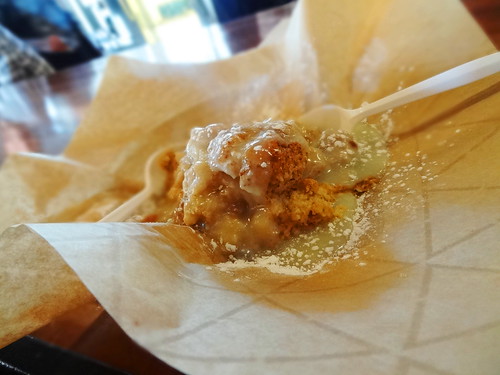
Orders are placed up at the bar, we have the best seat in the house, goblets and mason jars are filled with beer, colors range from gold to red to nearly black. Food orders are placed, numbers are handed out and food is brought directly to the customer, everything looks delicious. We spy Bread Pudding with Rum sauce on the menu and can’t resist. It arrives steaming hot, moist and smothered in sauce, it’s fantastic! By now the place is near capacity, with no available seating we relinquish ours to a couple standing nearby. Great service, exceptional beer and wonderful food, I can see what all the fuss is about!

CINCINNATI: Back in Time….

17 Feb

ci 104 (1)

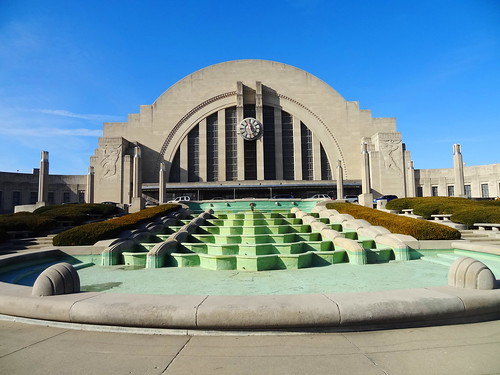
It’s our last day in Cincy; we’ve still got a list of things to do. No trip to the Queen City is complete without a visit to the Cincinnati Museum Center, formerly Union Terminal. Everything about this building is amazing from architecture and history to its present-day use as a museum. Work started on the building in August of 1929, completed March 31, 1933 it is one of the last great train stations built and one of the finest examples of the Art Deco style. When it opened it was served by seven railroads; designed to accommodate 17,000 passengers and 216 trains a day, it was a transfer point for soldiers during WWII, Amtrak still runs a train from the station. Union Terminal cost $41 million to build including the land and readjustment of railroad facilities, the complex and rail yards take up 287 acres with 94 miles of track.

ci 005 (1)

ci 007 (1)ci 006 (1)

ci 008 (1)

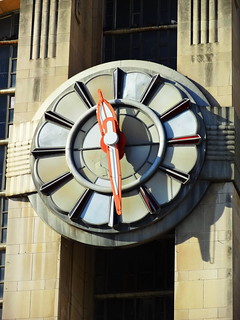
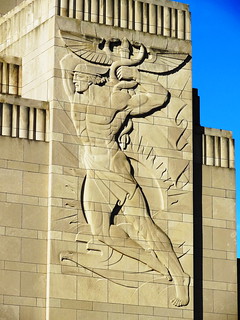
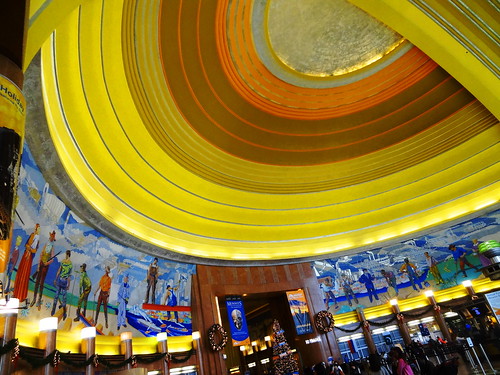
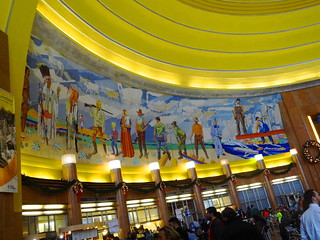
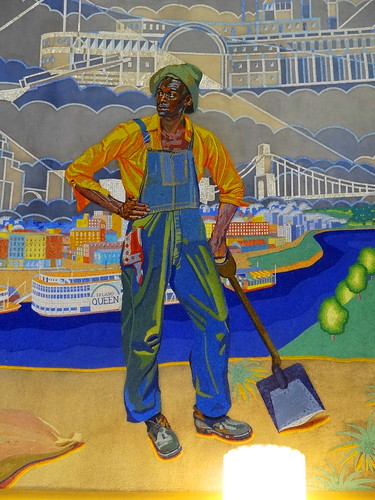
  The Jeep is parked and we approach the building on foot; no matter how many times we come here, I am still awed by the magnificence of the structure, so grand, elegant, sophisticated. The clock is mounted front and center, two bas reliefs flank the rotunda, one represents transportation, the other commerce. In 1932, Maxfield Keck and his team stood on scaffolding and carved the figures directly into the limestone exterior, it took several months. Inside, the rotunda’s interior dome spans 180 ft with a height of 106 feet, it’s stunning! A series of murals depict the heritage of the US and Cincy. German artist Winold Reiss is responsible for the design of the murals; glass mosiac tiles, roughly the size of a nickle were pressed into a colored-plaster background. Glass tiles were ideal, the colors are brilliant, they will not fade and are easy to clean and maintain, especially important back in the days when smoking in public was the norm, not to mention the smut and smoke from the trains. Reiss also had input to the color scheme of the rotunda dome, a rainbow of yellows and golds, as well as the terrazzo floor patterns.

ci 020 (1)

ci 013 (1)ci 019 (1)

ci 030 (1)

ci 015 (1)

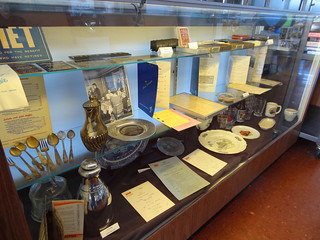
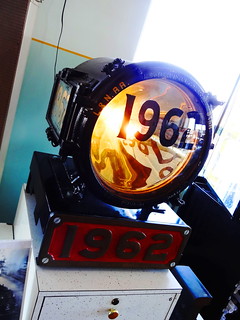
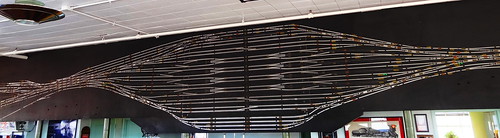
A sign guides us to Tower A, we’ve never been, so we’re excited to check it out; a ride on an elevator, a few steps up and we’re in. This my friends, is the control tower, the train director would sit at his desk, look at the control panel and determine the path of travel of each train through the terminal, lever men would align the switches down at the track level to keep all trains moving safely. The original control panel hangs on the back wall, it’s huge, it has been rewired and is programmed to show how it looked back when Tower A was in full operation, amazing. Showcases are filled with memorabilia from the glory days of train travel, silverware, china, menus and photographs. Parents rest on old train station seats as youngsters ring the (very loud) train bell, bookshelves are cramped with volumes on the history of trains, lanterns and traffic lights hang above. Standing on the viewing platform we see the Queensgate Yard to the right, every day a CSX train brings orange juice from Florida to the Tropicana plant just north of Cincinnati. Straight out is the CUT yard, rows of tracks are filled with freight cars, the Amtrak passenger train uses the platform just below the Tower. Off to the left is the Ohio River and many bridges including the Norfolk Southern Bridge, that route runs from Cincy to Chattanooga. The Control Tower is also the home of the Cincinnati Railroad Club who funded the renovation of Tower A, thanks guys!

ci 032 (1)

ci 043 (1)

ci 059 (1)

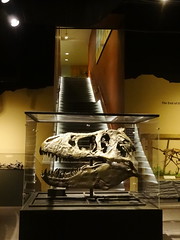
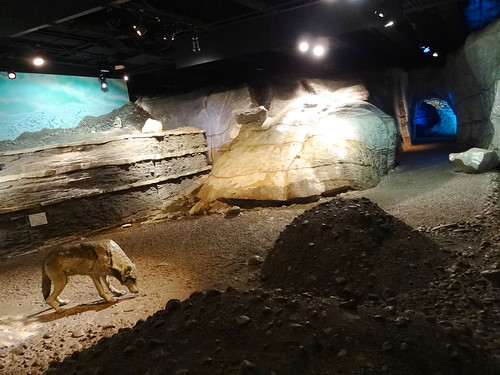
Back on the main floor we enter the Museum of Science and Natural History. An exhibit honors the memory of Ohio native Neil Armstrong, the display includes a moonrock collected during his Apollo 11 mission in which he became the first man to set foot on the moon, along with a replica of his spacesuit and tools. As we proceed further we find ourselves in a re-creation of real caves found in Ohio and Kentucky, covering two levels and 500 feet of dark, narrow passages. Floors and walls are textured, it’s chilly and a little damp, walkways open into chambers filled with stalactites and stalagmites, there’s an underground stream and a waterfall, they even have a bat colony. Next thing you know we’ve traveled back roughly 19,000 years in the Ohio Valley into the ice age and pre-historic worlds. There are dinosaur skeletons, fossils and casts, we walk through a re-created glacier with its Caribbean blue light eerily lighting our way, we follow the ice age trail to the stream table all rocky and uneven. Here the land is barren but for a few trees, wolves roam the landscape, more dinosaurs lurk about.

ci 083 (1)

ci 088 (1)

ci 097 (1)

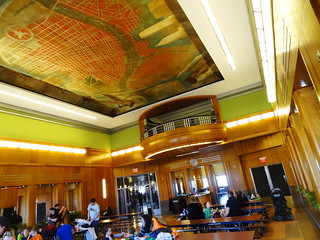
Back in the Rotunda we ramble through the building a little more, because of the crowds they have opened several dining room spaces usually reserved for private meetings and events. French artist Pierre Bourdelle is responsible for decorative ceiling designs in the dining rooms and hall, the formal dining room’s ceiling mural is a map of Cincinnati bounded on the edges with all forms of transportation and landmarks of the city. Bourdelle’s artwork consumes 5,496 sq ft of the building, his largest commission. Back in the day, public buildings were always designed to impress, local history and landmarks were often used in decorative ways, a means of connecting people and their community. Union Terminal is an architectural treasure, in November 2014 residents of Hamilton County passed a millage to provide funding for renovations of Union Terminal to keep it functional, now that’s money well spent. 

ci 116 (1)

ci 117 (1)

ci 113 (1)

For dinner we are crossing the Ohio River into Covington Kentucky and the MainStrasse Village neighborhood to Dee Felice. On the corner of Main and 6th Streets stands the 18th century orange brick building that began life as a pharmacy. Inside, the ornate tin ceiling, black and white marble tile floor and old-fashioned details remain. Long-time Jazz drummer and band leader Emidio De Felice opened the restaurant/Jazz club back in 1984, today his wife and daughter carry on the tradition of serving up live Jazz and Cajun food. We arrive to a nearly full house, musicians are perched on the stage behind the open bar playing Sweet Lorraine. After a quick scan of the menu we place our order, the music continues, many of our Jazz favorites are played. The Pasta Dante arrives; blackened strips of chicken over peppers, onions and linguine sauteed in white wine and topped with feta cheese, it’s delicious! We sip on cocktails, the music comes to an end, time to go.

ci 033 (1)

ci 007 (2)

ci 010 (1)

It’s still early, we walk Main Street the length of downtown, buildings are distinctly southern in style, narrow fronts, deep in length–shotgun style. With elevated front doors, some have ornate cornices, others leaded glass, they’re snuggled close together. Restaurants and taverns are doing a good business, the neighborhood was originally German, the 6-block district still retains its charm. Kris drives the car over to the riverfront, this is one of our favorite places to walk.  The Kentucky side of the Ohio River was relatively shallow compared to the Ohio side, making it unusable as a public landing for boats and steamships; instead beautiful mansions were built overlooking the waterway. Today a series of parks and pathways line the riverside affording visitors a  view of the best of both worlds, the vibrant city skyline of Cincinnati and the picturesque charm and grandeur of Covington. Until next time…….. 

ci 027 (1)ci 037 (1)

ci 029 (1)

ci 039 (1)

ci 050 (2)

CINCINNATI: Lush Life

4 Feb

ci 025 (1)

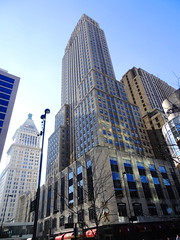
We had a pleasant drive from Madison Indiana to Cincinnati Ohio; we are spending the next couple of nights at the Hilton Cincinnati Netherland Plaza. This modern-day palace is so extraordinary, Kris and I have decided to devote an entire post to the building. The Netherland Plaza Hotel and Carew Tower were designed to be a “city within a city”; financed by the Emery family and completed in January 1931, the complex predated Rockefeller Center’s opening by four years. When the hotel opened it featured 800 guest rooms, high-speed automatic elevators, 11 kitchens, 7 restaurants, a ballroom and a nightclub. Winston Churchill, Elvis, Eleanor Roosevelt and Bing Crosby are just a few of the famous guests who have stayed at the Netherland Plaza. C’mon, let us show you around…..

ci 118 (1)

ci 051 (1)ci 125 (1)

ci 151 (1)

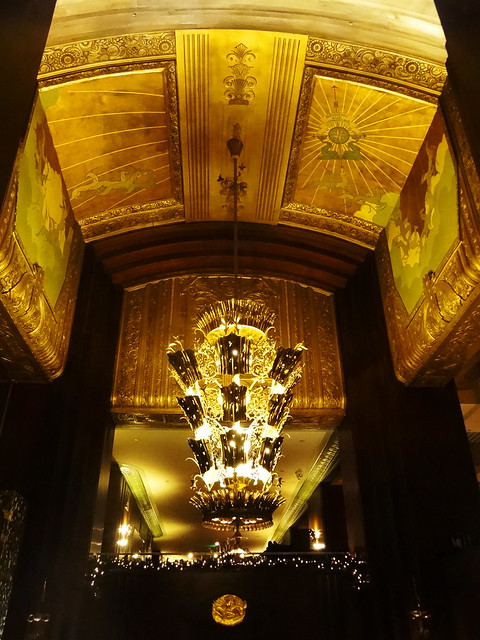
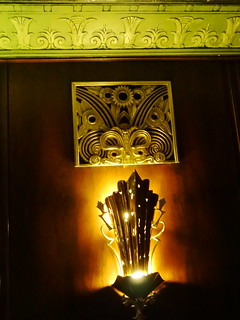
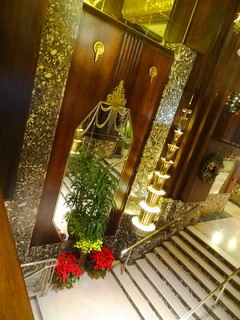
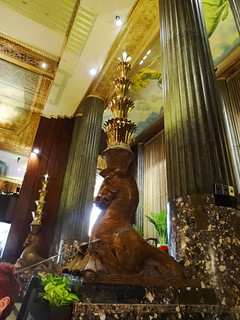
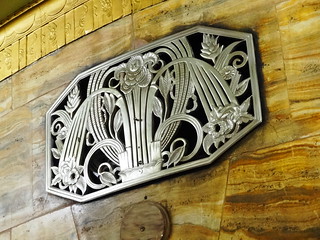
We pass through the handsome porte-cochere on Fifth Street to enter the building, decorative floral metalwork reaches horizontally above the entrance, brass torcheres guard the staircase, a mural covers the vaulted ceiling, the French caption “Bienvenu aux Voyageurs (Welcome Travelers) greets all who pass under. A compass-rose points true north and is surrounded by 24 gazelles which represent each hour of the day. The lobby is well appointed with Brazilian Rosewood, Italian marble and pierced nickel-silver fixtures in a foliage design, making the area feel rich and luxurious. French Art Deco saturates the building; pillars, openings and moldings are angular, geometric shapes; herons, lotus leaves and sunbursts are found throughout. On the mezzanine level we get an excellent view of the Welcome Traveler piece, there are 18 Louis Grell murals in all, each one a masterpiece; the original cost to build the hotel was $7 million (1930) dollars! Now let’s have a look at the Continental Room.
ci 128 (1)

ci 152 (1)ci 137 (1)

ci 133 (1)

This lavish room was originally the main dining room of the hotel, the room is still adorned with the extravagant 1930 wall sconces and chandeliers, amazing. Murals represent the four seasons, nickel-silver doors have French mirror backing, now here’s the really cool part: When the hotel opened, there was a small ice rink built into the floor in the center of the room, diners were entertained by an ice-skating show—can you imagine that? At this level we have a lovely overview of the Palm Court, once the main lobby, now home to Orchids at Palm Court, a fine dining restaurant, The Grille and The Bar at Palm Court; more on these later. And we’re walking, third floor is next. I have to dig deep into my adjectives bag for this next part, there are no words to do it full justice but I’ll give it a shot.

ci 057 (1)

ci 071 (1)ci 061 (1)

ci 055 (1)

The Hall of Mirrors (sigh). Opulent, decadent, palatial, ornate, grandiose (sigh). This splendid  ballroom was designed by George Unger, interior designer of the Roxy and Beacon Theatres in New York City. The soaring ceiling, unique lighting, impressive stairway and enormous mirror create a dramatic effect. It’s stunning. Taken in as a whole it’s gorgeous, looking at individual features, it’s incredible— like stepping into an Art Deco fantasy. The lighting in the room is fabulous; frosted glass deco chandeliers remind me of upside-down umbrellas shining their soft light upwards, combined with French peach-colored marble, gold-plate mirrors, lavender, rose and jade colored accents, the ballroom is bathed in a pastel-tinted glow. The hotel suffered a fire in 1942, the original chandelier was damaged, it has been replicated with a ceiling mural taking its place. My eyes travel downward to the horizontal band near the ceiling (frieze), garlands of flowers fill the plaster band, mirrors fill the space behind what appears to be window frames, swagged pilasters imitate drapes. Surrounding the balcony is a series of German silver balustrades and balusters, the grill-work is outstanding, the epitome of French Art Deco, take a minute and study the pictures. Workers arrive and begin setting up for an event, time to move along.

ci 079 (1)

ci 092 (1)

ci 084 (1)ci 228 (1)

And we’re walking, this time to the fourth floor. As we leave the Hall of Mirrors I am fascinated (again) by the metalwork on the railings and posts, a swan medallion is perched above the doors. Here, a group of newer murals cover the walls, Cincinnati artist Tom Bacher created these pieces in 1984; they say the paints are luminescent, they retain light and glow when the lights are dimmed, we’ll have to check that out later. We arrive at the Pavillion Caprice, this was originally the hotel’s nightclub, It’s claim to fame is Doris Day made her first professional appearance here when she was 16 years old, a picture of her and the band hangs on the wall. Kris and I both really like this room, it’s not as fancy as some of the others, but it’s super cool. The space is designed to look like the nightclub of the ocean liner the SS Leviathan, seriously. The room is long, metal railings curve, the ceiling has unique indirect lighting, to me, the most unusual feature are the funky, bronze sunburst lights on pedestals along the walls.

ci 046 (1)

ci 217 (1)ci 146 (1)

ci 224 (1)

Back down the stairs, through the Apollo Gallery, to The Grille at Palm Court for lunch. The decor in this room is a bit different, while it still screams Art Deco, it’s mixed with classic Louis XV overtones. Murals are high up and wrap from ceiling to wall, the theme here is recreation; look closely and discover the distinct outline of Carew Tower in the background of each mural. We are seated at the far end of the Palm Court, the ziggurat-shaped fountain is nearby, it was made right here in Cincinnati at the Rookwood Pottery studio on Mt Adams. It’s hard to concentrate in such beautiful surroundings, we pick a few items from the bar menu, before we know it lunch arrives. The beef sliders are smothered with red onion marmalade, Portobello mushrooms and red wine mayo, delicious. The potato croquettes are golden and crispy, the herbed sour cream makes them extra tasty. The Asian pork buns are flavorful, they make a nice contrast to the other dishes. We take our time eating, soaking up the ambiance, this is truly an incredible place.

ci 247 (1)ci 246 (1)

ci 242 (1)

ci 240 (1)

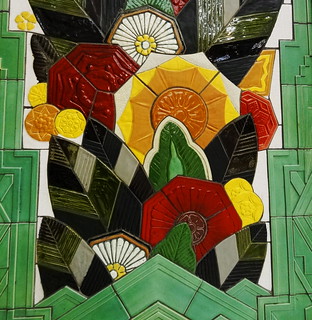
Lunch is finished, we take a little more time poking around the building; around every curve, down every stairway we are fascinated by another ornamental grate, embellished elevator doors, letter box and showy hallways. Crossing the threshold into Carew Tower, Rookwood Pottery tiles add color and beauty to the shopping arcade. As astounding and impressive as the hotel and Tower are today, imagine what it was like to wander into the Netherlands Plaza in 1931. Deep in the throes of the Great Depression, anybody could walk in, get caught up in the remarkable surroundings, and for just a short time forget their troubles. Funny, it still has that same effect 84 years later.

ci 032 (1)

ci 251 (2)ci 029 (1)

ci 030 (1)

ROADTRIP: Madison Indiana

28 Jan

ci 218 (1)

We’re on the road, deep down in southern Indiana. The scenic byway twists and turns through rolling hills and limestone bluffs; Pine trees look like picks stuck into the terraced roadside, signs warn us of road slides. We snake back and forth, the Ohio River comes into view, at last, we have arrived at our destination, the historic rivertown, Madison Indiana. This is one of those places you’ve either been to or never heard of, it’s not a place most folks commonly know of, until today that is….

ci 242 (1)

ci 090 (1)

ci 143 (1)

Nestled along the banks of the Ohio River, the city was platted in 1810, it consists of historic commercial and residential buildings, quaint streets, public parks and 133 blocks of the downtown area known as the Madison Historic Landmark District; picture wonderful characteristics of New Orleans, Savannah and Charleston brought together in one lovely little town. Madison’s early years were spent as a bustling steamboat town, heavy river traffic brought residents and wealth to the area, located between Cincinnati and Louisville on the mighty Ohio, industry, transportation and culture flourished, it was also a stop on the underground railroad. Federal style is the most common architectural style in the district with over 400 buildings represented, but there’s a little bit of everything.

ci 172 (1)

ci 039 (1)

ci 036 (1)ci 018 (1)

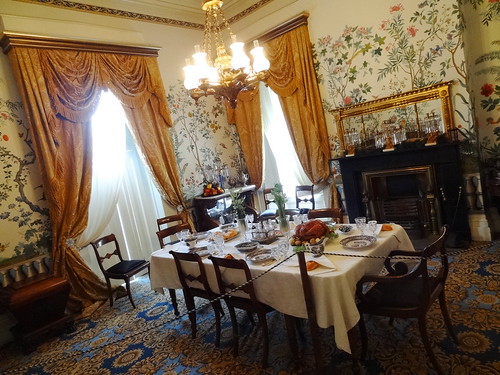
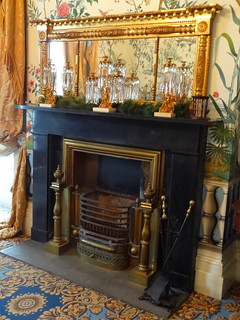
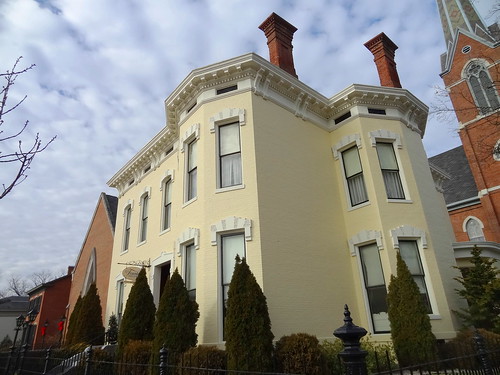
We begin the day with a tour of the Lanier House, a grand Greek Revival mansion designed by Francis Costigan and built in 1844. James F D Lanier was a businessman, banker and entrepreneur of such great wealth he actually loaned the state of Indiana money, saving it from bankruptcy TWICE! The home remained in the family until 1917, the State took control of the home and opened it publicly as a historic house museum, it became a National Historic Landmark in 1994. Let’s have a look….The exterior wears its original color of gold, Corinthian columns, Doric pilasters, dentilated cornice and ornamental pediments over doors and windows shout Greek Revival. The interior has been restored to its former grandeur, original colors on walls and plaster moldings are covered in a high gloss varnish just like in 1844. Standing in the hall, we notice there are two front doors, one facing the street, the other faces the river, from here we see just a tease of the circular stairway. We start in the dining room, the table is set, it looks as if dinner is ready. Elegant glass lamps rest on the fireplace mantel, heavy drapes cover the windows, Oriental floral design wallpaper wraps the walls. Crossing the hall I take notice of the dentilated molding as we enter the parlor. Wallcoverings and carpets are heavy with patterns, all are reproductions, above the fireplace hangs a very nice oval mirror; the room is decorated for the holidays, an old-fashioned Christmas tree stands near a window. The other side of the room features an antique piano with fancy carved legs, a harp sits nearby, this is where guests would be entertained. The family would gather in a less formal room, here the children would play with their toys or do homework at the desk. Gorgeous chandeliers hang in each room, beautiful pieces and glass lamps rest on tables and shelves.
ci 044 (1)

ci 049 (1)

ci 053 (1)

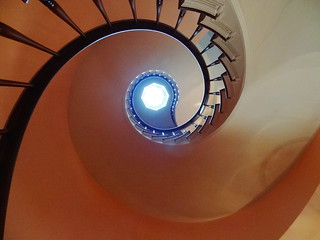
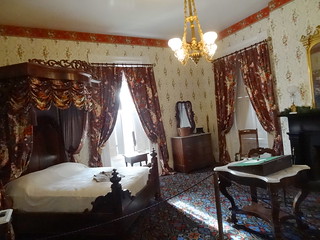
Before we ascend the stairs we take a good look at the circular stairway, it seems to hang in mid-air, standing at the bottom you can look straight up to the cupola, light fills the tunnel-like space. Funny, the last three historic homes we’ve visited each had a spiral staircase, I can’t remember a single one we’ve seen before that.  Upstairs a thick wood bed fills the master bedroom, drapes, carpet and walls each wear a unique floral design, somehow it all works. River facing windows offer an unobstructed view of the formal gardens, I’d love to see them in the summertime. The spiral staircase continues up to the third floor, steps are bare wood, round windows are reminiscent of portholes and give a 360 degree view of the city. We thank our guide and hit the streets of Madison.

ci 074 (2)

ci 071 (1)

ci 085 (1)

One of the city’s most famous attractions is the Broadway Fountain, with good reason, it’s stunning. Designed by French sculptor J P Victor Andre and created by Janes, Kirtland and Company, the fountain was originally exhibited at the Philadelphia Centennial Exposition in 1876. The Independent Order of Odd Fellows (think Freemasons) purchased the fountain several years after the exposition closed and presented it to Madison in 1886. Originally cast in iron, time and the elements eventually took their toll, it was recast in bronze as a bicentennial celebration of the citizens of Madison, it should be safe for a very long time. I stand and look, taking in the details, created in the neo-classic design, the top basin features a robed maiden holding a rod, two large birds surround the second basin, the base is surrounded by four horn-blowing Tritons. Ornamental urns rest upon the top wall of the reflecting pool, today miniature lights dangle from the upper and lower basin. The fountain has that perfect patina, it’s ideally placed right off Main Street among larger homes, it’s the perfect setting for live music and festivals.

ci 063 (1)

ci 112 (1)

ci 067

With so much to see we only have time for a quick lunch, The Red Pepper, will suit us just fine. We order the daily special at the counter and have a seat in the dining area, we’ve done a lot of walking, it feels good to relax. Our lunch arrives in minimal time, we’re having a roast beef sandwich slathered in horseradish mayo, topped with lettuce, tomato and red onion, tasty. Along with chips we ordered a side of pasta salad, it’s a nice combo of noodles, sun-dried tomatoes, fresh basil, chopped garlic and dressing, yum! 

ci 102 (1)

ci 109 (1)ci 129 (1)

ci 119 (1)

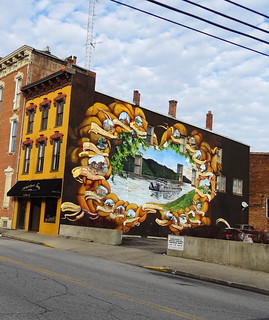
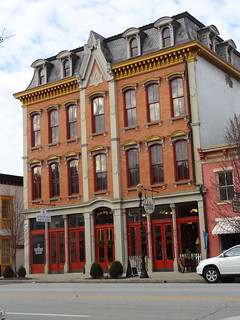
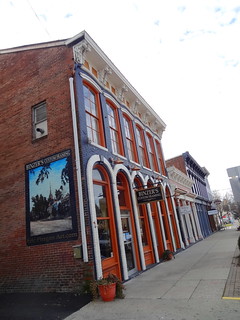
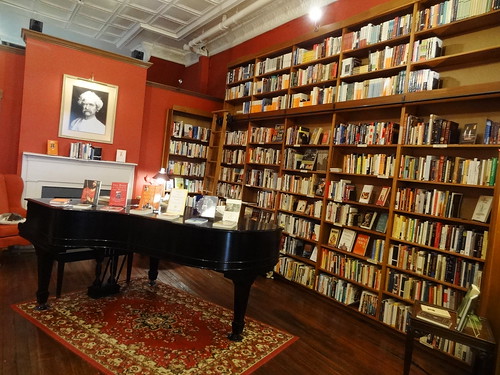
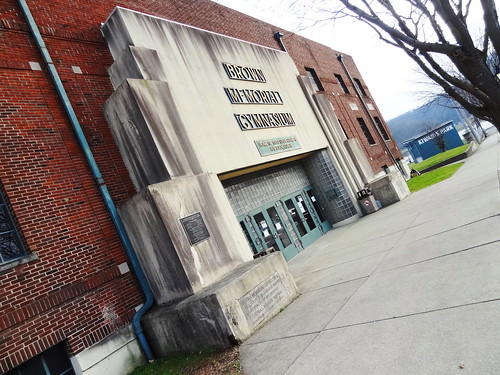
We leisurely stroll Main Street, it’s picturesque, quaint, old-fashioned, attractive. Narrow buildings of varying height line the street, window pediments, awnings and vintage signs decorate storefronts; church steeples pierce the skyline. Longtime businesses share the street with the new; the Ohio Theatre has been showing movies since 1938. We stop in at Village Lights Bookstore, the Twain Room makes me want to get comfy in a chair and read, it is the ultimate in cozy. We browse through Something Simple, a home goods store, gift shops and best of all a chocolate shop called Cocoa Safari Chocolates, hands down the best dark chocolate, malted milk balls I’ve ever had! There’s a wonderful mural of a steamboat floating down the river on the side of Shipley’s Tavern on West Street. The Art Deco style Brown Memorial Gymnasium built in 1924 stands apart from the rest of the buildings.

ci 153 (1)

ci 141 (1)ci 152 (1)

ci 170 (1)

We spend the rest of our time here walking neighborhood streets, the homes and streetscapes are very different from back home in Detroit. While the majority of houses are Federal style, they vary in size from tiny to sprawling; mainly constructed of brick, many owners choose to pain the exterior in a variety of colors, highlighting architectural details. Iron fences with ornamental gates are the norm here, so pretty. We cover Second Street, First Street and the riverfront; hotels, taverns and mills once lined the streets along with stables, slaughterhouses and a tobacco prizing house. Today this area is primarily residential, many of the homes have historic significance, a placard placed in front details the importance.  Holiday decorations linger, wreaths and garlands are festive, doors and entryways are notable, porch lights and sconces are extraordinary. A surge of restoration is taking place throughout the neighborhood.

ci 176 (1)

ci 183 (1)ci 179 (1)

ci 194 (1)

We linger on the riverbank, barge traffic is brisk this afternoon, up ahead a bridge leads from Indiana to Kentucky, in the sky clouds seem to be putting on a show, quickly changing formations, in spite of all the activity, the surface of the river is calm. Before leaving town  we stop in at the Thomas Family Winery on Second Street. The old 1850’s stable and carriage house has been transformed into a pleasant tasting room complete with wood burning stove and board games. Sitting at the bar we enjoy the complimentary tasting of wines and old world ciders, we buy a few to take home and enjoy later. The sun is beginning to set, the sky and water enjoy a pinkish glow. Kris points the Jeep east toward Cincinnati where tomorrow our adventure will continue.

ci 201 (1)

ci 203 (1)ci 196 (1)

ci 245 (1)


The Octagon House

20 Jan

Octogon House 062 (1)

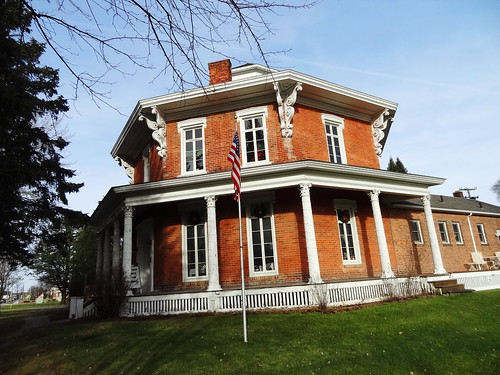
In 1860, Macomb County farmer, engineer, Loren Andrus completed construction on his cupola-topped, Corinthian-columned, eight-sided home on Van Dyke just north of 26 mile Rd in Washington Michigan; 155 years later it’s still looks beautiful. Today the Friends of the Octagon House are having a holiday open house and we’re going. Before we start our tour, I’d like to tell you a little about this unique style of architecture. Some consider the octagon the first pure American housing style, it is completely different from the styles brought from Europe; Thomas Jefferson designed over 50 buildings with octagonal features. Eight-sided structures were less expensive to build, every inch could be used as living space, they were easier to heat in the Winter and stayed cooler in the Summer months due to the spiral staircase. It’s estimated thousands of octagonal homes were built in the US, mostly on the East Coast; today, less than 500 remain, two of them right here in Macomb County.

Octogon House 059 (1)

Octogon House 061 (1)

Octogon House 069 (1)

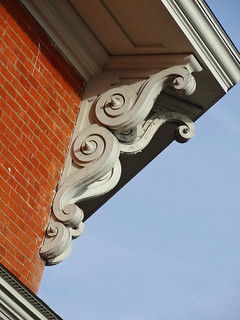
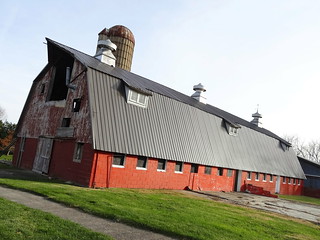
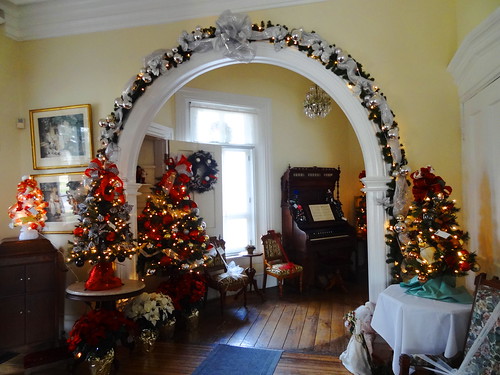
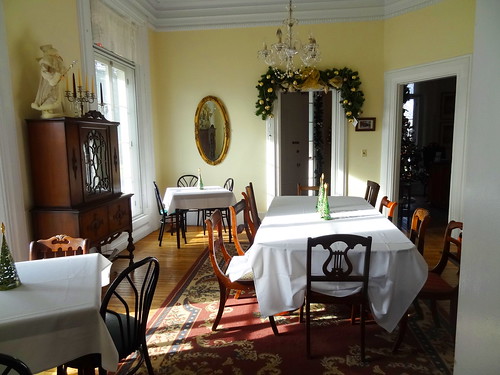
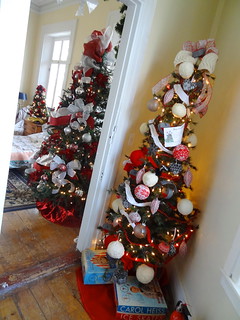
We park in the lot next to the house, two of the original barns remain on the property, the orange brick home features 8-foot windows, white trim and pretty scrolled brackets reminding us it was built in the Victorian era. The front entrance is open, Christmas decorations fill the rooms, walls are pale yellow, wide trim pieces are painted satin white. I am astounded at how fancy the interior is; thick moldings hug wide arches that permit passage from one room to the next, ceilings are embellished with carved details, medallions act as anchors for chandeliers, and the spiral staircase……..wow!! All of the decorated trees and garlands are for sale, one of the many ways the “Friends” raise funds for restoration and maintenance, it’s beautiful. Rooms flow one to the next, period furniture fills the space, many items have been donated. In the dining room a cluster of  large plaster acanthus leaves cling to the ceiling forming an elegant medallion for the crystal chandelier, this one is original, there’s a lovely china cabinet and sideboard, light pours in through the large windows making the room bright.

Octogon House 041 (1)

Octogon House 036 (1)

Octogon House 056 (1)

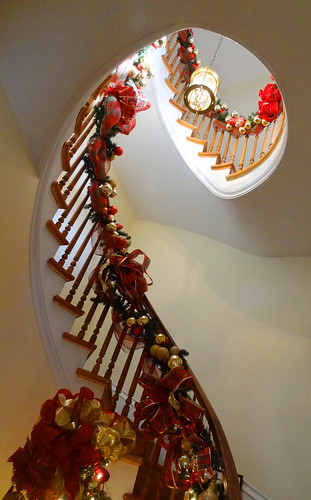
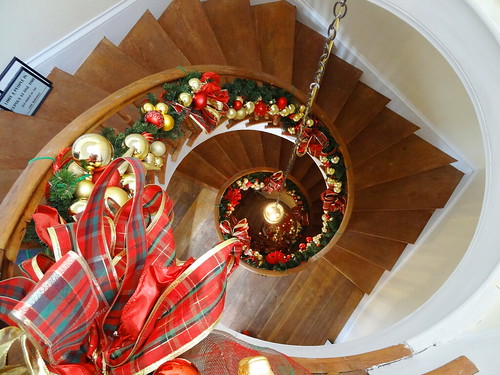
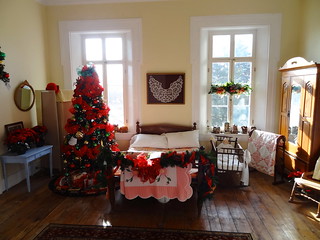
There are different rooms for entertaining on the first floor, the kitchen is complete with ice box and antique stove. The centerpiece is, of course, the 55 step, cantilevered, spiral staircase that leads from the first floor to the third-story cupola, it’s gorgeous! Today it’s embellished in ribbons, garlands and glass ornaments. Kris and I stand at the bottom and gaze up to the top, it’s a swirl of plaster, wood and holiday sparkle. Climbing the steps, we go all the way to the top, inside the cupola we are granted a panoramic view of our surroundings; on one side mature trees and old barns recall the days when this was a working farm, the other direction, a complete contrast, busy roads and modern businesses. Walking down one flight, we are on the second story where the family bedrooms are located. Again we have that flow from room to room; doorways are wide, floors are broad planks, beds are antique, quilts are draped on racks; Christmas trees and Poinsettia adorn the spaces. A sitting area is finished off with thick books filling cases, a phonograph and other old-fashioned items scattered throughout.
Octogon House 013 (1)

Octogon House 016 (1)

Octogon House 022 (1)

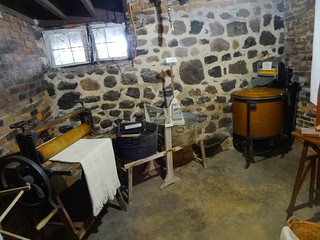
We descend the dramatic staircase to the first floor, then continue on to the basement, here we find old photographs and displays. There have been ‘digs’ on the property revealing old farming tools, bottles and wheels. A cellar is filled with cast iron skillets, rolling pins, baking pans, butter churn and storage bins for vegetables grown on the farm. Canning jars are filled with pickled and preserved items. In the laundry room there’s an old washing machine and a wringer to squeeze out the excess water before things were hung on the clothesline, reminds me of what a chore laundry used to be. Did you know the Octagon House was one of the stations on the Underground Railroad? 

Octogon House 047 (1)

Octogon House 049 (1)

Octogon House 051 (1)

Like so many other important, historic sites and buildings, the Octagon House had been vacated, vandalized and condemned, it was rescued  just days before the wrecking ball was set to demolish the house. I remember coming here as a kid when it was the Apple Barrel Farm (1974-84) complete with animals. Today it is a State of Michigan Historic Site, it’s on the National Register of Historic Places and is a Macomb County Historic Landmark. It’s really a remarkable place, I encourage you to visit during one of their open houses or events, it can even be rented out for one of your own private events; check it out.

Octogon House 033 (1)Octogon House 038 (1)

Octogon House 052 (1)

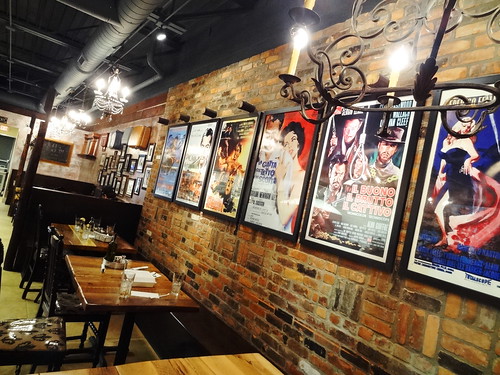
Driving south on Van Dyke, we decide to stop off and grab a bite to eat at Tivoli’s Pizzeria in Utica. Nestled in a decades-old strip mall, the building recently suffered a fire, this is our first time back since they re-opened.  The inside is completely different, yet the same. The layout hasn’t changed; tables fill the front section, the open kitchen remains in the middle. The decor is a bit more rustic, chandeliers are mismatched, table tops resemble old wood planks. The long wall is exposed brick, Italian movie posters hang mid-way down, the left wall is covered in a custom painted mural, photographs and memorabilia belong to the family. We’re glad to see many of the old staff members have returned. 

octo 022 (1)

octo 002 (1)

octo 012 (1)

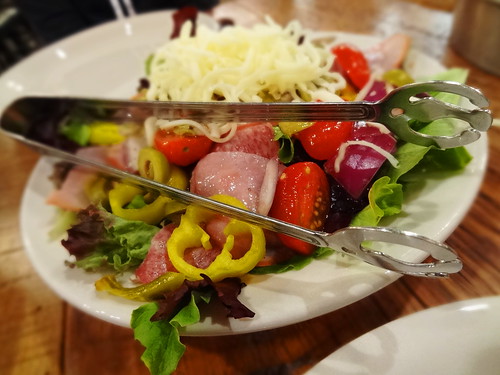
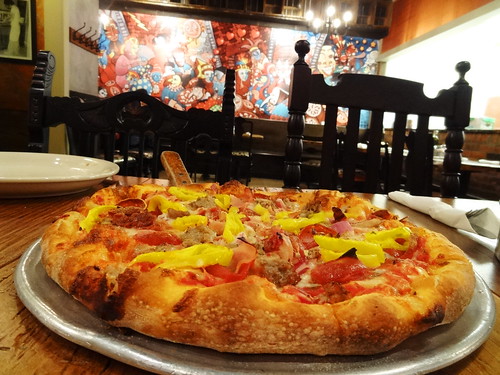
The menu has been revised; new things have been added, old favorites remain (whew!). Today we are having the Tivoli Special, a NY style round pizza with mozzarella, pepperoni, mushrooms, green peppers, onions, ham, bacon, Italian sausage, we add yellow pepper rings to the mix. We start with the Antipasto salad, a nice pile of crisp lettuce topped with all the usual suspects, dressed with the housemade vinegar and oil, delicious. Our pizza is served right from the wood-burning oven, the crust is puffed high in some spots, melted mozzarella stretches all the way from the pan to our plates, it’s delectable, as expected. They also make Sicilian square and Chicago stuffed pizza, oh and don’t forget about dessert, you can’t go wrong with their homemade Tiramisu or Cannoli.